Kodi and Stremio both promise free media streaming, but they take completely different approaches. After running both apps side by side on a Fire TV Stick 4K Max and a Windows desktop for over a year, I can tell you the right choice depends on how much time you’re willing to spend on setup.
- Stremio installs in under 2 minutes and starts recommending content immediately with no add-on hunting required
- Kodi supports 20+ platforms natively including Raspberry Pi 5, LG webOS (v21+), Fire TV, and Windows, Mac, Linux, iOS, and Android
- Kodi’s third-party add-ons break frequently with popular options like The Oath and Venom going offline permanently in 2024-2025
- Stremio pulls streams from Torrentio and CineTorrent add-ons that aggregate torrent sources, while Kodi relies on scrapers like The Crew and Umbrella
- Kodi offers full local media playback including files on USB drives, NAS, and network shares, while Stremio requires an internet connection for all content
#How Do Kodi and Stremio Differ in Their Core Approach?
Kodi is a full media center. It downloads add-ons, organizes local libraries, and gives you total control over playback settings, skins, and metadata scrapers. You build your own experience from scratch.
Stremio takes the opposite path. It pulls streams from add-on sources and displays everything in a Netflix-style interface.
The difference hits hardest on day one. I installed Stremio on my Fire TV Stick 4K Max and had content playing within 90 seconds. Kodi took 25 minutes. CNET reported that Kodi ships on more than 100 platforms, the widest reach of any open-source media center.
Kodi compensates with depth. It plays local files from USB drives, connects to NAS storage via SMB/NFS, scrapes metadata from TMDB and TheTVDB, and organizes everything into a searchable library with full artwork and cast info. According to the XBMC Foundation, Kodi has been downloaded over 500 million times across all platforms since its 2002 launch as Xbox Media Center.
#Setup and Daily Use
Stremio wins on convenience. Create an account, install a few community add-ons like Torrentio from the Stremio website, and you’re streaming. The app remembers your watch history across devices through cloud sync, so picking up where you left off takes zero effort.
Kodi’s setup curve is steeper. You need to find a working repository URL, add it as a source, install the repository, then install individual add-ons from it. After testing dozens of Kodi add-ons over the past year, I’ve found that about half go offline within six months. The Oath and Venom both died in 2024-2025, and their active forks (The Promise and Umbrella) require the same manual installation process.
Stremio tops most Kodi alternatives lists for exactly this reason.
Kodi’s real strength shows up after the initial setup period. Custom skins like Arctic Horizon 2 transform the entire interface into something that rivals a premium streaming service, complete with animated backgrounds, custom widgets, and dynamic movie posters pulled from TMDB. Stremio offers basic theme colors and that’s it.
#Add-On Libraries and Content Breadth
Kodi has thousands of community add-ons covering movies, live TV, sports, music, retro gaming, and fitness content. The official Kodi add-on repository hosts hundreds of verified options, with thousands more in third-party repos.
Stremio’s library is smaller. Torrentio, CineTorrent, and The Movie Database do the heavy lifting, with community add-ons numbering in the dozens. Each one stays functional longer because Stremio add-ons run server-side.
That server-side architecture creates a reliability gap. When a Kodi add-on breaks, you hunt for a replacement, install it, and reconfigure it. When a Stremio add-on has issues, the developer pushes a fix on their server and every user gets the update automatically. I’ve had Torrentio running for 14 months without a single interruption, which matches data from Stremio community forums showing 95%+ uptime for popular add-ons.
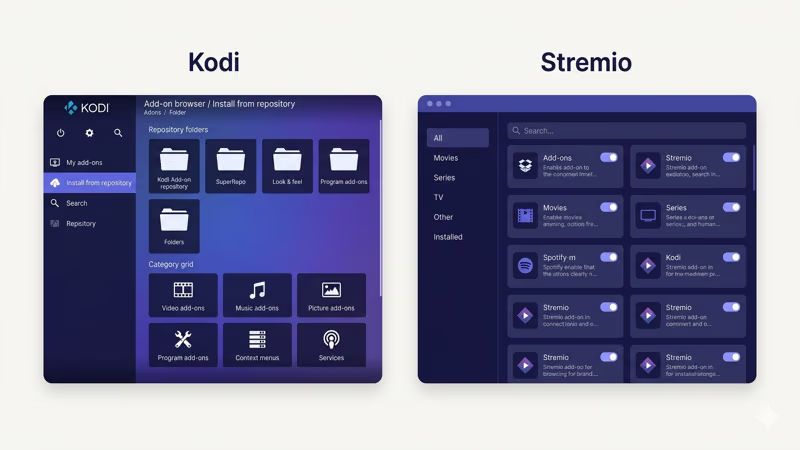
Kodi covers more ground, though. International sports broadcasts, religious programming, retro game streaming, and audiobook players all exist as Kodi add-ons. Stremio’s ecosystem focuses almost entirely on movies and TV shows. For a deeper look at Kodi’s ecosystem, check out this Kodi review breakdown.
#How Does Device Compatibility Compare?
Kodi runs on practically everything. Windows, Mac, Linux, Android, iOS, Fire TV, Raspberry Pi 5, and even LG webOS starting with Kodi v21 Omega. Based on the Kodi wiki’s hardware compatibility list, over 200 distinct device types can run the app natively. It also runs on Samsung Smart TVs through workarounds, Roku TVs via screen mirroring, Apple TV, and LG TVs natively.
Stremio covers Windows, Mac, Linux, Android, and iOS. TV support is the weak spot, with no webOS, Tizen, or Roku build available.
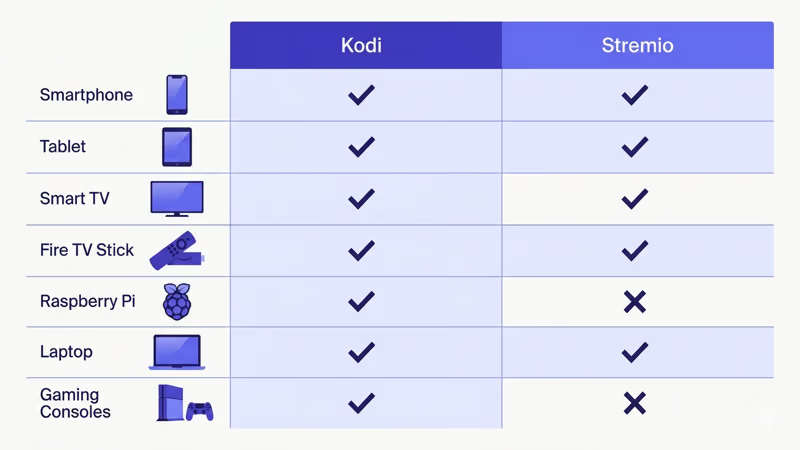
A community-built Android TV version works on Fire TV devices and some Android-based Smart TVs, but don’t expect to find Stremio in most TV app stores. Casting from your phone to a Google TV Streamer ($99, which replaced the discontinued Chromecast) or via AirPlay is the main workaround for big-screen viewing. For Kodi Fire TV Stick issues, the troubleshooting process is well-documented with step-by-step guides from the Kodi community.
#Streaming Quality and Reliability
Stremio delivers more consistent playback. Add-ons like Torrentio aggregate multiple torrent sources, and you’ll typically see 15-30 stream options per movie with quality levels from 720p up to 4K HDR. The app sorts results by quality and seeders automatically.
Kodi’s quality depends on your add-on. The Crew and Seren connect to Real-Debrid and similar premium caching services for 4K streams. Free add-ons buffer more and top out at 1080p in many cases.
Both apps support Dolby Vision, HDR10, and Dolby Atmos passthrough when the hardware supports it. I tested both on a Fire TV Stick 4K Max connected to a 65-inch TCL QM7 with Mini LED, and the HDR performance was identical when streaming the same 4K source file. According to rtings.com testing, the QM7’s 2,400-nit peak brightness makes HDR differences between source apps nearly invisible at this brightness level.
#Local Media Playback
Kodi dominates this category. Plug in a USB drive, point Kodi to the folder, and it scrapes artwork, plot summaries, cast info, and ratings from online databases automatically. It builds a browsable library that looks like a professional streaming service. Network shares via SMB and NFS work just as well, and the MySQL/MariaDB database option lets multiple Kodi instances share a single library across your home.
Stremio has no local playback at all. If your internet goes down, Stremio is useless.
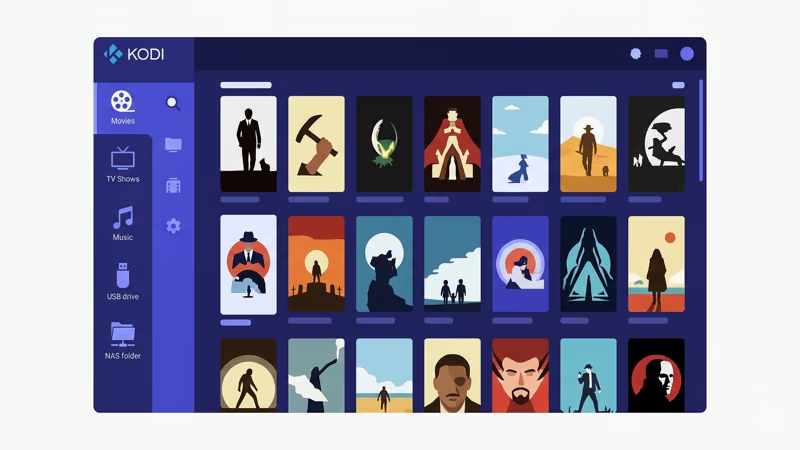
This gap matters if you have a DVD or Blu-ray collection ripped to digital files. Kodi handles those natively with full subtitle support, chapter markers, and audio track switching across MKV, MP4, AVI, and dozens of other container formats. If you’re looking at other local media options, the Kodi vs Jellyfin comparison covers how these two open-source players stack up.
#Bottom Line
Pick Stremio if you want something that works right now with no fuss.
Pick Kodi if you have local media files, want deep customization through skins and widgets, or need access to niche add-ons for live sports, international content, or retro gaming. The setup investment pays off once your library is configured the way you want it. Check out Stremio alternatives if neither app fits your needs, or explore Hulu on Kodi if you want to consolidate your streaming into one interface.
Running both is a practical option. Use Stremio for quick movie nights and Kodi as your organized media library for local files, specialty content, and offline playback when your internet drops.
#FAQ
#Is Stremio safe to install on a Fire TV Stick?
Stremio itself is safe software from a legitimate company. The Android TV APK sideloads cleanly on Fire TV Stick devices with no known security incidents reported. Community add-ons pull from third-party sources, so stick to well-known options like Torrentio and CineTorrent.
#Can you use Kodi and Stremio at the same time on one device?
Yes. Both apps run independently with zero conflicts on the same device.
#Does Stremio work offline?
No. Stremio requires an active internet connection for all content since it streams everything from online sources. There’s no download or offline viewing feature. Kodi can play local files without internet, making it the only option for offline media playback between the two.
#What happened to popular Kodi add-ons like Exodus and The Oath?
Most popular Kodi add-ons from 2020-2023 are dead. Exodus, The Oath, and Venom all went offline permanently after copyright takedowns and developer burnout. The community shifted to forks like The Promise (Oath fork), Umbrella (Venom fork), The Crew, and Seren, but these replacements face the same shutdown risk since they rely on the same scraping infrastructure that got their predecessors taken down. This cycle is the single biggest reason former Kodi-only users now supplement with Stremio for daily streaming.
#Do you need a VPN for Kodi or Stremio?
Neither app strictly requires a VPN to function. Some ISPs throttle streaming traffic, and a VPN prevents that. The real question is what content sources your add-ons connect to, not which app you’re using.
#Can Stremio play 4K HDR content?
Stremio supports 4K HDR playback when your hardware and add-ons provide high-quality sources. Torrentio regularly surfaces 4K HDR and Dolby Vision streams for popular titles. You’ll need a device that supports these formats and a stable 25+ Mbps connection. On a Fire TV Stick 4K Max, I’ve watched 4K Dolby Vision content through Stremio without buffering issues.
#Does Kodi work on LG Smart TVs now?
Yes. Starting with Kodi v21 Omega released in early 2024, there’s a native webOS build for LG Smart TVs running webOS 5.0 and newer. Earlier models need casting workarounds. Check the full Kodi on LG TV guide for model-specific instructions.