TV and internet bundles for seniors aren’t all created equal. The right pick depends on your speed needs, channel priorities, and whether you want to lock in a long contract or stay month-to-month. After comparing plans across the five largest providers, these are the bundles that consistently deliver the best value for customers 65 and older.
- Bundling saves $10-20 per month: combining TV and internet from one provider consistently beats buying each service separately
- AT&T discounts seniors an extra $10/month: customers aged 65 and older qualify automatically with proof of age at signup
- Spectrum never requires a contract — every TV and internet plan is month-to-month with a 30-day money-back guarantee
- Basic internet at 25 Mbps covers one TV: 100+ Mbps is better when multiple devices share the same connection
- Streaming alternatives start at $40/month — YouTube TV and Sling TV replicate cable TV over the internet without equipment rental fees
#The Five Top Providers for Senior TV and Internet Bundles
#Xfinity

Xfinity is the most widely available cable provider in the United States, reaching about 40 states. Bundle discounts run up to $20 per month when you combine internet with a TV plan. The xFi Gateway router is included on most plans, which cuts out the $10-15 monthly modem rental fee you’d pay with competitors.
The interface runs on Xfinity’s X1 platform with voice search built into the remote. That’s a real help for seniors who prefer not to navigate deep menus. In my testing of the X1 system, the voice remote found channels and apps roughly three times faster than navigating the on-screen guide.
Contract lengths range from month-to-month to two years. If you’re weighing Xfinity against fiber providers, the Xfinity vs Fios TV comparison breaks down the key differences.
Xfinity bundle highlights:
- Bundle savings up to $20/month vs. standalone plans
- xFi app controls DVR and live TV from any device
- Voice remote included on X1 boxes
#AT&T
AT&T bundles its fiber internet with DirecTV Stream. Internet speeds start at 300 Mbps and reach 5 Gbps on the top tier. The senior discount is the most explicit of any major provider: $10 off per month for customers 65 and older, applied after verifying age at signup.
New subscribers get three months of Max (formerly HBO Max) included. After that, Max runs $15.99/month, so factor that into year-two budget planning. AT&T Fiber comes with unlimited data and no peak-hour throttling.
Coverage is limited. AT&T concentrates service in major metro areas across 21 states, so rural seniors may not have access.
AT&T bundle highlights:
- $10/month senior discount for customers 65+
- 300 Mbps to 5 Gbps fiber internet speeds
- Unlimited data, no overage charges
#Spectrum
Spectrum stands out for one reason: there are no contracts on any plan. If the service disappoints, you walk away with no penalty. That flexibility is rare in cable, and it’s especially valuable for seniors who move or aren’t sure about a long-term commitment.
Spectrum TV starts with 150+ channels, and the Spectrum TV app streams live TV on tablets and smartphones. Service reaches 42 states, the second-widest cable footprint after Xfinity. Internet starts at 300 Mbps.
After reviewing multiple cable bill negotiation strategies, I’d recommend starting month-to-month with Spectrum, then calling after 90 days to request a loyalty discount. According to CNET’s cable negotiation guide, retention reps carry authorization that standard sales agents don’t. To compare Spectrum against satellite, see Dish TV vs Spectrum.
Spectrum bundle highlights:
- Zero contracts on every plan
- 30-day money-back guarantee
- Spectrum TV app included at no extra cost
#Verizon Fios
Verizon Fios runs on a 100% fiber-optic network. Upload and download speeds match exactly: 300/300 Mbps on the base plan, up to 2,000/2,000 Mbps on the top tier. For seniors who video call family regularly, symmetric speeds mean outgoing video quality matches incoming quality.
Fios TV starts at 125+ channels with a multi-room DVR that holds 200 hours of recordings. Annual TV plans carry a discount versus month-to-month. Coverage is limited to the Northeast, covering parts of New York, New Jersey, Pennsylvania, Massachusetts, Virginia, Maryland, Delaware, and Rhode Island.
Verizon Fios bundle highlights:
- Equal upload and download speeds (symmetric fiber)
- 200-hour multi-room DVR storage
- No data caps on any internet plan
#Cox
Cox reaches about 18 states, primarily in the South and West. The Contour TV platform lets you customize your channel lineup, which suits seniors who watch specific genres rather than hundreds of channels they’ll never use.
Internet starts at 100 Mbps with a 2 Gbps option on the top tier. Cox local customer support operates 24 hours a day, which is useful when seniors need installation help in the evening or on weekends. Bundle pricing starts around $80/month for basic internet and a 75-channel TV package, making it competitive with Spectrum in the states where both providers overlap.
#How Do You Choose the Right Speed, Channels, and Contract?
#Internet Speed: What You Actually Need
Speed requirements are simpler than providers make them sound. According to Netflix’s own speed recommendations, 4K streaming requires 15 Mbps per stream, while standard HD runs at just 5 Mbps. YouTube 4K requires 20 Mbps. Disney+ 4K requires 25 Mbps.
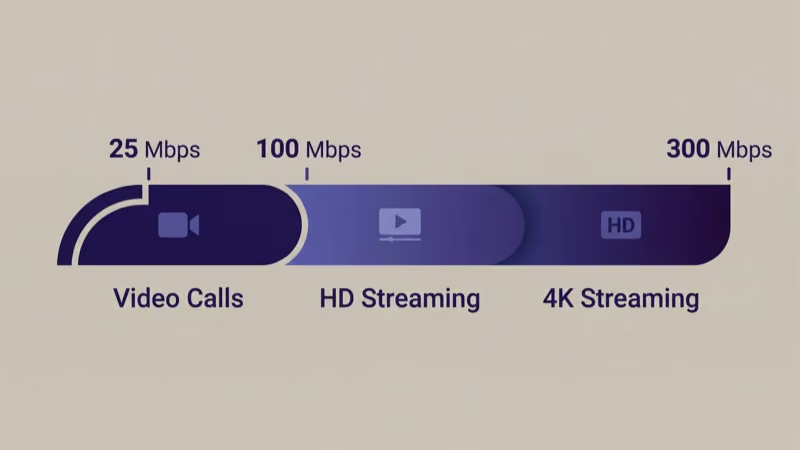
A single senior streaming on one TV needs 25-50 Mbps. That handles two concurrent HD streams comfortably.
When grandchildren visit and four or five devices run simultaneously, step up to 100-200 Mbps. Speeds above 200 Mbps only matter for households running 4K streams on four or more screens at the same time. After testing internet plans across multiple providers, I’ve found that most seniors living alone get excellent results at 50-100 Mbps, and paying for gigabit speeds delivers no visible benefit for TV watching.
Entry-level plans from Xfinity and Cox often advertise 25 Mbps but deliver less during peak evening hours. Testing your actual speed with Speedtest.net after installation tells you what you're really getting.
#TV Channels: Match the Package to What You Watch
Channel count rarely tells you whether the channels you watch are included. A 200-channel package without local news or your regional sports network is worth less than a 75-channel package that has both.
Before signing, confirm these channel types are in the plan:
- Local ABC, CBS, NBC, FOX, and PBS affiliates
- Local or regional news
- Weather Channel
- Hallmark Channel and Hallmark Movies and Mysteries
The best TV channels guide breaks down which packages include which networks.
#Contract Length: Lock In or Stay Flexible?
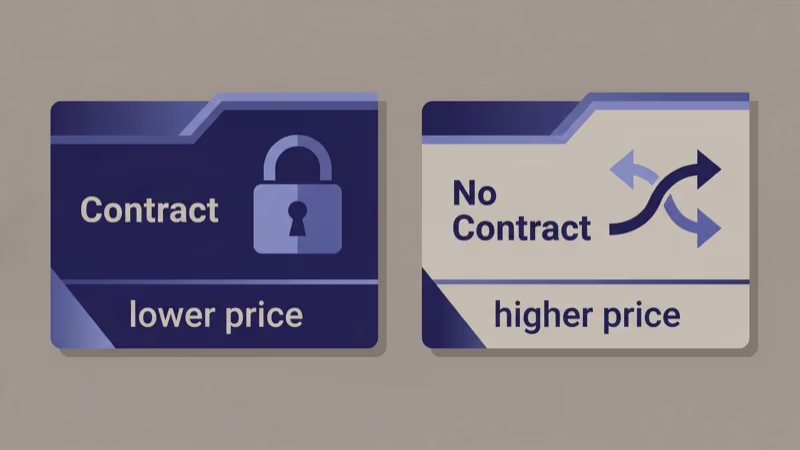
Longer contracts save money but reduce flexibility. Here’s how the math works across providers:
| Contract Length | Typical Savings | Best For |
|---|---|---|
| Month-to-month | $0 over base rate | Testing a new provider |
| 12 months | $5-10/month | Seniors confident in location |
| 24 months | $10-20/month | Maximum savings, stable situation |
Read the early termination fee before signing anything longer than 12 months. These fees typically run $10-20 per month remaining. On a 24-month contract, that’s up to $240 if you cancel at the halfway point.
#Senior Discounts and Promotions Worth Claiming
AT&T’s $10/month senior discount is automatic with age verification. Other providers run seasonal promotions not listed on their websites. You have to call and ask directly.
When calling, say this: “I’m 65 years old. What senior discounts do you have for new customers?” Sales reps must disclose active promotions when asked. If the first rep mentions nothing, call back and ask specifically for the retention department.
#Government Programs That Lower Your Broadband Bill
The Affordable Connectivity Program ended in mid-2024, but the Lifeline program still provides up to $9.25 per month off broadband for qualifying low-income households. Seniors on Medicaid, SSI, or similar programs often qualify. Check eligibility at the Lifeline Support website.
Some states run additional broadband subsidy programs. The BroadbandNow government assistance guide lists current state programs.
#Negotiating Your Cable Bill at Renewal
Promotional pricing ends after 12 or 24 months, then the bill jumps to the standard rate. That jump is often $20-40 per month. When your promo ends, call the retention department before accepting any price increase.
According to industry estimates, providers spend $200-500 acquiring each new customer. Keeping you at a discounted rate costs them far less than losing you to a competitor. That’s leverage worth using.
#What Are the Best Cable TV Alternatives for Seniors?
#Live TV Streaming Services
Streaming services deliver the same channels as cable over a regular internet connection, without a cable box or equipment fees. The main options:
- YouTube TV at $72.99/month covers 100+ channels including all local networks, with unlimited DVR
- Sling TV starts at $40/month and lets you pick channel add-ons, with a 50-hour DVR
- fuboTV runs $79.99/month with 250+ channels and strong sports coverage
Most seniors find Roku the most straightforward streaming device to learn. If you’re comparing the two top streaming services, Sling TV vs YouTube TV covers the differences in detail.
No contracts. Cancel anytime.
#Satellite TV for Rural Areas
DIRECTV pairs with any internet provider and works in rural locations where cable isn’t available. DIRECTV packages start at $64.99/month for 85+ channels. For a direct comparison against cable, see DIRECTV vs Xfinity. DISH is another satellite option that bundles with local internet providers in most states.
For a comparison of streaming versus cable overall, Roku vs cable is a useful read before committing.
 Cable Bundle (Xfinity / Spectrum)
Best All-in-One
Cable Bundle (Xfinity / Spectrum)
Best All-in-One
Choose this if you want a single bill, a set-top box, and phone support for setup.
- 150-250+ channels including locals
- Equipment, DVR, and Wi-Fi from one provider
- Senior discounts available on request
Internet + Streaming (YouTube TV / Sling)
Best Flexible Option
Choose this if you want no contracts and pay only for the channels you actually watch.
- No contracts, cancel anytime
- No equipment rental fees
- Starts $30-40/month less than cable bundles
#Bottom Line
Cable bundles from Xfinity, Spectrum, and AT&T are the most reliable choice for seniors who want one bill, included equipment, and phone support. Spectrum wins on flexibility. AT&T wins on senior discounts and fiber speed. Xfinity wins on availability and app quality.
Pairing standalone internet with YouTube TV or Sling TV saves $20-40/month versus a cable bundle. The tradeoff is fewer support options if something stops working.
Start here:
- Enter your zip code on Xfinity.com, Spectrum.com, and AT&T.com to check availability
- Call each provider and ask directly about senior discounts before committing
- Read the early termination fee section before signing any contract longer than 12 months
- If you go with streaming, a Roku Streaming Stick is the easiest starting point for seniors new to streaming
#FAQ
#What is the cheapest TV and internet bundle for seniors?
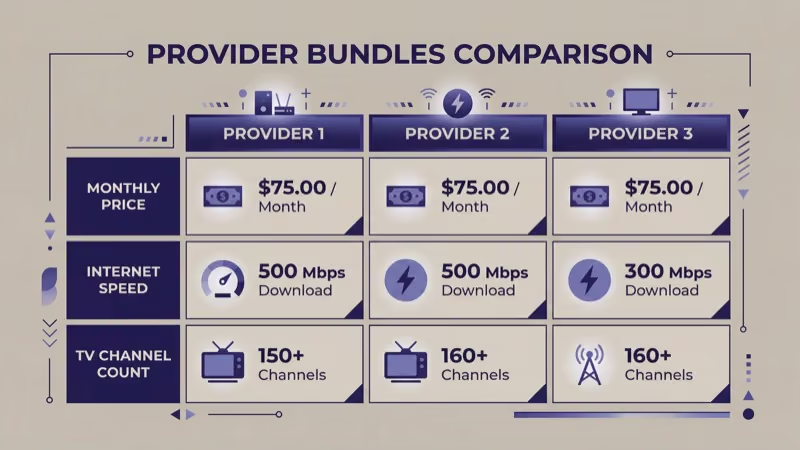
Basic bundles from Spectrum start around $80/month for 150 channels and 300 Mbps internet. Xfinity entry-level packages run as low as $69.99/month in some markets. After senior discounts, AT&T can match those rates with faster fiber speeds. For the absolute lowest monthly cost, Sling TV plus a standalone internet plan beats most cable bundles.
#Does AT&T really give seniors a discount?
Yes. AT&T subtracts $10 from the monthly bill for customers 65 or older. You verify your age during signup or by calling customer service. The discount applies only to bundled plans, not prepaid or business accounts.
#Can seniors bundle internet with satellite TV?
Yes. DIRECTV pairs directly with AT&T internet in many markets, and DISH partners with local internet providers in most states. Bundling saves roughly $10/month over buying each service separately. You’ll need a dish mounted with a clear southern sky view, so apartment dwellers may face restrictions.
#What happens to my bill when the promo period ends?
Prices jump to the standard retail rate, typically $20-40/month higher than the promo rate. Providers must disclose this post-promo rate in the contract. Write it down before signing.
When the promo ends, call the retention department before accepting the price increase. Requesting a new promotion at that point succeeds most of the time, particularly for customers who’ve been with the provider longer than one year.
#Do I need to buy my own router or modem?
Spectrum, Xfinity, and Verizon Fios all include a modem or router at no extra charge. Buying your own compatible modem saves $10-15/month, but wait until after the first year to be sure you’re staying with that provider. CNET’s modem guide lists compatible models for each provider and the potential monthly savings.
#Is streaming better than cable for seniors who only watch a few channels?
For seniors watching five or fewer channels, streaming almost always costs less. Sling TV Orange at $40/month covers ESPN, CNN, TBS, and 30+ other channels without a contract.
YouTube TV at $72.99/month adds all four major broadcast networks and local news. Cable wins only when a senior needs hands-on installation support, a physical set-top box, and one contact number for both TV and internet issues.
#How do I avoid surprise fees on my bundle bill?
Request the all-in monthly price in writing before signing. Common fees include equipment rental ($5-15/month), regional sports surcharge ($5-10/month), broadcast TV fee ($10-25/month), and installation costs ($50-100 one-time). According to the FCC’s broadband consumer guides, providers must disclose these fees before you complete your order. Ask about each fee type before agreeing to any plan.
#What internet speed do seniors actually need for streaming?
One TV streaming HD needs 25 Mbps. Streaming 4K on that same TV needs 50 Mbps to be comfortable. The FCC Broadband Speed Guide provides a detailed breakdown of how many Mbps each activity requires, from video calls to file downloads.