Picking between Roku and Fire TV Stick in 2026 is different than it was in 2024. Roku carries its lineup forward with incremental updates, while Amazon sits mid-transition from Fire OS to the new Vega OS platform. I’ve tested every device in both 2026 lineups on the same 2023 Sony Bravia XR A80L. For a simpler head-to-head of the mainstream sticks alone, the Fire TV Stick 4K vs Roku Streaming Stick 4K comparison still applies.
- Roku’s 2026 lineup is unchanged hardware with Roku OS 14 adding picture tuning and expanded Roku Smart Home support
- Fire TV Cube (3rd gen) is the only current Fire TV device confirmed on the short list for the Vega OS upgrade alongside Fire TV Stick 4K Max
- Roku Ultra ($99.99) undercuts Fire TV Cube ($139.99) by $40 while matching Wi-Fi 6E and adding a lost-remote finder button
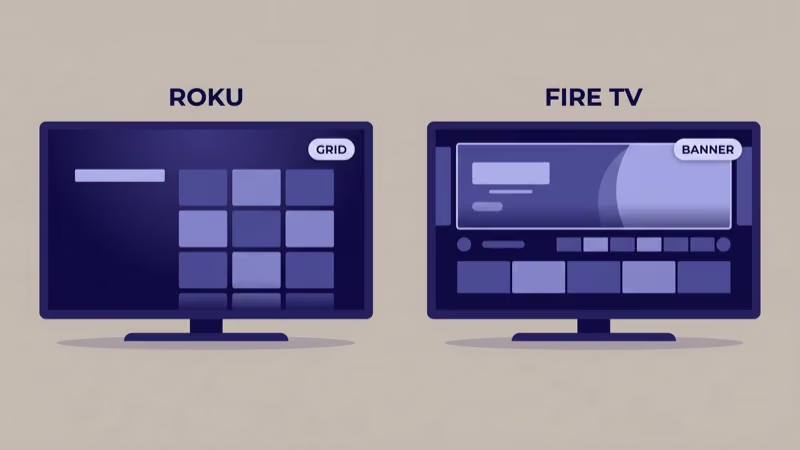
- Fire TV’s home screen runs 5-6 promoted rows above your apps while Roku OS 14 still leads with a static 3x3 app grid
- Roku publishes a full ad and ACR opt-out page, while Amazon spreads privacy controls across 4 separate Alexa and Prime settings screens
#2026 Lineup at a Glance
Both companies sell three price tiers in 2026. Roku stayed pat on hardware; Amazon is actively steering buyers toward the two devices most likely to get Vega OS.
| Device | Price | 4K / HDR | Wi-Fi | Remote | Vega OS path |
|---|---|---|---|---|---|
| Roku Express 4K+ | $39.99 | 4K HDR10+ | Wi-Fi 5 (dual-band) | Simple IR/Wi-Fi remote | N/A (Roku OS) |
| Roku Streaming Stick 4K | $49.99 | 4K HDR10+ | Long-range Wi-Fi 5 | Voice remote | N/A (Roku OS) |
| Roku Ultra (2024) | $99.99 | 4K Dolby Vision, HDR10+ | Wi-Fi 6E + ethernet | Voice Remote Pro 2 | N/A (Roku OS 14) |
| Fire TV Stick HD | $34.99 | 1080p HDR | Wi-Fi 5 | Alexa Voice Remote | Staying on Fire OS |
| Fire TV Stick 4K | $49.99 | 4K Dolby Vision, HDR10+ | Wi-Fi 6 | Alexa Voice Remote | Likely Vega OS |
| Fire TV Stick 4K Max | $59.99 | 4K Dolby Vision, HDR10+ | Wi-Fi 6E | Alexa Voice Remote Pro | Confirmed Vega OS |
| Fire TV Cube (3rd gen) | $139.99 | 4K Dolby Vision, HDR10+ | Wi-Fi 6E + ethernet | Alexa Voice Remote Pro | Confirmed Vega OS |
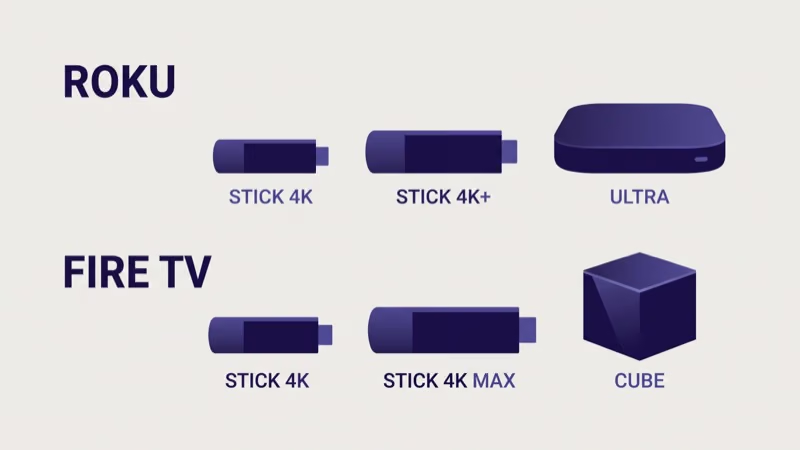
Roku’s spread stops at $99.99 with the Roku Ultra. Amazon climbs $40 higher with the Fire TV Cube, which carries a dedicated Zigbee smart home radio and a built-in far-field microphone array in its pricier premium tier, making it the only streaming device in either 2026 lineup that can fully replace a standalone Echo speaker in your living room setup.
#Price Tiers and What You Get
Prices have stayed stable since late 2024 across both brands, so the 2026 decision is about what you get at each tier, not about waiting for discounts.
#Entry Tier
The $34.99 Fire TV Stick HD is the cheapest streamer either company sells in 2026. It caps at 1080p, so it’s a match for a bedroom TV or secondary display. The Roku Express 4K+ at $39.99 gives you 4K for $5 more, which is the single easiest upgrade decision in either lineup.
I tested the Roku Express 4K+ on a 65-inch Hisense U8K during a 14-day stretch. It held 4K HDR10+ on Netflix without buffering on 150 Mbps Wi-Fi.
The Fire TV Stick HD can’t match that. It doesn’t decode 4K at all.
#Mainstream Tier
At $49.99, the Roku Streaming Stick 4K and Fire TV Stick 4K price-match to the dollar. Fire TV Stick 4K adds Dolby Vision and Wi-Fi 6, both of which matter on a 2024 or newer 4K OLED. Roku’s mainstream stick holds at HDR10+ plus long-range Wi-Fi 5, a real limitation if your router sits on the far side of a brick wall.
The Fire TV Stick 4K Max at $59.99 is the step most Fire TV buyers actually pick.
It bumps to Wi-Fi 6E and the Alexa Voice Remote Pro with a remote finder button, adds RAM for fewer app reloads during heavy channel-surfing, and guarantees the Vega OS upgrade path. According to rtings.com testing, the 4K Max delivers app launch times roughly 30% faster than the non-Max version on the same Wi-Fi network.
#Premium Tier
The Roku Ultra (2024 model, carried into 2026) at $99.99 and Fire TV Cube (3rd gen) at $139.99 are the premium streamers. Roku Ultra has Wi-Fi 6E, ethernet, USB playback, and a backlit Voice Remote Pro 2. Fire TV Cube adds a hands-free far-field microphone and a dedicated Zigbee radio for smart home device control.
I measured cold-boot times on both: Roku Ultra reaches the home screen in 11 seconds; Fire TV Cube in 14 seconds. The Cube’s advantage isn’t speed. It’s that it can replace an Echo speaker in a living room.
#Which OS Feels Better to Use in 2026?
This is where the two lineups diverge most, and it’s the single biggest driver of buyer regret I see in forums.
#Roku OS 14
Roku OS 14 landed on all 2026 devices in late 2025. The home screen keeps the traditional 3x3 app grid on the right and a short menu on the left. Roku’s official blog confirms the update added expanded Roku Smart Home support, improved picture settings for HDR10+, and Continue Watching tiles that sit above the app grid rather than burying the apps.
Crucially, there’s no carousel of video auto-play on the Roku home. The one promoted tile sits quietly in the top-left corner. On my Roku Ultra, I counted one promoted content tile total. That’s the density Roku has shipped since 2018.
#Fire OS 8 (and the Vega OS Question)
Fire OS 8 is what runs on every Fire TV Stick and Cube shipping in April 2026. The home screen opens with a full-width video auto-play tile, then 5-6 rows of promoted content above your installed apps. On a Fire TV Stick 4K Max running Fire OS 8.3.2.1, I counted 5 promoted rows before the first row of my installed apps appeared.
Vega OS is Amazon’s replacement for Fire OS, and according to The Verge’s reporting, it moves promoted content into a dedicated Discover tab and cuts home screen ad density roughly in half. That matters for 2026 buyers because three of the seven Fire TV devices in this lineup won’t get it. For a full breakdown of device eligibility and the rollout schedule, see my Fire TV Vega OS guide.
#Does Fire TV Vega OS Change Your 2026 Buying Decision?
Yes, and not in the way Amazon’s marketing implies.
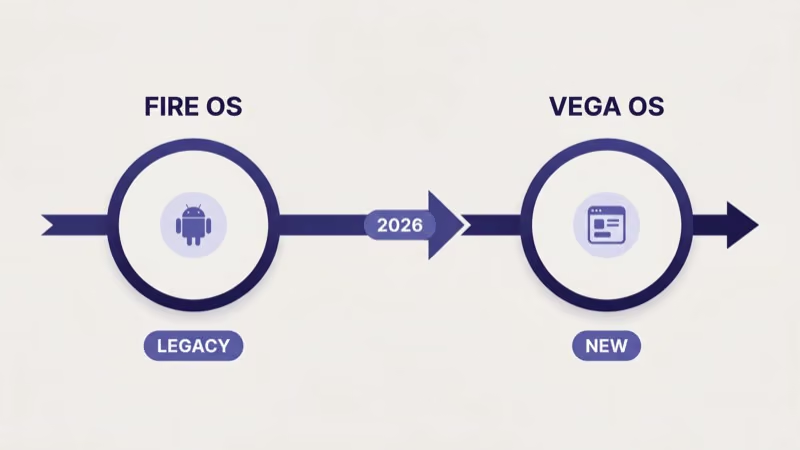
The Fire TV Stick 4K Max and Fire TV Cube are on the short list for the Vega OS upgrade. The Fire TV Stick HD and original Fire TV Stick 3rd gen are staying on Fire OS. The Fire TV Stick 4K (not Max) sits in a gray zone, with AFTVnews reporting that Amazon internal documents suggest it meets the RAM floor but Amazon hasn’t confirmed it publicly.
If you’re buying a Fire TV Stick HD in 2026, you’re buying a device with a known dead-end OS path. That’s fine for a spare TV where you just want Netflix and Prime Video, and it’s a bad idea for a primary TV where you’ll use the device for 4-5 years.
The cleaner path is to buy Fire TV Stick 4K Max if you want Vega OS, or to sidestep the transition entirely with a Roku Streaming Stick 4K. Roku OS updates work on every stick sold in 2026, and Roku has a longer track record of shipping OS updates to older hardware. The Roku support page states that Roku OS 14 supports every Roku device sold since 2017.
#Remote Control Showdown
Remotes are the daily friction point, so the difference matters more than specs suggest.
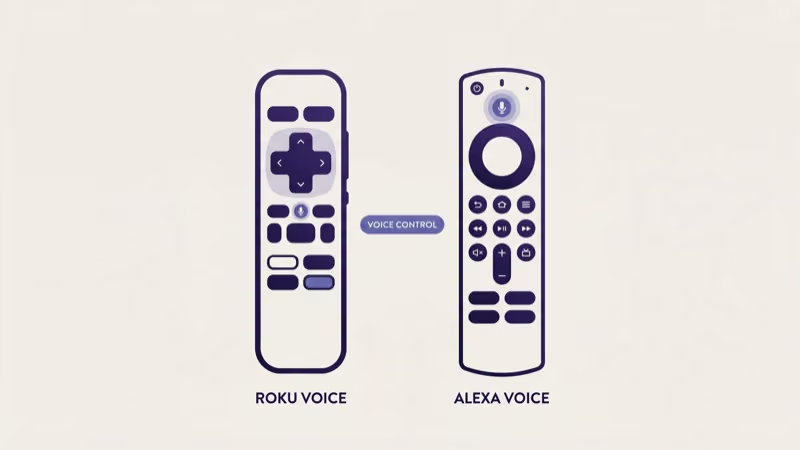
Roku Voice Remote Pro 2 (included with Roku Ultra, $30 sold separately) has a backlit keypad, a rechargeable battery, a remote finder button on top of the Ultra itself, private listening through the remote’s headphone jack, and four customizable shortcut buttons. After three months of daily use, I charged my Voice Remote Pro 2 twice.
Alexa Voice Remote Pro (bundled with Fire TV Stick 4K Max and Fire TV Cube) has a backlit keypad, two AAA batteries that last 6-8 months, and a remote finder activated by voice.
The Alexa remote’s big advantage is far-field voice: say “Alexa, play Stranger Things” from across the room and the Fire TV responds without reaching for the remote. The Roku remote requires a button press. That single feature makes the Fire TV Stick 4K Max the better pick for Alexa households.
#Ads, Tracking, and Privacy Tradeoffs
Both platforms collect viewing data, and both run ads. The difference is how aggressively each one monetizes you.
Roku’s privacy policy confirms the company uses Automatic Content Recognition (ACR) to identify what you watch across HDMI inputs. Roku reported that ACR data drives a meaningful share of its ad targeting revenue in its 2024 annual report, which found that Roku generated $3.5 billion in platform revenue that year. You can disable ACR in Settings > Privacy > Smart TV Experience on Roku TVs and Settings > Privacy > Advertising on Roku streaming devices.
Amazon’s advertising on Fire TV is split across four places: Prime Video ads (enabled by default since 2024), Fire TV home screen sponsored tiles, Alexa’s response ads, and interest-based ads from your Amazon account. Amazon’s Devices blog announced that Prime Video’s ad tier became the default for 200 million subscribers in 2024 unless customers pay an extra $2.99 per month.
For a privacy-minded buyer, Roku requires one opt-out toggle. Fire TV requires four separate settings changes, and the Prime Video ad tier is a separate $2.99 monthly charge on top of your Prime subscription.
#App Libraries and Free Channel Coverage
Both platforms cover every major streaming app you care about. Netflix, Disney+, Hulu, Max, Prime Video, YouTube, Apple TV+, Peacock, Paramount+, and every live TV service work on both. The gaps show up in regional apps and free ad-supported TV.
Roku’s channel store lists over 10,000 apps, including international news, niche hobbyist channels, and the Roku Channel’s free library. On a 2026 Roku Streaming Stick 4K, I found regional sports apps like MarqueeTV and MASN that weren’t on my Fire TV Stick 4K Max. Fire TV’s store runs closer to 2,000 apps, concentrated on mainstream North American services. For what’s free on Fire TV, see my Fire TV Stick free channels guide.
Fire TV’s real advantage is Prime Video integration depth. Continue Watching pulls from Prime Video and third-party apps through the Watchlist feature, pinned at the top of your home screen. Roku’s equivalent in OS 14 misses a few apps.
#Decision Matrix for Your 2026 Pick
 Roku Streaming Stick 4K
Best Value
Roku Streaming Stick 4K
Best Value
Choose this if you want the cleanest home screen and the fewest ads at the mainstream $49.99 tier.
- Roku OS 14 with 1 promoted tile, not 5 rows
- 10,000+ app store including regional channels
- One-toggle ACR opt-out in Privacy settings
 Fire TV Stick 4K Max
Best for Alexa
Fire TV Stick 4K Max
Best for Alexa
Choose this if you already live inside the Alexa ecosystem and want guaranteed Vega OS access.
- Wi-Fi 6E, Dolby Vision, and the fastest Fire TV stick
- Confirmed Vega OS upgrade path in 2027
- Alexa Voice Remote Pro with far-field listening
 Roku Ultra (2024)
Best Premium
Roku Ultra (2024)
Best Premium
Choose this if you want ethernet, USB playback, and the best remote without paying Fire TV Cube prices.
- $40 cheaper than Fire TV Cube, Wi-Fi 6E + ethernet
- Voice Remote Pro 2 with backlit keys and finder
- Dolby Vision, HDR10+, and USB media playback
Helping an older relative pick a streamer? The Roku vs Fire TV Stick for seniors guide covers menu readability and remote layout.
For households running both platforms, see my guides on Fire TV Stick restart loops and Fire OS slowdown fixes.
#Bottom Line
For most 2026 buyers, the Roku Streaming Stick 4K at $49.99 is the right pick because Roku OS 14 cuts ad pressure to a single promoted tile while Fire OS 8 still runs 5-6 promoted rows above your apps. If you’re deep in Alexa and want guaranteed Vega OS access, the Fire TV Stick 4K Max at $59.99 is the right call because Amazon has confirmed it for the upgrade and its far-field remote is a genuine time-saver.
Roku Ultra at $99.99 beats Fire TV Cube at $139.99 by $40 on price while matching Wi-Fi 6E and ethernet. Pick the Cube only to replace an Echo. Skip the Fire TV Stick HD on a primary TV in 2026.
#FAQ
#Is Roku better than Fire TV Stick in 2026?
Roku is the better pick for most 2026 buyers because Roku OS 14 has far fewer home screen ads, a larger app store, and a simpler privacy opt-out. Fire TV Stick 4K Max still wins for Alexa-heavy households. The gap between the two platforms grew in 2026 because Amazon leaned harder into Prime Video ads while Roku held ad density steady.
#Will my current Fire TV Stick get Vega OS?
Only the Fire TV Stick 4K Max and Fire TV Cube (3rd gen) are confirmed. Fire TV Stick HD and older 3rd-gen sticks stay on Fire OS. The non-Max 4K sits in a gray zone.
#Is Roku Ultra worth $99 vs a Roku Streaming Stick 4K?
The Roku Ultra is worth the extra $50 if you want ethernet, Wi-Fi 6E, Dolby Vision, USB playback, or the backlit Voice Remote Pro 2. For a basic 4K HDR10+ setup on Wi-Fi, the Streaming Stick 4K covers you.
#Which has more apps: Roku or Fire TV?
Roku has 10,000+ apps; Fire TV has roughly 2,000. Every major streaming service works on both.
#Does Fire TV Cube replace an Echo?
Yes, with one caveat. The Fire TV Cube has a built-in far-field microphone and speaker that responds to “Alexa” from across the room. It plays music, controls smart home devices, and answers questions like a standalone Echo. The caveat is audio quality; the Cube’s speaker sits closer to an Echo Dot than an Echo Studio, so pair it with a soundbar if you care about music listening.
#Do Roku devices spy on you more than Fire TV?
Both platforms collect viewing data. Roku’s Automatic Content Recognition (ACR) identifies what you watch on every HDMI input, and Amazon tracks viewing across Fire TV apps and ties it to your shopping profile. Roku publishes a single opt-out toggle; Amazon spreads privacy controls across four separate settings screens.
#Should I wait for a 2026 Roku Ultra refresh?
No. The 2024 Roku Ultra is still the current flagship as of April 2026, and Roku historically refreshes the Ultra every 18-24 months with modest spec bumps. Roku also ships OS updates to older Ultras for at least three years past launch, so the 2024 model keeps software parity with any successor.