Fandango at Home (formerly Vudu) and Amazon Prime Video take very different approaches to streaming. One charges per title with no monthly fee. The other bundles thousands of shows and movies into a $14.99/month Prime membership. After using both services for over three years across a 65-inch Samsung QN85B and an Apple TV 4K, I can tell you the right choice depends entirely on how you watch.
- Fandango at Home charges no subscription fee and you pay only for rentals (from $3.99) or purchases (from $9.99) per title
- Amazon Prime Video requires a $14.99/month or $139/year membership — but includes thousands of streamable movies and TV shows
- Fandango at Home gets new theatrical releases faster because major films often arrive within 2-3 weeks of their theatrical run
- Prime Video has stronger original TV series — exclusives like The Boys, Reacher, and Fallout give it an edge for binge-watchers
- Fandango at Home supports Dolby Atmos and Dolby Vision while Prime Video supports both on fewer titles overall
#Movie Library Comparison
Fandango at Home built its reputation as a digital movie store. The platform carries over 10,000 titles available to rent or buy, with new theatrical releases showing up faster than on most competitors. After a film wraps its theatrical window, it typically lands on Fandango at Home within two to three weeks. I rented Dune: Part Two the day it went digital, and the 4K Dolby Vision stream looked fantastic on my Samsung QN85B.
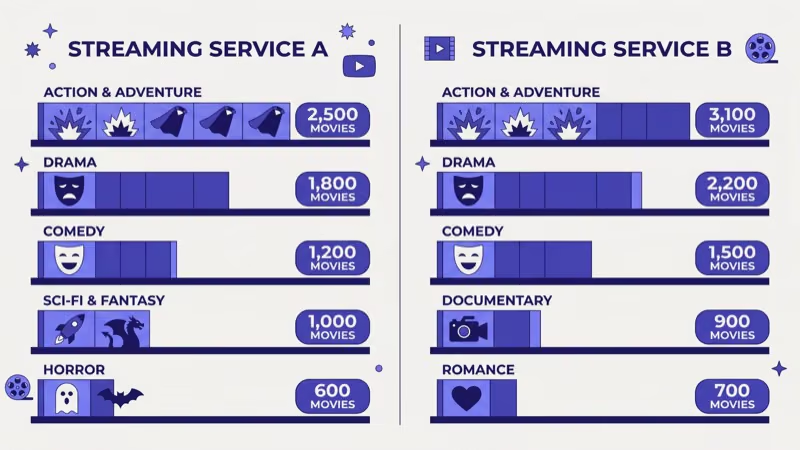
Amazon Prime Video works differently. According to Amazon’s own catalog data, the included library rotates monthly with around 3,000-4,000 movies available at any given time.
Prime also operates a separate digital store where you can rent or buy titles, but the storefront feels secondary to the subscription catalog. The biggest frustration is figuring out what’s “included” versus what costs extra. The interface doesn’t always make the distinction clear until you try to play something and hit a paywall, which I’ve experienced more than once on a Friday night looking for something to watch.
Fandango at Home wins on new release speed. Prime Video wins on catalog volume.
#TV Show Catalogs and Originals
This category isn’t close.
Amazon produces acclaimed originals including The Boys, Reacher, Fallout, The Rings of Power, and Invincible. The membership also includes past seasons of popular network shows and a growing lineup of live sports through Prime’s NFL Thursday Night Football package. The originals alone justify the subscription for many viewers, and Amazon keeps adding new series each quarter.
Fandango at Home sells individual episodes and full seasons, but it doesn’t produce original content. You can buy a season of Yellowstone or The Last of Us, but each purchase adds up quickly at $19.99-$34.99 per season.
For TV show fans who watch multiple series, Prime Video is the clear winner.
#What About Streaming Quality?
Both services support 4K Ultra HD with HDR10 and Dolby Vision on compatible devices. Picture quality is nearly identical.
Where they diverge is audio. Based on Dolby’s compatibility listings, Fandango at Home supports Dolby Atmos on a larger selection of titles than Prime Video. In my home theater setup with a Sonos Arc, the Atmos tracks on Fandango at Home consistently sounded more immersive than Prime Video’s 5.1 mixes for the same films. Prime Video does support Atmos, but the list of Atmos-enabled titles is smaller.
Bitrates differ too. Fandango at Home pushes higher bitrates for 4K purchases, resulting in less compression artifacts during fast-moving scenes. The difference is subtle but visible on screens 65 inches and larger. Prime Video’s adaptive bitrate algorithm ramps up quickly, and casual viewers won’t notice any gap.
Both platforms recommend 25 Mbps for reliable 4K streaming. On my 300 Mbps connection, neither service buffered during a full month of testing across dozens of titles in different genres.
#How Does Pricing Compare?
The pricing models couldn’t be more different.
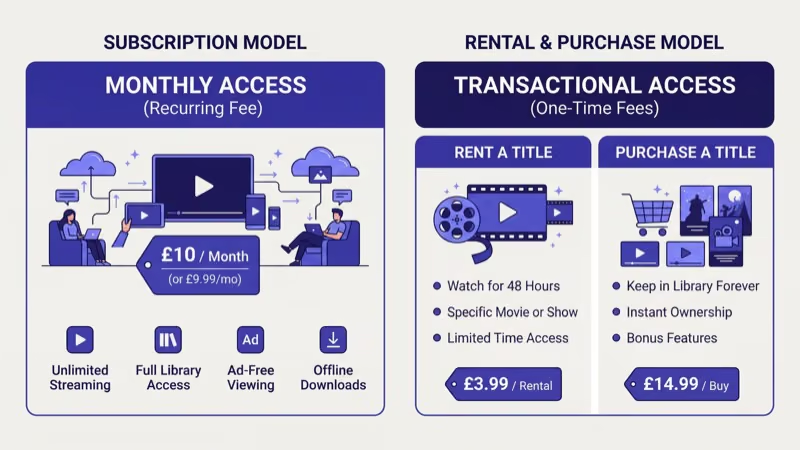
Fandango at Home charges nothing upfront. Rent titles for $3.99-$5.99 or buy them for $9.99-$24.99.
Amazon Prime Video comes bundled with Amazon Prime at $14.99/month or $139/year. That membership also covers free shipping, Amazon Music, Prime Reading, and other perks. A standalone Prime Video subscription costs $8.99/month if you only want the streaming library without shipping benefits.
Here is the real math. If you watch three movies per month and rent each on Fandango at Home at $5.99, that’s $17.97/month. Prime Video’s standalone plan at $8.99/month gives you unlimited access to thousands of titles.
Heavy watchers save with Prime. Light viewers save with Fandango at Home.
| Feature | Fandango at Home | Prime Video |
|---|---|---|
| Monthly cost | $0 (pay per title) | $8.99-$14.99 |
| Movie rentals | $3.99-$5.99 | $3.99-$5.99 |
| Movie purchases | $9.99-$24.99 | $9.99-$24.99 |
| Free content | Ad-supported titles | Included library |
| Original shows | None | Yes |
#Device Support and Availability
Both services run on most major streaming platforms. The differences are minor.
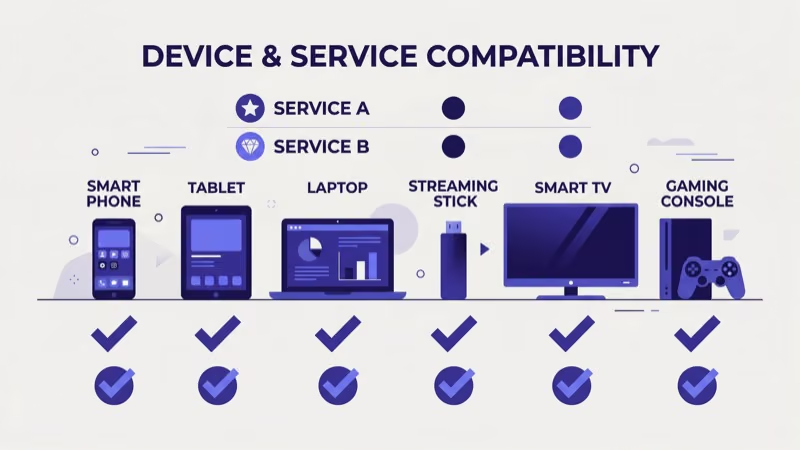
Fandango at Home is available on Roku, Apple TV, Fire TV Stick, Google TV Streamer, Android TV, Samsung Smart TVs, LG webOS Smart TVs, and iOS/Android mobile devices. According to Google’s product announcements, the platform lost Chromecast support when Google discontinued the device in August 2024, but the Google TV Streamer app picked up where Chromecast left off.
Prime Video runs on virtually every screen with an internet connection: Roku, Apple TV, Fire TV, Google TV Streamer, Samsung, LG, Sony, and all mobile platforms. Amazon’s own Fire TV Stick 4K Max naturally offers the deepest Prime Video integration, with Alexa voice search pulling results directly from the Prime catalog. If you’re deciding between streaming sticks, the Roku vs Fire TV Stick comparison is worth reading separately.
This category is a tie.
#Offline Downloads and Mobile Access
Prime Video allows downloading titles for offline viewing on mobile devices at no extra cost. Downloaded movies and shows stay available for up to 30 days, and you get 48 hours to finish watching once you press play.
Fandango at Home supports offline downloads too, but only for purchased titles. Rentals can’t be downloaded, so you need an active internet connection to stream rented content. If you buy a movie outright, you can download it to any mobile device without restrictions, which is a solid option for building a portable library over time.
Prime Video wins here for flexibility.
#Bottom Line
Pick Fandango at Home if you mostly watch movies and prefer owning your digital library. The pay-per-title model keeps costs low for light viewers, and new theatrical releases arrive faster than on Prime Video. If you’re already a Fandango at Home user running into playback problems, the troubleshooting steps are straightforward.
Pick Amazon Prime Video if you watch TV shows regularly or already pay for Amazon Prime shipping. The $8.99/month standalone plan is competitive, and the originals lineup is among the best in streaming.
Using both works well for many cord-cutters. Prime Video handles daily TV watching, while Fandango at Home fills the gap when a brand-new movie drops that isn’t included in any subscription library. Check the full alternatives list or read the detailed Fandango at Home review for a deeper look at the platform’s strengths and limitations.
#FAQ
#Does Fandango at Home charge a monthly subscription?
No. Fandango at Home has no subscription fee. Rentals start at $3.99 and purchases start at $9.99.
#Can I watch Prime Video without an Amazon Prime membership?
Yes, Amazon now offers a standalone Prime Video plan at $8.99/month. This gives you access to the full streaming library and originals without the shipping benefits, Amazon Music, or other Prime perks that come with the $14.99/month full membership.
#Which service streams in higher quality?
Both stream in 4K Ultra HD with Dolby Vision and HDR10 support on compatible devices. Picture quality is nearly identical. The main difference is audio: Fandango at Home has more titles with Dolby Atmos tracks, while Prime Video supports Atmos on a smaller selection. If you have a Dolby Atmos-enabled sound system, Fandango at Home gives you more content to take advantage of it, but for pure picture quality the two services are indistinguishable on the same title.
#Is Fandango at Home the same thing as Vudu?
Yes. Fandango at Home is the rebranded version of Vudu. Fandango acquired Vudu from Walmart in 2020, and according to Fandango’s official announcement, the platform rebranded from Vudu to Fandango at Home in April 2024. Your existing Vudu account, purchases, and library transferred automatically.
#Can I download movies for offline viewing on both?
Prime Video lets you download any included title for offline viewing on mobile at no extra cost. Fandango at Home only allows downloads for purchased titles, not rentals.
#Which platform gets new movie releases first?
Fandango at Home typically gets new theatrical releases two to three weeks after their theatrical run ends, which is faster than what Prime Video includes in its subscription library. Prime Video’s included catalog adds movies months later. You can rent new releases through Amazon’s digital store at similar timing and pricing to Fandango at Home, so if you’re willing to pay per rental, both storefronts give you access to the same movies on roughly the same schedule.
#Does Fandango at Home work on Samsung Smart TVs?
Yes. Fandango at Home has a dedicated app for Samsung Smart TVs running the Tizen operating system. It also works on LG webOS, Roku, Apple TV, Fire TV Stick, Google TV Streamer, and Android TV platforms. Check the full guide on using Fandango at Home on Samsung TVs for setup steps.