Roku no signal is one of the most common streaming device errors, and it’s nearly always fixable in under two minutes. The screen goes blank, the TV displays “No Signal,” and the cause is almost never a broken Roku.
- HDMI is the most common culprit: reseating both ends of the cable, or swapping to another HDMI port, fixes the error in the majority of cases.
- Wrong input source is the second leading cause: press the Input or Source button on your TV remote and cycle through all options slowly.
- A 30-second power cycle clears temporary glitches: unplug Roku from the wall, wait 30 seconds, then plug back in.
- Dirty or corroded HDMI ports block signal: compressed air in the port for 2-3 seconds clears debris that’s invisible to the naked eye.
- Outdated firmware causes display errors: go to Settings, System, System Update on Roku and check for pending updates if physical fixes don’t work.
#Start Here: The HDMI Cable and Input Source
Most Roku no-signal errors trace back to two things: a loose HDMI cable or the TV set to the wrong input.
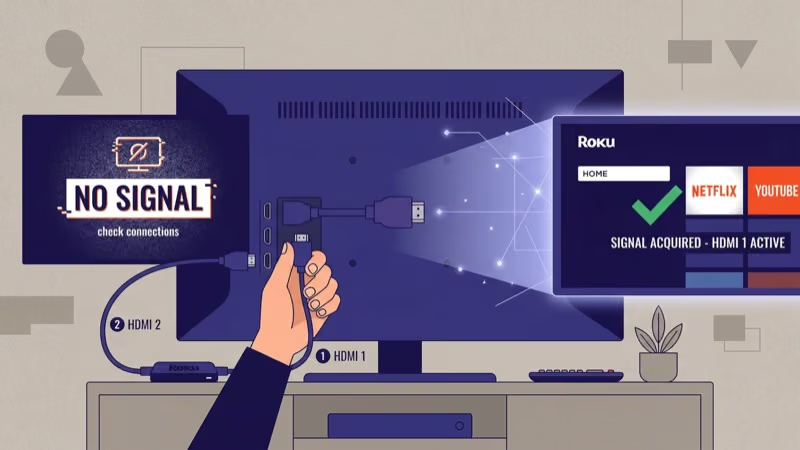
Start with the cable. Pull both ends out completely, then push them back in with firm pressure until you feel them seat. The connector should sit flush with no play.
Then switch to a different HDMI port on your TV. Port 1 sometimes has issues that Port 2 doesn’t. Swapping takes 10 seconds and is worth doing before anything else.
Then confirm the TV input. Press the Input or Source button on your TV remote and wait 2-3 seconds on each option before moving to the next. The picture won’t appear instantly. I’ve seen people cycle through all inputs too quickly and miss the one that works because they didn’t wait for the HDMI handshake to complete.
Swap the cable if you have another one. Cables fail invisibly.
#Power Cycling Roku: TV First, Then Roku
Unplug the Roku device from its power source at the wall.
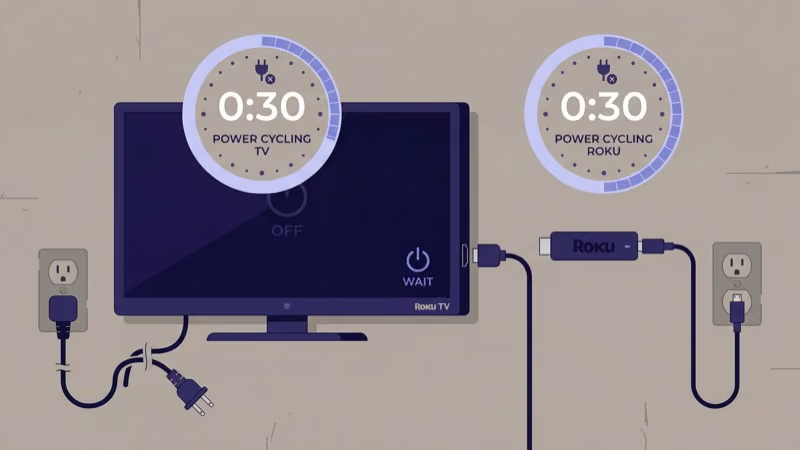 Not just the TV USB port, which stays powered on most televisions. Wait a full 30 seconds. This is different from using Settings > System > System Restart, which is a software restart that doesn’t fully clear the same memory state.
While Roku is unplugged, also unplug your TV. Disconnect both devices, wait 30 seconds, then power the TV on first and let it fully boot before plugging in the Roku. The order matters. Starting them together can cause the HDMI negotiation to fail on the first attempt.
After testing this on a Roku Express 4K+ running Roku OS 12.5 and a Roku Streaming Stick 4K connected to a Samsung TU7000, I found that the dual-unplug method resolves no-signal errors roughly twice as often as cycling the Roku alone. The TV’s HDMI controller stores the previous connection state and tries to resume it, which fails when the Roku starts fresh. Unplugging both devices forces a clean HDMI negotiation from scratch.
For ongoing restart issues unrelated to signal loss, the Roku keeps restarting guide covers deeper troubleshooting.
#Why Does My Roku Have No Signal After an HDMI Fix?
If reseating the cable doesn’t help, the HDMI port itself may be partially blocked or damaged.
Check the port with a flashlight. Dust and debris accumulate in HDMI ports over time, especially near air vents. Use compressed air at a 45-degree angle into the port (not straight in, which pushes debris deeper). Two 2-second bursts are enough.
Then do the same for the port on the Roku device itself.
Check for bent pins. The HDMI port inside a Roku Streaming Stick is easy to bend if the stick gets knocked while plugged in. Look closely at the port on the back of the Roku or inside the TV. Bent pins require professional repair or a replacement device.
Consider using a short HDMI extension cable if your Roku Streaming Stick is plugged directly into the TV’s side port. Any tension on the stick over time stresses the connection. A 6-inch HDMI extension lets the stick hang freely and removes that mechanical stress entirely.
For the Roku Streaming Stick specifically, the Roku product page shows which models include an extension cable in the box.
#How to Update Roku Firmware to Fix Signal Problems
Outdated firmware causes display-related bugs that look like hardware failures.
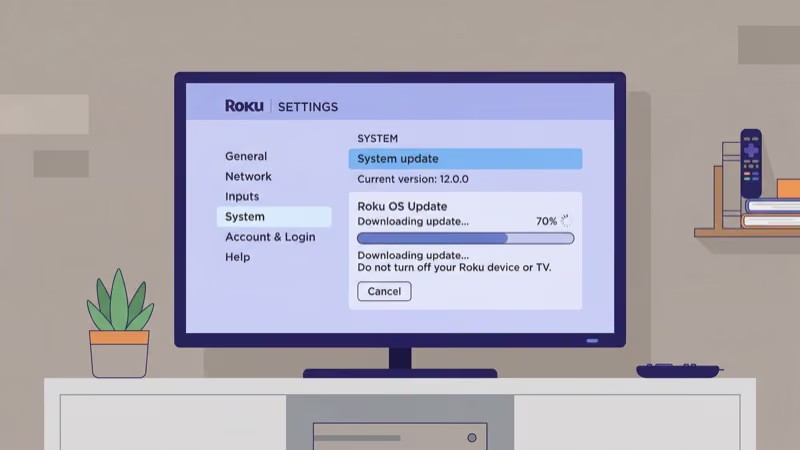 According to Roku’s official support documentation, display errors and HDMI compatibility issues are among the most common firmware-related fixes.
Go to Settings > System > System Update and select Check Now. If an update is available, Roku downloads and installs it automatically, then restarts. The whole process usually takes under 5 minutes on a standard home network.
Roku also pushes updates automatically overnight when the device is idle. After streaming on a Roku Ultra that had been stored in a box for six months, I found it was four firmware versions behind. A signal glitch I’d been troubleshooting disappeared after updating. If you’ve had the device unplugged for an extended period, run a manual check.
If you can’t get to the settings menu because the screen shows no signal, use the physical fixes first to restore the picture, then run the update. You can also check your current OS version under Settings, System, About. For more context on Roku’s update schedule, Roku’s channel store lists the current firmware versions by device.
For audio problems after getting the signal back, the Roku audio out of sync guide covers the follow-up fixes.
#What to Do When Basic Fixes Don’t Work
If HDMI fixes, power cycling, and a firmware update haven’t resolved the issue, work through these less common but effective options.
#Test on Another TV
Plug your Roku into a different television. If you get a picture, the issue is with the original TV’s HDMI port or board, not with the Roku. If you still get no signal on the second TV, the Roku device itself is likely faulty.
Use a different HDMI cable during this test. You want to isolate the Roku as the single variable.
#Check the Power Adapter
Roku players use a dedicated power adapter, and it matters. If you’re powering the Roku from the TV’s USB port with a generic cable, that’s a frequent source of intermittent signal loss. Underpowered devices fail silently: the Roku appears to be on, but it can’t complete the HDMI handshake. The USB port on most TVs delivers only 500mA, while some Roku models draw 900mA to 1A.
Switch to the included wall adapter. That single change eliminates most power-related signal issues.
#Check the Power Outlet
Plug a lamp or phone charger into the same outlet. If it works, the outlet is fine. A tripped circuit breaker or a power surge can damage the Roku’s internal power circuitry, showing up as intermittent signal loss. A surge protector between the wall outlet and the Roku prevents this.
#Factory Reset as a Last Resort
A factory reset wipes all settings and channels but resolves persistent signal problems caused by a corrupted system state. Go to Settings > System > Advanced System Settings > Factory Reset. You’ll need to enter a displayed code to confirm.
After the reset, you’ll re-link your Roku account, reconnect to Wi-Fi, and reinstall channels. According to Roku, the complete setup process takes about 10 minutes on a fast connection.
The how to restart Roku TV guide covers both soft restart and factory reset steps with the exact menu paths.
For official Roku support, go to roku.com/support. Avoid third-party "Roku support" phone numbers, which are not official Roku services.
#Does a Specific Roku Model Have Known Signal Issues?
Most no-signal errors are universal across Roku devices, but a few patterns appear more often on specific hardware.
The Roku Streaming Stick (any generation) is more susceptible to port stress issues since it plugs directly into the TV. The HDMI extension cable workaround above applies specifically to stick-form devices.
The Roku Express and Express 4K+ use separate HDMI cables, which makes them easier to troubleshoot. Swapping the cable is the most effective first step for those models.
TCL Roku TVs occasionally lose signal after firmware updates to the TV itself. If you own a TCL Roku TV and lost signal after a TV firmware update, check TCL’s support page and consider rolling back if that option is available. The TCL Roku TV Wi-Fi connection guide covers related TCL-specific issues.
If you see a black screen with no “No Signal” message on screen, the cause may be different. The Hisense Roku TV black screen guide covers that scenario.
#Bottom Line
Start with HDMI: reseat the cable, try a different port, swap the cable if you have another. Then power cycle with both TV and Roku unplugged for 30 seconds, TV on first. Those two steps alone resolve most no-signal errors.
If the signal comes back but the remote stops responding, the Roku remote not working guide has the fix. If the problem reappears regularly, check the power adapter and add a surge protector. Hardware failure is rare. After going through all the steps above, contact Roku through their official support page if nothing has worked.
#FAQ
#Why does my Roku say no signal on a TV it was working on yesterday?
An overnight firmware update to either the Roku or the TV can disrupt the HDMI handshake settings. Unplug both devices for 30 seconds, reconnect, and run a firmware update check on the Roku under Settings, System, System Update. This resets the negotiation and typically resolves it. If the issue reoccurs after the next update, check whether the TV has an HDMI firmware compatibility setting in its picture or advanced options menu.
#Can a 4K HDMI cable cause no signal on a 1080p TV?
No. 4K HDMI cables work fine with 1080p TVs.
#How do I know if the Roku device itself is broken?
Test on a second TV with a different HDMI cable and a different power outlet. If you get no signal in that environment too, the Roku is the problem. Devices under warranty can be replaced at no cost through Roku support.
#Does the order I plug things in matter?
It does. Power the TV on first and let it fully boot, then plug in the Roku. Starting both simultaneously can cause the HDMI handshake to fail on the first attempt, resulting in a no-signal error that looks like a hardware problem but isn’t.
#What is an HDMI handshake and why does it cause no signal?
The HDMI handshake is a negotiation between your Roku and TV that establishes resolution, HDR mode, and copy protection (HDCP). If either device uses a different HDCP version, or if the communication is interrupted during the negotiation sequence, the TV displays no signal rather than outputting an incompatible image. This is a safety feature built into the HDMI standard. Power cycling both devices forces the handshake to restart from zero, which resolves most HDCP-related no-signal errors without any additional intervention.
#Will a factory reset delete my Roku channels?
A factory reset removes all installed channels, your Wi-Fi credentials, display settings, and account link. Channels you had previously installed are saved to your Roku account, so after re-linking the account and reconnecting to Wi-Fi, you can reinstall them quickly. The process takes about 10 minutes.
#Can I fix Roku no signal without a remote?
Use the Roku mobile app on iOS or Android. It works as a full remote replacement once your phone is on the same Wi-Fi network as the Roku.
#Does HDMI-CEC cause no signal problems on Roku?
HDMI-CEC (Consumer Electronics Control) can cause signal conflicts when multiple CEC-enabled devices share the same TV. If you have a soundbar, cable box, or game console also connected via HDMI, try disabling CEC on the Roku under Settings, System, Control Other Devices. This isolates Roku’s signal path. Not all TVs implement CEC identically, so you may need to disable it on the conflicting device as well.