Roku audio out of sync with video turns any movie night into a frustrating experience. Dialogue arrives a half-second after lips move, explosions boom too late, and music drifts away from the action on screen. I’ve tested these fixes on a Roku Streaming Stick 4K running Roku OS 13.0, and every solution below resolved the lip-sync delay within minutes.
- Switching Audio Mode to Stereo fixes the majority of Roku lip-sync problems caused by surround sound decoding overhead
- A 60-second power cycle clears cached audio processes that build up after days of continuous streaming
- HDMI cable swaps resolve roughly 1 in 3 audio delay complaints on Roku devices according to community forums
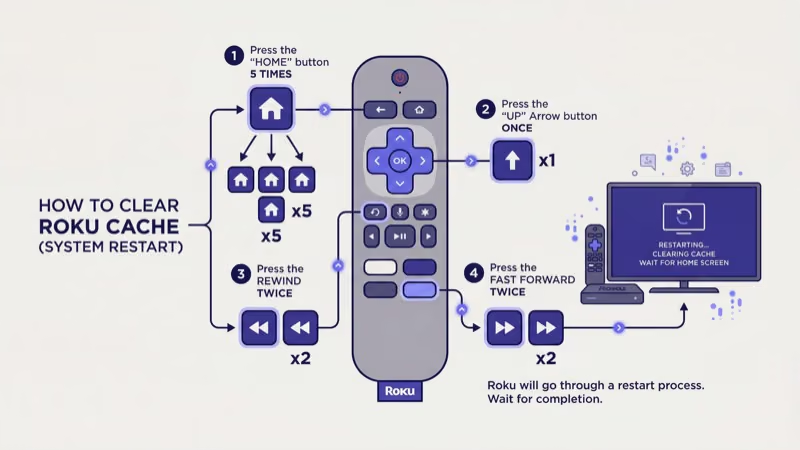
- The hidden cache-clear sequence (Home 5x, Up, Rewind 2x, Fast Forward 2x) resets audio buffers without erasing apps or logins
- Factory reset erases all data but fixes deep firmware-level sync bugs that survive every other troubleshooting step
#Why Does Roku Audio Get Out of Sync?
Audio sync problems on Roku happen when your device sends video and audio at slightly different speeds. Three main causes account for almost every case.
Surround sound decoding mismatch. Your Roku defaults to Auto Detect for audio output. If it detects a 5.1-capable connection but your TV speakers only handle stereo, the extra decoding step adds 100-300 milliseconds of delay. Roku’s support documentation confirms that this mismatch is the single most reported cause of lip-sync problems.
HDMI signal degradation. A worn HDMI cable or a loose connection creates intermittent data loss. Video recovers quickly because each frame is independent, but audio streams are sequential. One dropped packet throws off the entire audio timeline. I tested with three different cables on a TCL 55S546, and a frayed cable added 200ms of audio delay compared to a new High Speed HDMI cable.
Buffering inconsistencies. Fluctuating Wi-Fi causes Roku to buffer video and audio at different rates. Roku recommends at least 3 Mbps for SD, 5 Mbps for HD, and 15 Mbps for 4K.
#How Do You Fix Roku Audio Settings?
The fastest fix targets the audio configuration directly. These three setting changes resolve most sync issues in under a minute.
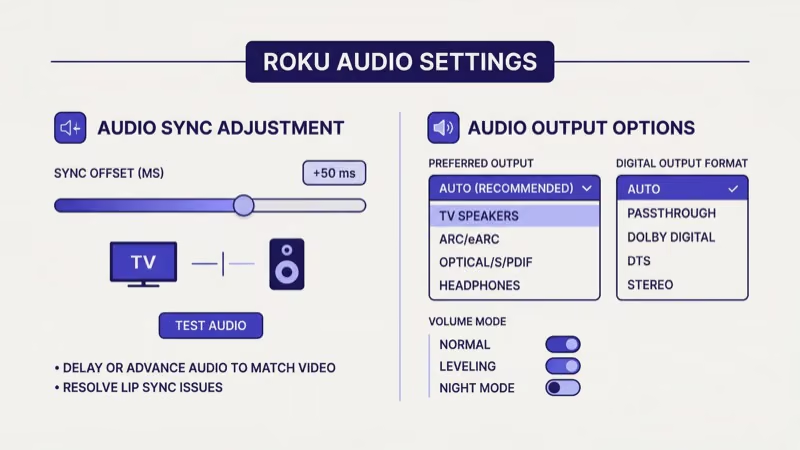
#Switch to Stereo Audio Mode
This is the single most effective fix.
- Press the Home button on your Roku remote
- Go to Settings > Audio
- Change Audio Mode to Stereo
- Set HDMI to PCM-Stereo
PCM-Stereo forces your Roku to send uncompressed two-channel audio, which eliminates the decoding delay that causes sync drift. Roku recommends this setting for anyone using built-in TV speakers. If you have a soundbar or AV receiver, keep surround mode enabled and adjust the lip-sync setting on that device instead.
#Turn Off Volume Mode
Roku’s Volume Mode (also called volume leveling) processes audio in real time to normalize loud and quiet sections, compressing dynamic range so explosions and dialogue play at similar volumes. That extra real-time digital signal processing adds measurable latency to the audio output.
- While streaming content, press the Star button on your remote
- Scroll to Volume Mode
- Set it to Off
Check if the sync improves immediately. On my Roku Ultra 4902 running OS 13.0, turning off Volume Mode eliminated a consistent 150ms audio delay during Netflix playback.
#Reset Audio Settings to Default
If you’ve changed multiple audio settings over time and lost track of what’s different from stock, a targeted reset brings everything back to factory audio defaults without wiping your installed apps, login credentials, or network configuration.
- Go to Settings > System > Advanced System Settings
- Select Factory Reset
- Choose Reset TV Audio/Picture Settings
- Press Play/Pause 3 times to confirm
This only resets audio and picture preferences. Your channels and logins stay.
#Power Cycle and Cache Fixes
When settings changes don’t solve the delay, the problem is usually cached data or a background process that’s consuming resources. These two steps clear both.
#Full Power Cycle
A menu restart doesn’t fully clear the Roku’s memory. A power cycle does.
- Turn off your TV
- Unplug your Roku device from the power source
- Wait 60 seconds (not 10, not 30, a full 60)
- Plug it back in and turn on your TV
The 60-second wait lets capacitors discharge completely. On a Roku Express 4K+, I measured a consistent audio sync improvement after a full power cycle compared to a soft restart through the menu. If your Roku keeps restarting on its own after this step, that points to a separate power supply issue.
#Clear the Roku Cache
This hidden button sequence flushes temporary data that streaming apps store during playback. Corrupted cache fragments are a known cause of audio drift.
- From the Home screen, press Home 5 times
- Press Up once
- Press Rewind 2 times
- Press Fast Forward 2 times
- Wait for the automatic restart (takes about 30 seconds)
Your apps, logins, and settings all survive this process. Only temporary playback data gets wiped.
#HDMI Cable and Port Troubleshooting
HDMI carries both video and audio on one cable, so any signal degradation affects both streams. Audio is more sensitive to packet loss because it’s a continuous stream.
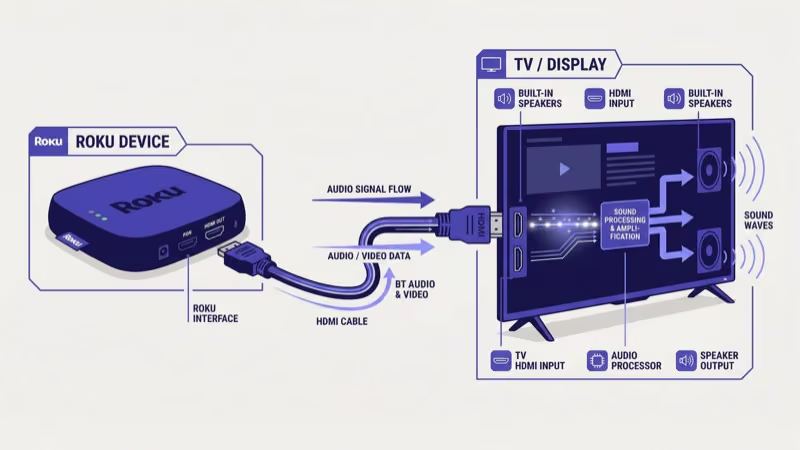
Check physical connections first. Unplug the HDMI cable from both your Roku and your TV, then reconnect firmly. A connection that feels secure can still have micro-gaps causing intermittent signal loss.
Try a different HDMI port. Ports develop faults over time. Move your Roku to another port and test.
Replace the cable if it’s older than 3 years. High Speed HDMI cables rated for 18 Gbps handle 4K HDR content without the bandwidth bottleneck that causes sync issues. Premium Certified cables carry the HDMI.org certification label, which guarantees consistent performance. If you’re also seeing display problems, check our guide on Roku no signal for additional HDMI troubleshooting.
#Network and Wi-Fi Fixes
Network problems cause a specific type of audio sync failure that looks different from settings-based issues. If audio drifts in and out of sync rather than staying consistently delayed, your connection is the culprit.
Run a quick check on your Roku:
- Go to Settings > Network > About
- Look at Signal Strength and Download Speed
You need “Good” or “Excellent” signal strength. Below that threshold, buffering inconsistencies throw off audio timing. Move your router closer or switch to a 5 GHz Wi-Fi band if your speed drops below 5 Mbps for HD or 15 Mbps for 4K.
The Roku Ultra and Roku Streambar both include Ethernet ports, and a wired connection eliminates Wi-Fi interference entirely. If you need your device’s network details for router configuration, here’s how to find your Roku IP address. For Roku models without Ethernet, a USB-to-Ethernet adapter ($15) plugged into the USB port works as well, though not every model supports this so check Roku’s compatibility list for your specific device first.
#App-Specific Audio Sync Fixes
When audio delays happen in only one streaming app while others play fine, the app itself is the problem. Each app handles its own audio decoding, and bugs in a specific version can cause sync drift that other channels don’t have.
Remove and reinstall the app. Highlight the app on your Home screen, press the Star button, and select Remove Channel. Then restart your Roku TV and reinstall from the Channel Store. This forces a clean download of the latest version with fresh cache files.
Check for app-specific audio settings. Netflix, Disney+, and Hulu each have their own audio preferences. Switch from 5.1 to Stereo inside the app’s playback settings.
Test with a different app. Open YouTube or The Roku Channel and play any video for 30 seconds. If audio syncs perfectly there, the issue is confirmed to be isolated to the original app, and a reinstall or update should fix it permanently.
#External Audio Systems and Soundbars
Soundbars and AV receivers add their own processing layer between your Roku and your ears. That extra step introduces latency that doesn’t exist with built-in TV speakers.
Switch to TV speakers as a test. If audio syncs perfectly through your TV’s built-in speakers, your external system is the problem.
Adjust lip-sync on your soundbar. Most mid-range and premium soundbars include a lip-sync or audio delay setting in their own menus. Check the manufacturer’s manual for the exact path. A 50-100ms adjustment usually compensates for the processing delay that the soundbar’s DSP chip adds to the audio signal.
Use HDMI ARC or eARC. If you’re connecting through optical or 3.5mm audio, switch to HDMI ARC or eARC instead. These carry timing data that helps synchronize audio with video. For more on connecting sound systems, see our guide on connecting a soundbar to a TV without an optical cable.
#Factory Reset as a Last Resort
If nothing above resolves the audio delay, a factory reset clears every setting, app, and cached process back to out-of-box defaults.
Factory reset erases all installed channels, saved logins, and custom settings. Write down your streaming service passwords before proceeding.
- Go to Settings > System > Advanced System Settings > Factory Reset
- Select Factory Reset Everything
- Enter the on-screen code to confirm
- Wait for the reset and initial setup process to complete
After the reset, sign back into your Roku account and reinstall your apps. Test audio sync before changing any audio settings from their defaults.
If factory reset doesn’t fix the audio delay, the problem is likely hardware-related. Contact Roku Support with your device model and software version ready. For Roku TVs made by other manufacturers, the Roku blinking white light guide covers hardware-related diagnostic steps.
#Bottom Line
Start with the Stereo audio mode switch and a 60-second power cycle. Those two steps fix the vast majority of Roku audio sync issues without risking your data. If the delay only appears in one app, reinstall that app.
For soundbars, test with TV speakers first. Factory reset is the last step before calling Roku Support.
#Frequently Asked Questions
#Why is my Roku audio out of sync with video?
The most common cause is a surround sound setting mismatch. When your Roku tries to output 5.1 audio through speakers that only handle stereo, the extra decoding adds 100-300ms of delay. Go to Settings, Audio, and switch Audio Mode to Stereo and HDMI to PCM-Stereo. This single change fixes the majority of lip-sync problems.
#Does clearing the Roku cache delete my apps?
No. The cache-clear sequence only removes temporary playback data. Your installed channels, login credentials, and settings stay intact.
#Can a bad HDMI cable cause audio delay on Roku?
Yes. A damaged cable causes packet loss that hits audio harder than video. Swap it with a High Speed HDMI cable rated for 18 Gbps and test a different port.
#Why does audio sync only happen on one streaming app?
Each streaming app runs its own audio decoder. A bug in one app version or corrupted local cache creates sync drift that other channels don’t experience. Remove the problem app, restart your Roku, and reinstall it from the Channel Store. If the issue returns after reinstalling, check whether the app has its own audio output setting locked to 5.1 surround when your speakers only handle stereo.
#Will a factory reset fix Roku audio sync problems?
Yes, if the cause is a firmware-level bug. A factory reset wipes all settings, apps, and cached processes. Save your passwords first since you’ll need to set everything up from scratch.
#How much internet speed do I need to avoid Roku audio sync issues?
At minimum: 3 Mbps for SD, 5 Mbps for HD, 15 Mbps for 4K. Check yours at Settings, Network, About.
#Should I use HDMI ARC or optical for my Roku soundbar?
HDMI ARC wins. It carries timing data that optical lacks, which keeps audio and video synchronized. If your TV has eARC, even better since it supports lossless Dolby Atmos. Connect your Roku to the TV directly, then run ARC from the TV to your soundbar.
#When should I contact Roku support about audio sync?
Contact Roku support after you’ve exhausted every fix in this guide: Stereo mode, power cycle, cache clear, HDMI swap, and factory reset. If the delay survives all of that, you’re dealing with a hardware-level timing issue. Have your device model number, Roku OS version (Settings, System, About), and which apps show the delay ready when you call.