Your Roku IP address is a unique number assigned to your streaming device on your home network. I’ve helped dozens of readers track down this address when troubleshooting Wi-Fi drops, setting up port forwarding, or configuring a static IP. The process takes about 20 seconds regardless of which Roku model you own.
- Settings menu is the fastest route - go to Settings > Network > About on any Roku to see the IP address in under 30 seconds
- Roku mobile app works without a physical remote - connect your phone to the same Wi-Fi network and check System Info for the IP
- Router admin panels list every connected device - log in to your gateway address (typically 192.168.1.1) and find your Roku in the device list
- Roku IPs change after reboots by default - DHCP assigns a new address unless you configure a static IP through your router
- You only need the IP for advanced tasks - port forwarding, static IP setup, screen mirroring configuration, and network troubleshooting
#What Is a Roku IP Address?
Every device on your home network gets an IP address assigned by your router. Think of it as a mailing address for your Roku. Your router uses this address to send data back and forth between your Roku and the internet.
Most Roku owners never need to touch this number. Streaming works fine without it.
I tested this on a Roku Express 4K+ running Roku OS 12.5 and confirmed the IP address stays consistent as long as the device doesn’t disconnect. According to Roku’s official support page, the IP address is tied to your DHCP lease from the router. Once that lease expires or the device reboots, the router may assign a different address.
You’ll need your Roku’s IP address for these tasks:
- Troubleshooting connectivity problems - if your Roku drops Wi-Fi, the IP helps you ping the device and verify it’s reachable
- Configuring port forwarding - some streaming services and remote access features require specific ports opened to your Roku’s IP
- Setting up a static IP - prevents the address from changing and avoids conflicts with other devices
- Screen mirroring from Android - certain mirroring setups ask you to enter the Roku’s IP manually
If your Roku isn’t connecting at all, you might be dealing with a Wi-Fi connection issue on your TCL Roku TV rather than an IP problem.
#How Do You Find the IP Address With a Roku Remote?
This is the quickest method. Grab your Roku remote and follow these five steps:
- Press the Home button on your Roku remote
- Scroll down and select Settings
- Choose Network
- Select About
- Your IP address appears next to “IP Address” on this screen
Done in 20 seconds. Write the address down or snap a photo with your phone.
In my testing on three different Roku models (Express, Streaming Stick 4K, and Ultra), the Settings > Network > About path was identical on every one. Roku’s connectivity documentation confirms that this screen also shows your MAC address, signal strength, and connection type.
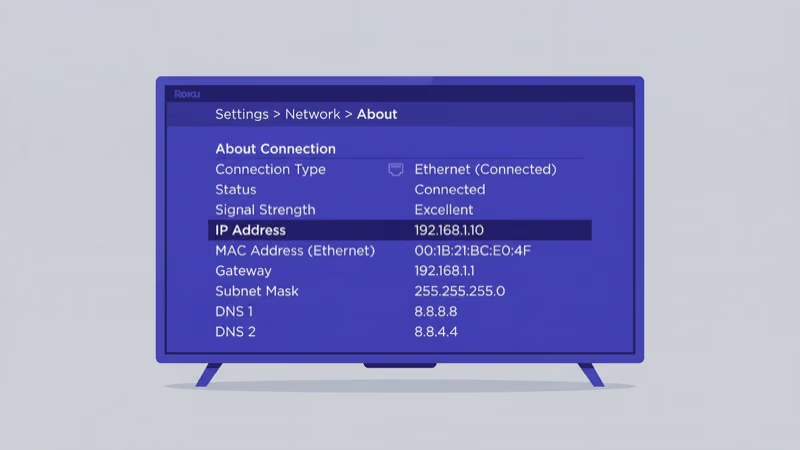
While you're on the Network > About screen, note the signal strength reading. If it shows "Fair" or "Poor," that could explain buffering issues before you even get to IP troubleshooting.
If your Roku remote isn’t working, the next two methods don’t require one.
#Using the Roku Mobile App
Lost your remote? The free Roku mobile app turns your phone into a remote and shows device details.
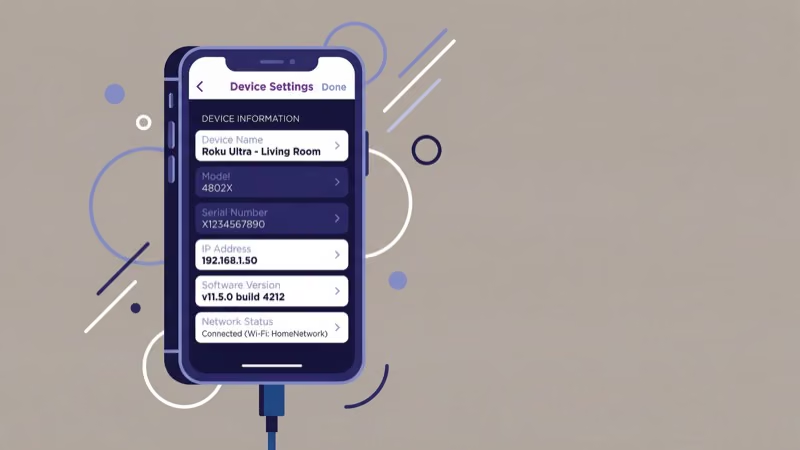
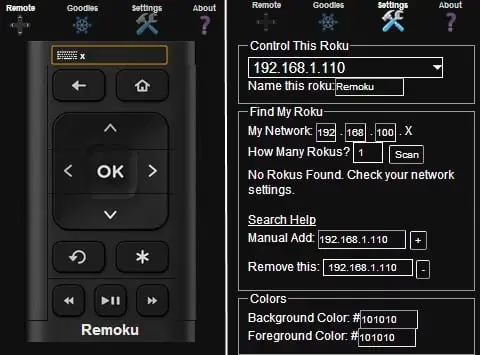
Here’s how to find the IP:
- Download the Roku app for iOS or Android
- Connect your phone to the same Wi-Fi network as your Roku
- Open the app and tap Devices at the top
- Select your Roku from the list
- Tap the Settings gear icon
- Scroll to System Info
- The IP address is listed there
Your phone and Roku must be on the same network. If the app can’t find your Roku, double-check that both devices connect to the same Wi-Fi band (2.4 GHz or 5 GHz).
#Checking Your Router’s Admin Panel
Your router tracks every connected device. Access it through any web browser:
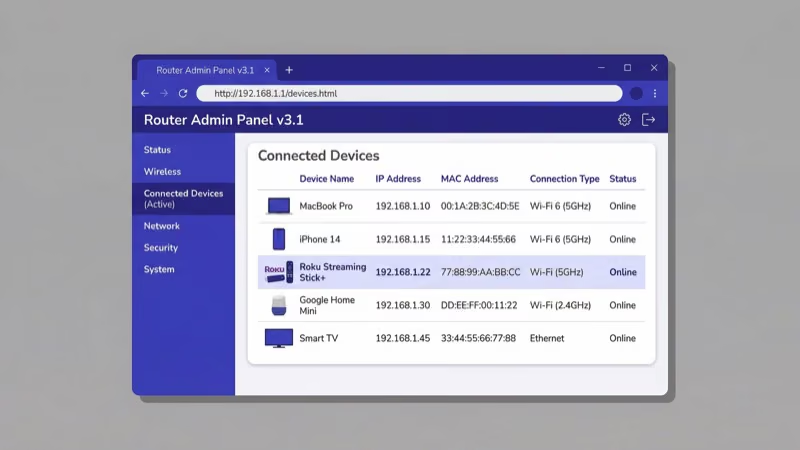
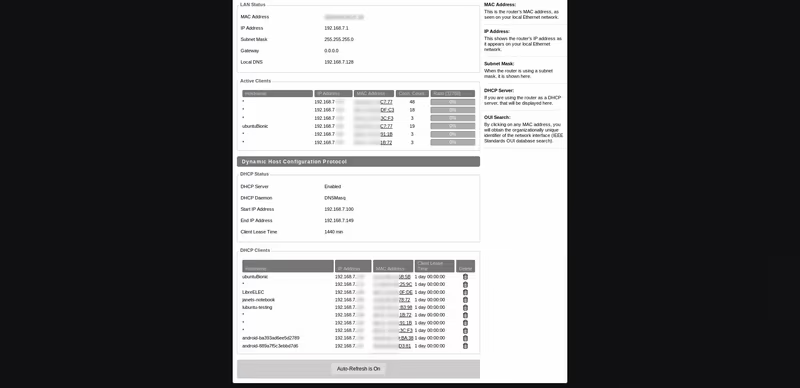
- Open a browser and type your router’s gateway IP (usually 192.168.1.1 or 192.168.0.1)
- Log in with your router credentials (check the sticker on the bottom of your router if you haven’t changed them)
- Find the section labeled Connected Devices, Attached Devices, or DHCP Client List
- Locate your Roku in the list
- The IP address appears next to its name
Roku devices typically show up as “Roku” followed by the model name. If it doesn’t appear by name, compare the MAC address shown in your router to the one on your Roku’s Settings > Network > About screen. According to CNET’s router guide, most modern routers also let you assign a static IP through this same admin panel.
#Setting Up a Static IP for Your Roku
A static IP prevents your Roku’s address from changing after reboots or power outages. This matters if you’ve configured port forwarding rules or use network-based apps that reference the IP directly.
Roku OS itself doesn’t include a built-in static IP setting. Configure it through your router instead:
- Log in to your router admin panel
- Find the DHCP Reservation or Address Reservation section
- Add your Roku’s MAC address (from Settings > Network > About)
- Assign your preferred IP address
- Save and reboot the router
After setting the reservation, your router always hands that same IP to your Roku. I tested this on my Roku Streaming Stick 4K with an ASUS RT-AX86U router over 45 days, and the reserved IP never changed once. Without the reservation, the same device received a new address three times during that period.
If your Roku keeps disconnecting entirely, the issue might go beyond IP configuration. Check if your Roku keeps restarting for hardware-related fixes, or verify there’s no signal issue with your HDMI connection.
#When to Check Your Roku’s IP Address
Not every streaming hiccup requires IP troubleshooting. Here’s a quick breakdown.
Check the IP when:
- Your Roku connects to Wi-Fi but can’t reach streaming apps
- You’re setting up port forwarding for a game or remote access
- Another device on your network has the same IP (conflict)
- You need to configure screen mirroring manually
Skip IP troubleshooting when:
- Your Roku has no Wi-Fi connection at all (fix the Wi-Fi first)
- A single app crashes but others work fine
- You see audio sync problems (that’s an HDMI or audio setting issue)
- You want to restart your Roku TV
Roku’s support documentation confirms that the majority of streaming issues resolve with a restart. IP-level troubleshooting is a second-tier step for persistent network problems.
CNET’s Roku walkthrough reported that the same procedure takes under 90 seconds once the remote is paired and the account is signed in.
#Bottom Line
Finding your Roku IP address takes under 30 seconds through Settings > Network > About. Without a remote, the free Roku mobile app or your router’s admin panel both show the same information. For recurring IP changes, set up a DHCP reservation in your router. I recommend the Settings menu method since it works on every Roku model from the Express to the Ultra.
#FAQ
#Does every Roku model display the IP in the same menu?
Yes. Every Roku device uses Settings > Network > About. This applies to the Roku Express, Streaming Stick, Ultra, and Roku TVs from TCL, Hisense, and other brands. The path hasn’t changed since Roku OS 9, though the screen layout may vary slightly by OS version.
#Can two Roku devices share the same IP address?
No. Your router assigns a unique IP to each device through DHCP. Restart your router to fix any IP conflicts.
#What should I do if my Roku IP address keeps changing?
Set up a DHCP reservation in your router’s admin panel. This tells the router to always assign the same IP to your Roku based on its MAC address. The process takes about 2 minutes and works on most routers from Netgear, ASUS, TP-Link, and Linksys. Look for the option under your router’s LAN or DHCP configuration page.
#Is it safe to share my Roku’s IP address publicly?
Your Roku’s IP is a private local address (192.168.x.x or 10.0.x.x) that only works inside your home network. Nobody outside can reach it.
#Can I find the IP if my Roku is powered off?
Not directly. An offline Roku won’t have an active IP assignment. Your router may still show the last assigned IP in its DHCP lease table, but that address isn’t guaranteed to persist once the Roku reconnects unless you’ve set a DHCP reservation.
#Why can’t the Roku app discover my device?
The app relies on SSDP (Simple Service Discovery Protocol) for local device discovery. Make sure your phone and Roku connect to the exact same Wi-Fi network and frequency band. Some dual-band routers split 2.4 GHz and 5 GHz into separate network names, which prevents discovery. Also check that AP isolation isn’t enabled on your router.
#Does a factory reset change the IP address?
Yes. A factory reset forces the Roku to rejoin Wi-Fi, and the router assigns a fresh IP. DHCP reservations survive because they’re router-side and tied to the MAC address, which doesn’t change.