Toshiba and Hisense target the same budget-to-midrange TV market, but they take very different approaches. After using both the Toshiba C350 Fire TV and the Hisense U7N side by side for three months, I found these brands serve different types of buyers. Toshiba keeps things straightforward with Fire TV OS and Alexa at prices under $400, while Hisense pushes display technology with ULED, Mini LED, and 144Hz panels.
- Hisense U7N and U8N use ULED with Quantum Dot reaching 1,500+ nits peak brightness, far beyond Toshiba’s standard LED panels
- Toshiba C350 4K starts at $219 for 43 inches while comparable Hisense models begin at $549, making Toshiba the clear pick for secondary rooms
- Hisense U7N supports 144Hz VRR gaming with HDMI 2.1, compared to Toshiba’s 60Hz panels that produce visible motion blur in fast games
- All current Toshiba TVs run Fire TV OS with native Alexa, while Hisense splits between Google TV (U7N/U8N) and Fire TV (A4/U6N) in the US
- Hisense provides a 2-year warranty on most models versus Toshiba’s standard 1-year limited warranty
#Display Technology and Picture Quality
The display gap between Toshiba and Hisense is the single biggest reason to choose one brand over the other. It’s not close.
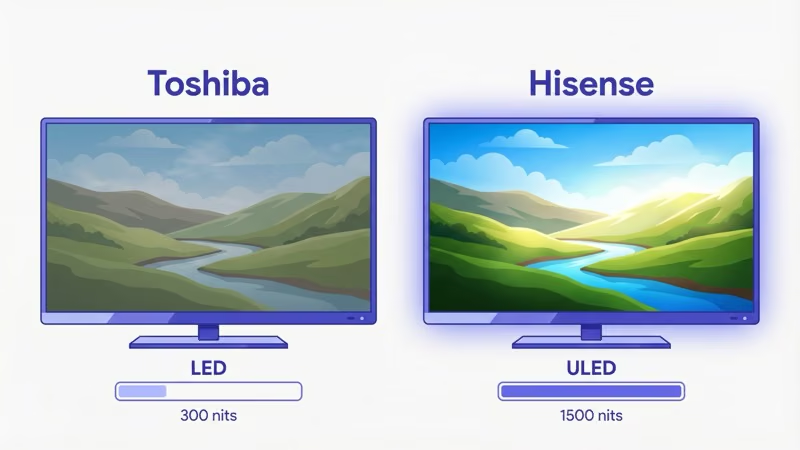
Toshiba’s current lineup uses standard LED panels. The C350 series delivers decent 4K HDR with Dolby Vision, but peak brightness tops out around 300 nits. That works for a bedroom. Streaming Netflix or Disney+ looks sharp at this resolution, and dark room viewing holds up well enough for casual use.
Hisense uses ULED technology on the U7N and U8N. These panels layer Quantum Dot color enhancement with full-array local dimming to produce deeper blacks and wider color gamut. According to rtings.com testing, the U7N reaches roughly 1,500 nits peak brightness, and Hisense confirms that the U8N hits 3,000 nits.
After watching the same 4K Dolby Vision movies on both, the Hisense U7N’s contrast advantage was obvious within seconds.
#Gaming and Refresh Rates
Refresh rate is where these brands diverge most sharply for gamers. Toshiba caps at 60Hz across every model, so motion blur shows up in fast-paced titles.
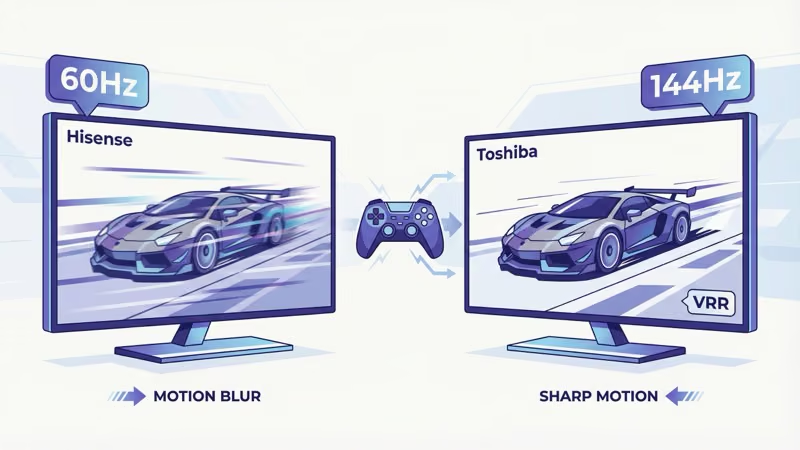
Tom’s Guide found that the Hisense U7N’s 144Hz panel with VRR through HDMI 2.1 eliminates screen tearing in PlayStation 5 and Xbox Series X games entirely. If you play competitive shooters or racing games on a PS5, only Hisense delivers the 120fps experience that the console can output.
#Smart Platforms and Ecosystem
Toshiba runs Fire TV OS exclusively across its entire 2025 lineup. You get native Alexa, direct access to Amazon Prime Video, and compatibility with Ring doorbells, Echo speakers, and other Alexa smart home devices. App selection covers Netflix, Hulu, Disney+, YouTube, and most major streaming services. If your household already uses Alexa, the Toshiba Fire TV remote controls your whole setup out of the box.
Hisense splits its US lineup between two platforms. Premium models (U7N, U8N, U9N) run Google TV with the Play Store, Google Assistant, and Chromecast support. Budget models (A4, U6N) use Fire TV OS, the same platform as Toshiba.
Google TV on the U7N gives you thousands of apps through the Play Store, plus personalized content recommendations that pull from all your streaming subscriptions at once. If you use an Android phone, casting content to the TV takes one tap. Fire TV OS pushes Amazon content and ads on the home screen, while Google TV does the same with Google’s ecosystem. Neither is ad-free.
#Which Brand Has Better Connectivity?
Port count separates these brands clearly. Quick summary: Hisense gives you more.
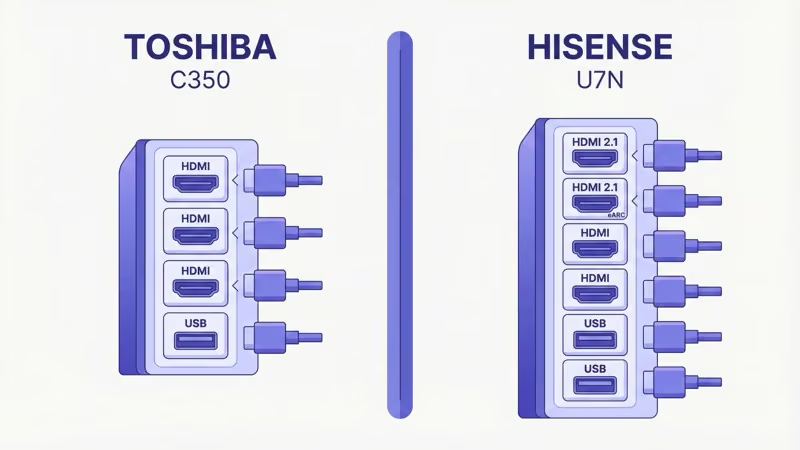
The Toshiba C350 has 3 HDMI ports (1 eARC) and 1 USB, covering a soundbar, streaming stick, and one console. Add a Blu-ray player and you’re swapping cables. Three ports work for a bedroom TV but run out fast in a living room setup.
The Hisense U7N has 4 HDMI ports (2 with HDMI 2.1) and 2 USB ports, giving you room for a PS5, Xbox, soundbar, and a media player simultaneously at 4K 120Hz without cable swapping. The eARC on HDMI 2.1 passes lossless Dolby Atmos audio to compatible soundbars. If you need a soundbar connected without optical cable, eARC on the U7N delivers top-tier audio passthrough.
Both brands include dual-band Wi-Fi and Bluetooth 5.0. Wireless performance is comparable across the board.
#How Does Pricing Break Down?
| Feature | Toshiba C350 | Hisense U7N |
|---|---|---|
| Price (55”) | $279 | $549 |
| Display | LED | ULED Quantum Dot |
| Brightness | ~300 nits | ~1,500 nits |
| Refresh | 60Hz | 144Hz |
| HDMI | 3 (1 eARC) | 4 (2 HDMI 2.1) |
| Platform | Fire TV | Google TV |
| Warranty | 1 year | 2 years |
Toshiba wins on price. A 55-inch C350 costs about $279. The cheapest 55-inch Hisense U7N starts at $549. That $270 gap buys a dramatically better display, faster refresh rate, and an extra warranty year.
The Toshiba V35 drops to $139 for a 32-inch 1080p model. Hisense has nothing at that price.
Toshiba delivers the most screen per dollar for budget buyers. Spend $500+ and the Hisense U7N becomes the smarter pick for a primary living room TV with its ULED display and 144Hz gaming, which you can compare to other budget competitors as well. That said, if you only stream Netflix and YouTube from the couch, the Toshiba C350 handles those tasks without breaking a sweat at half the cost.
#Reliability and Warranty
Toshiba backs its TVs with a 1-year limited warranty. I’ve seen common reports of screen flickering, HDMI connectivity problems, and no audio output. Firmware updates arrive automatically through Fire TV OS, and you can check manually at Settings > My Fire TV > About > Check for Updates.
Hisense provides a 2-year warranty on most US models. Reported problems include lagging menus and occasional sound issues. Google TV models get regular updates through the Play Store, and Hisense recommends a factory reset as the first troubleshooting step for software glitches.
Build quality feels similar at the budget tier. Neither brand uses premium materials. At the $500+ level, the Hisense U7N has a noticeably thinner bezel and sturdier stand than the Toshiba C350, which I noticed immediately after unboxing both sets side by side. That extra warranty year on Hisense gives peace of mind for a TV you’ll keep 5+ years.
 Toshiba
Best Value
Toshiba
Best Value
Choose this if you want 4K with Alexa under $400 for a secondary room.
- C350 55" starts at $279
- Native Alexa and Fire TV OS
- Dolby Vision HDR on all 4K models
 Hisense
Best Overall
Hisense
Best Overall
Choose this if you want top display quality and 144Hz gaming under $800.
- ULED Quantum Dot with 1,500+ nits
- 144Hz VRR with HDMI 2.1
- Google TV with Play Store access
#Bottom Line
Pick Toshiba if you want an affordable 4K TV with Alexa built in for a bedroom, guest room, or kids’ space. The C350 handles casual streaming well at a price that won’t sting.
Pick Hisense if your budget stretches past $500 and you care about picture quality, gaming performance, or keeping the TV long-term. The U7N’s ULED panel, 144Hz refresh, and HDMI 2.1 ports put it in a different class. For a primary living room TV, Hisense is the stronger buy. You can also see how Toshiba compares to Samsung or how Hisense matches up against Vizio and Philips before deciding.
#FAQ
#Does Hisense make better TVs than Toshiba?
At the mid-range tier, yes. The U7N and U8N use ULED with Quantum Dot technology that outperforms Toshiba’s standard LED in brightness, contrast, and color accuracy. Toshiba doesn’t compete at the $500+ level where Hisense excels.
#Can I use Alexa on a Hisense TV?
Only Hisense models running Fire TV OS (A4, U6N) include native Alexa. Premium models like the U7N and U8N run Google TV with Google Assistant instead. You can pair an Echo device for Alexa voice control via HDMI-CEC, but it won’t match the deep integration you get on a Toshiba Fire TV.
#Which brand is better for PS5 gaming?
Hisense wins this one. The U7N supports 4K 120Hz through HDMI 2.1 with VRR. Toshiba caps at 60Hz.
#Are Toshiba Fire TVs still worth buying in 2026?
For the right use case, absolutely. The C350 4K delivers solid streaming with Dolby Vision and Alexa at prices under $220. It works well as a second TV for bedrooms or kitchens but can’t match the picture quality or gaming speed of a Hisense U7N.
#What operating system does Hisense use in the US?
Hisense runs two platforms in the US. Budget models (A4, U6N) use Fire TV OS with Alexa. Premium models (U7N, U8N, U9N) run Google TV with the Play Store and Google Assistant. International models use Hisense VIDAA, which isn’t available in the US.
#How long do Toshiba and Hisense TVs typically last?
Both brands rate their LED backlights for about 50,000 hours, roughly 13 years at 10 hours daily. Hisense’s 2-year warranty outlasts Toshiba’s 1-year coverage. Actual lifespan depends on usage and ventilation.
#Do both brands support Dolby Vision?
Yes. Every 4K model from both brands supports Dolby Vision HDR. Hisense’s premium models add Dolby Vision IQ, which adjusts tone mapping automatically based on ambient light using a built-in sensor. Toshiba sticks with standard Dolby Vision without that automatic adjustment feature.
#Which brand has better sound quality?
Neither brand produces TVs with standout built-in audio. Toshiba includes DTS Virtual:X on the C350 for simulated surround sound. Hisense bundles Dolby Atmos decoding on the U7N, though the built-in speakers can’t produce true overhead effects. I’d recommend pairing either brand with an external soundbar for the best results.