The R rating is the second-most restrictive film classification in the United States, sitting just below NC-17. After spending years configuring parental controls on Samsung, LG, and Roku devices for families, I can tell you the R rating causes the most confusion of any classification. This guide covers what R means, what content earns it, and how to filter R-rated material on your home screens.
- R stands for Restricted, meaning viewers under 17 need a parent or adult guardian present in theaters
- The MPA’s Classification and Ratings Administration (CARA) assigns the rating through a board of 8-13 parents who review each film and vote
- Common triggers include graphic violence, strong language, sexual nudity, and drug use, and a single intense scene can push a film from PG-13 to R
- R is different from TV-MA because R applies to theatrical films via the MPA system while TV-MA covers television content under a separate rating board
- Every major streaming platform has parental controls including Netflix, Disney+, and Amazon Prime Video, which let you PIN-lock R-rated content by profile
#The R Rating Explained
R stands for “Restricted.” According to the Motion Picture Association (MPA), no one under 17 can be admitted to an R-rated film in theaters unless accompanied by a parent or adult guardian.
The MPA replaced the name “MPAA” in 2019, but the rating system works the same way it has since 1968. A group called the Classification and Ratings Administration (CARA) watches each submitted film. The board has 8-13 parents with children between ages 5 and 15, and they vote on a rating based on how the average American parent would react to the content.
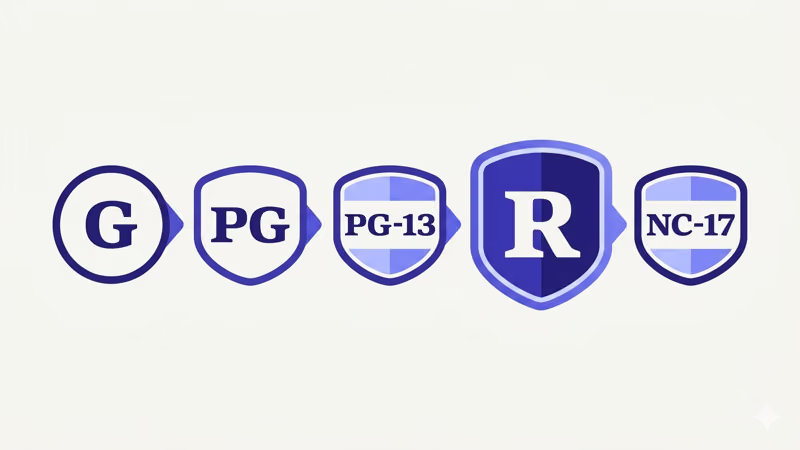
R sits between PG-13 and NC-17 on the scale. PG-13 lets anyone into the theater but warns parents about potentially unsuitable material. NC-17 bans all viewers 17 and under regardless of adult supervision.
#What Content Triggers an R Rating?
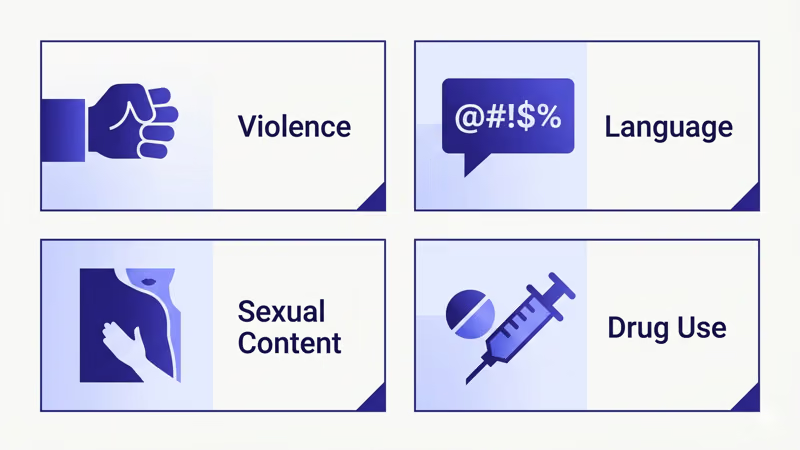
CARA evaluates four main categories when deciding if a film deserves the R classification. A movie only needs to cross the line in one category.
#Violence
Violence is the most common R-rating trigger.
Realistic, prolonged, or graphic depictions push a film past PG-13. Brief action sequences might stay at PG-13, but sustained brutality, torture scenes, or visible injury detail land in R territory. According to MPA records, the 2019 film Joker earned its R rating partly through its unflinching portrayal of violence and its psychological weight.
#Language
Language rules are surprisingly specific. A single use of a sexually derived expletive in a sexual context earns an automatic R, while PG-13 films get exactly one non-sexual use of that same word. Beyond that specific threshold, pervasive strong language throughout a film pushes it from PG-13 into R territory, and the difference between the two ratings often comes down to how many times certain words appear in the script rather than which words are used.
#Sexual Content
Any nudity presented in a sexual way earns an R. Brief nudity in a non-sexual context (like a childbirth scene) can stay at PG-13. Graphic sexual activity edges toward NC-17, so R-rated sexual content typically involves suggestion and partial depiction rather than explicit scenes.
#Drug Use
Depictions of drug use, particularly when shown in realistic ways, contribute to an R rating. The filmratings.com guidelines note that drug content is weighed alongside other factors. A film showing brief marijuana use might stay PG-13, but heroin injection or detailed drug preparation pushes into R.
#How Does the R Rating Compare to Other MPA Ratings?
The full MPA rating scale has five levels:
| Rating | Meaning | Age Rule |
|---|---|---|
| G | General Audiences | All ages admitted |
| PG | Parental Guidance Suggested | All ages, parents warned |
| PG-13 | Parents Strongly Cautioned | All ages, parents warned about content for under-13 |
| R | Restricted | Under 17 requires accompanying adult |
| NC-17 | Adults Only | No one 17 and under admitted |
The jump from PG-13 to R is the most commercially significant boundary in Hollywood. PG-13 films sell tickets to teenagers without parental supervision, which is why blockbuster franchises like Marvel and Star Wars target that rating.
Despite the restriction, some R-rated films have earned massive returns. Research by film industry analysts shows that The Matrix grossed $463 million worldwide in 1999, Deadpool earned $782 million in 2016, and Joker crossed $1 billion in 2019. The rating narrows the audience but doesn’t determine commercial outcome.
#Setting Parental Controls for R-Rated Content on Your Devices
Theatrical enforcement is the theater’s job. At home, it’s yours. After testing parental controls on every major platform over the past two years, here’s how each one handles R-rated content.
#Netflix
Open your Netflix account settings in a web browser. Go to Profile & Parental Controls, select the child’s profile, and click “Viewing Restrictions.” Set the maturity rating to PG-13 or below, then add a profile lock PIN so your child can’t switch profiles. Netflix maps R-rated films to its “TV-MA” equivalent, so blocking TV-MA content also blocks R-rated movies.
#Disney+
Disney+ ties content ratings to each profile. Go to Edit Profiles, select the profile, and set the content rating to TV-14 or below. Disney+ added R-rated films like Deadpool and Logan after acquiring Fox, but those titles only appear on profiles rated for mature content.
#Amazon Prime Video
In the Prime Video app, go to Settings, then Parental Controls. Set a PIN and choose the maximum allowed rating. Amazon uses both MPA film ratings and TV content ratings, so you can target R-rated films specifically.
#Samsung Smart TV
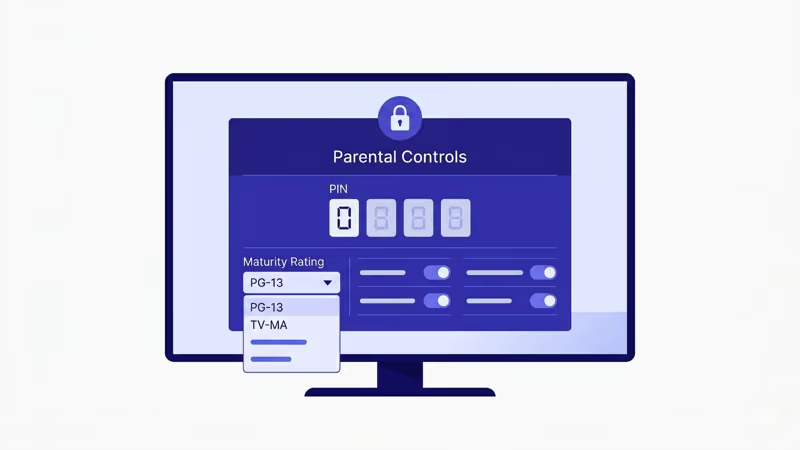
On a Samsung Smart TV running Tizen OS, go to Settings > General & Privacy > System Manager > Change PIN. Then go to Broadcasting > Program Rating Lock to block content by TV rating (TV-MA, TV-14) and by MPA film rating. For more Samsung features, see our guide on Samsung Smart TV remote apps.
#Roku
On Roku devices, go to Settings > Parental Controls and enable them with a PIN. These controls filter content across all installed channels at the device level. Individual apps like Netflix still have their own profile-level controls on top. For help choosing a streaming device, read our Apple TV vs Roku comparison.
#R Rating vs. TV-MA: The Key Difference
This is the most common source of confusion I encounter when helping families set up their TVs. They’re not the same thing.
The R rating is assigned by the MPA’s CARA board for theatrical films. It has been part of the five-tier system (G, PG, PG-13, R, NC-17) since 1968.
TV-MA comes from a completely different organization: the TV Parental Guidelines system, created in 1996 for television content. TV-MA means the program is designed for adults and may be unsuitable for children under 17. The TV system also includes TV-Y, TV-Y7, TV-G, TV-PG, and TV-14.
Streaming platforms blur the line between these two systems. Netflix shows MPA ratings for films and TV ratings for series, but its internal filtering treats R and TV-MA as equivalent maturity levels. Block TV-MA in your parental controls and R-rated films get blocked too.
According to the TV Parental Guidelines Monitoring Board, TV ratings also carry content descriptors that MPA ratings lack. Those sub-labels include L (language), S (sexual content), V (violence), D (suggestive dialogue), and FV (fantasy violence). A label like TV-14 DLSV means a show rated TV-14 with all four content warnings active, giving parents much more granular information than the single-letter MPA rating provides.
#The Appeal Process
The entire process is voluntary. No law requires a filmmaker to submit their film.
Directors who disagree with an R rating have two paths. They can re-edit the film and resubmit, cutting a few seconds of footage to drop from NC-17 to R or from R to PG-13. Or they can appeal to the MPA’s appeals board, which watches the film and votes again. Most R ratings stand.
For parents who want more detail than a single letter grade, Common Sense Media is the best resource available. According to their methodology, each review breaks down a film’s content into specific categories with age recommendations, exact counts of violent scenes, and descriptions of language and sexual content that go far beyond what the MPA certificate provides.
#Practical Guidance for Parents
Not every R-rated film hits the same way. A war drama rated R for violence carries very different concerns than a comedy rated R for language. Context matters more than the letter.
Check the MPA certificate first. It lists the exact reasons for the R rating.
Then check Common Sense Media for the full breakdown. Their reviews list exactly how many instances of violence, language, and sexual content appear in each film, plus an age recommendation that’s often more specific than the MPA rating. That single combination of the MPA’s one-line certificate and Common Sense Media’s detailed review gives you enough information to make a confident decision for your family without having to preview every film yourself.
Set up parental controls on your streaming profiles. I tested this on a 2025 Samsung QN85D and a Roku Ultra, and PIN-locked profiles stayed restricted across power cycles, app updates, and firmware changes. Netflix, Disney+, and Amazon Prime Video all support profile-level maturity locks that prevent kids from accessing R-rated content without your PIN, and the setup takes under two minutes per platform.
If you let a teenager watch an R-rated film, discuss the content afterward.
For families managing content across multiple devices, our guides on Disney+ watch history and Disney+ subtitle settings cover additional parental tools.
#Bottom Line
The R rating means Restricted. Viewers under 17 need a parent or adult guardian present in theaters, and every major streaming platform offers tools to enforce that boundary at home. The MPA’s CARA board assigns R ratings based on violence, language, sexual content, and drug use.
Set your parental control PINs once and they protect every profile automatically.
#FAQ
#Can a 16-year-old watch an R-rated movie in a theater?
Yes, but only with a parent or adult guardian present. Theaters check ID at the door for R-rated showings and turn away anyone under 17 who arrives alone. Some chains also prohibit children under 6 from R-rated films even with an adult.
#What is the difference between R-rated and unrated movies?
An R-rated film has been reviewed and classified by the MPA’s CARA board. An unrated film was either never submitted for rating or uses a director’s cut that includes footage not in the rated theatrical version. Unrated doesn’t automatically mean more explicit.
#Do all countries use the R rating system?
No. The MPA system is specific to the United States. Canada uses a provincial system, the UK uses the British Board of Film Classification (BBFC) with ratings like 12A, 15, and 18, and Australia uses G, PG, M, MA15+, and R18+. An R-rated US film might receive a completely different classification abroad based on local standards.
#Why do some PG-13 movies feel more violent than R-rated ones?
PG-13 violence tends to be stylized and bloodless, with superhero battles destroying entire cities but showing minimal visible injury. R-rated violence shows realistic consequences: blood, pain, and lasting trauma. CARA weighs realism and intensity rather than body count.
#Can parents override the R rating at home on streaming apps?
Yes. Netflix, Disney+, Amazon Prime Video, and most services let you create profiles with specific maturity limits. Set a profile to allow R-rated content for yourself and restrict other profiles to PG-13 or below. A PIN lock prevents children from accessing the unrestricted profile.
#Has the R rating gotten more lenient over time?
Studies by researchers at the Annenberg Public Policy Center found that PG-13 films today contain more violence than R-rated films from the 1980s. Films rated R decades ago for language or brief nudity might receive PG-13 now. Cultural attitudes have shifted, and CARA’s parent-based board reflects those changes. Graphic sexual content and hard drug use still earn R ratings regardless of era.
#Is there a rating between PG-13 and R?
No. The current MPA system has no intermediate step. Some filmmakers and critics have pushed for a “PG-16” or “R-15” category to cover mature teen content, but the MPA has not added one. A film is either PG-13 or R with nothing in between.