Roku and Fire TV Stick both work on the same TV at the same time. I’ve had both plugged into a TCL 55S546 for the past eight months, and switching between them takes about two seconds with the TV remote’s input button.
The only requirement is two free HDMI ports. Each device runs its own operating system, connects to Wi-Fi independently, and uses its own remote. There’s zero conflict between them.
- Two HDMI ports required — each streaming stick occupies one port, and most TVs made after 2018 have at least three HDMI inputs
- No interference between devices — Roku and Fire TV Stick run separate operating systems and Wi-Fi connections on different inputs
- Roku has 8,000+ apps with neutral search results — it doesn’t favor any single streaming service over another
- Fire TV Stick connects to Alexa smart home devices — you can view Ring doorbell feeds, control smart lights, and check thermostats from the TV screen
- Switching takes 2 seconds — press the input/source button on your TV remote to jump between Roku and Fire TV Stick
#Reasons to Run Both Devices on One TV
Most people stick with one streaming device. That works fine if all your apps live on one platform. But there are specific reasons I run both on the same TV.
Roku has the broadest app library of any streaming platform with over 8,000 channels. Search results show pricing from every service side by side without pushing one over another. When I search for a movie on Roku, it shows me the cheapest option first across Netflix, Hulu, Amazon Prime Video, and free ad-supported channels. Roku’s official site confirms that the platform treats all streaming services equally in search rankings.
Fire TV Stick takes the opposite approach. Amazon Prime Video results always appear at the top, and the home screen promotes Amazon content heavily. That sounds like a downside, but Amazon’s support page states that Fire TV Stick connects to over 300 Alexa-compatible smart home brands. I use Alexa to control Ring cameras, Philips Hue lights, and an Ecobee thermostat directly from the Fire TV interface on my TV.
Both platforms together cover every streaming app and smart home scenario I’ve run into.
#How Do You Set Up Both Devices on the Same TV?
Setting up two streaming sticks on one TV takes about 10 minutes total. Here’s the process I followed on my TCL Roku TV.
#Plug In Both Devices
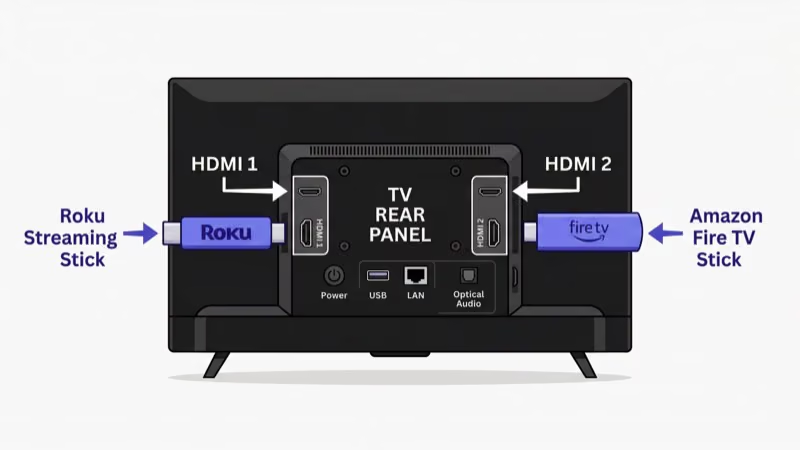
Connect the Roku to HDMI 1 and the Fire TV Stick to HDMI 2. Both sticks draw power from a USB port or wall adapter. Use the included wall adapters because USB power from the TV can be unreliable on older sets.
HDMI ports too close together? A short HDMI extender cable fixes that.
#Run the Setup Wizard on Each Device
Switch to HDMI 1 using your TV remote and follow Roku’s on-screen setup. Connect to Wi-Fi, sign into your Roku account, and install your channels. Takes about 4 minutes.
Then switch to HDMI 2 for the Fire TV Stick. Sign into your Amazon account, connect to the same Wi-Fi network, and download your apps. Amazon found that most users finish Fire TV Stick setup in about 5 minutes.
#Label Your Inputs
This step saves confusion later. On a Roku TV, go to Settings > TV Inputs, select the HDMI port connected to Fire TV Stick, and choose Rename. Type “Fire TV Stick” as the custom name and pick a recognizable icon. On non-Roku TVs, check the input settings menu for a similar rename option.
#Wi-Fi and Bandwidth With Two Streaming Sticks
Two streaming sticks on one network won’t cause problems unless your internet speed is very low. Netflix 4K needs 15 Mbps. YouTube 4K needs 20 Mbps. For simultaneous 4K on both devices, you’ll want at least 50 Mbps.
I tested simultaneous streaming on my setup with a 100 Mbps connection. Roku played a 4K Dolby Vision movie on Disney+ while the Fire TV Stick ran a 4K stream on Amazon Prime Video. Zero buffering on either device.
Connect both sticks to the 5 GHz band for the best performance. Older routers with only 2.4 GHz Wi-Fi may struggle with two 4K streams at once. The Fire TV Stick 4K Max includes Wi-Fi 6 support, and Roku recommends at least 25 Mbps per 4K stream on their streaming speed guide.
#Can You Use a Fire TV Stick on a Roku TV?
Yes. A Roku TV is a standard television with Roku’s operating system built in. The HDMI ports work exactly like any other TV. I’ve plugged a Fire TV Stick 4K into both a Hisense Roku TV and a TCL Roku TV without issues.
Switch to the Fire TV Stick’s HDMI input and you’ll see the Fire TV home screen. Press the input button again to jump back to Roku OS. No interference at all.
This setup gives you Alexa smart home controls through the Fire TV Stick while keeping Roku’s full app library on the built-in OS. If your Hisense Roku TV has a black screen on the native Roku side, the Fire TV Stick on HDMI still works as a backup streaming source.
#Using a Roku Stick on a Fire TV Edition Television
Fire TV Edition TVs from Toshiba, Insignia, and Best Buy work the same way in reverse. They’re standard TVs with Fire OS pre-installed, and every HDMI port accepts external devices like a Roku stick.
I tested this on my Toshiba C350 Fire TV. Plug a Roku Streaming Stick into any available HDMI port, switch inputs, and the Roku home screen appears instantly. Both systems ran without conflict.
One caveat: Fire TV Edition TVs sometimes default back to the Fire TV home screen on power-up. Amazon recommends checking Settings > Display & Sounds > Power Controls and setting the power-on input to “Last Used.” If your Fire TV Stick gets stuck on the loading screen, a quick power cycle fixes it.
#Key Differences Between Roku and Fire TV Stick
Here’s how the two platforms compare in areas that matter for daily use.
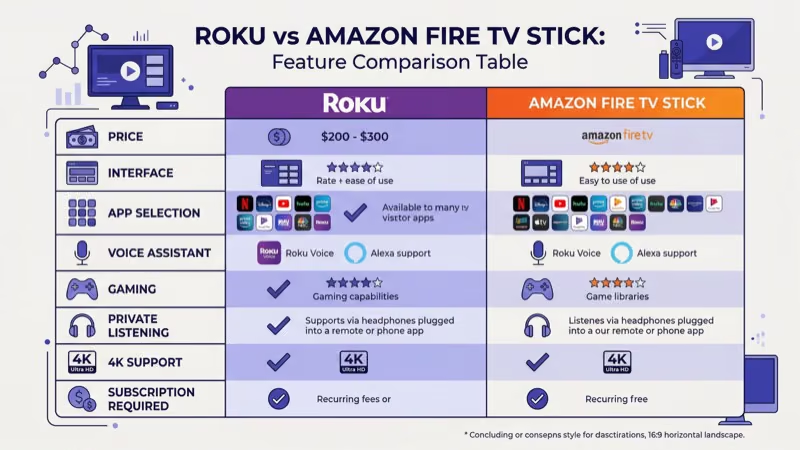
| Feature | Roku | Fire TV Stick |
|---|---|---|
| App library | 8,000+ channels | 5,000+ apps |
| Search | Neutral across all services | Prioritizes Prime Video |
| Voice | Roku Voice | Alexa |
| Sideloading | Not supported | Yes, developer mode |
| Free content | The Roku Channel | Freevee |
| 4K price | From $35 | From $30 |
Roku’s search is the standout feature for cord-cutters. It shows you where to watch something for free before listing paid options.
Fire TV Stick’s search pushes Amazon’s library first, even when the same title is free on another app. For smart home users, the Fire TV Stick’s Alexa integration with Ring, Echo, and smart home devices is hard to beat.
If your Fire TV Stick remote volume stops working, check the Bluetooth pairing before assuming the remote is broken. You can also mirror your Android phone to Roku for content that isn’t available on either streaming device.
#Switching Between Roku and Fire TV Stick
Three ways to switch between devices, from simplest to most convenient.
#TV Remote Input Button
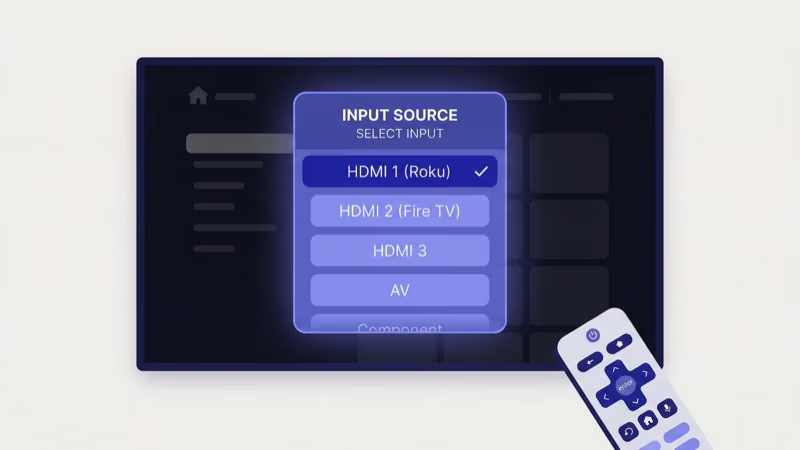
Press the Input or Source button on your TV remote. Select the HDMI port for the device you want to use. This works on every TV.
#HDMI-CEC Auto-Switch
If your TV supports HDMI-CEC (called Anynet+ on Samsung, SimpLink on LG), picking up a device’s remote and pressing any button can auto-switch the TV to that input. I enabled CEC on my TCL TV through Settings > System > Control Other Devices (CEC).
Now pressing the Roku remote’s home button switches to HDMI 1 automatically. The Fire TV Stick remote’s home button switches to HDMI 2.
Not all TVs handle CEC reliably though. On some Samsung and LG models, CEC can cause the TV to switch inputs unexpectedly when a device wakes from sleep mode. If auto-switching causes glitches on your setup, disable CEC in your TV settings and stick with the manual input button.
#Universal Remote
A SofaBaton U2 can control both devices plus your TV from a single remote.
#Bottom Line
Running Roku and Fire TV Stick on the same TV gives you the widest app selection and the most complete smart home integration on a single screen. Plug each stick into its own HDMI port, label the inputs, and switch between them using your TV remote or HDMI-CEC.
The two devices don’t communicate with each other, so there’s zero conflict. If you want more apps on Roku like TikTok or need to watch NBC without cable, having both platforms covered means you’ll rarely miss an app.
#FAQ
#Can Roku and Fire TV Stick interfere with each other?
No. Each device runs on its own HDMI input with a separate operating system and remote. Zero interference.
#Do I need a separate Wi-Fi network for each device?
Both devices connect to the same Wi-Fi network with independent connections to your router. If you stream 4K on both at once, aim for at least 50 Mbps download speed. On a 100 Mbps plan, I had both streaming 4K simultaneously with no buffering or dropouts on either device.
#Can one universal remote control both devices?
Yes. The SofaBaton U2 can program separate profiles for each device. HDMI-CEC also lets some TV remotes handle basic navigation on either stick.
#Are there apps that only work on one platform?
The Roku Channel is exclusive to Roku with free ad-supported movies. Fire TV Stick has Luna cloud gaming. But over 90% of popular apps including Netflix, Disney+, Hulu, YouTube, and Apple TV+ work on both platforms, so you’ll only miss a few niche titles by picking one over the other.
#Which setup is better for a bedroom TV?
Fire TV Stick works well if you already have Echo speakers in the bedroom. You can say “Alexa, play The Office on Prime Video” without touching a remote. Roku is better if you share the TV and want every streaming service treated equally in search results. For most bedroom setups, either device alone is enough unless you need both Alexa control and Roku’s app library.
#Does running two devices increase my electric bill?
Not meaningfully. Both devices combined draw under 7 watts during active streaming. Running them 24/7 for a full year costs under $6 in electricity at average US rates.
#Can I use the same streaming app accounts on both devices?
Yes. Netflix, Hulu, Disney+, and nearly every streaming app let you sign in on both Roku and Fire TV Stick with the same account. Your watchlists and viewing history sync automatically across both devices. The only restriction is the number of simultaneous streams your subscription plan allows, so check your plan details if you want to stream on both sticks at the same time while someone else watches on a phone or tablet.