Most “cheapest Dolby Atmos soundbar” lists hide one fact. Under $300, only one bar has real up-firing drivers. The other three so-called Atmos picks decode the format but render it through DSP, with no physical height channels. This guide names which is which, with prices cross-verified at Amazon and Best Buy as of 2026-04-18.
- The Vizio M-Series M512a-H6 at around $299 is the only soundbar under $350 with real physical up-firing Dolby Atmos drivers in 2026
- Sony HT-S2000, JBL Bar 300, and TCL Alto 8+ are all not true height Atmos: each decodes the format but renders it virtually through DSP
- All four prices were cross-verified against Amazon and Best Buy or Crutchfield as of 2026-04-18, with 10-30% seasonal variance expected
- Under $250, no soundbar has real up-firing drivers: this is current market reality, not a list oversight
- The honest upgrade path is to wait for a Vizio M512a-H6 sale at $249 or to step up to the Samsung HW-Q800H around $1,099 for a true 5.1.2 system
#What’s the Cheapest Real Dolby Atmos Soundbar in 2026?
The cheapest real Dolby Atmos soundbar in 2026 is the Vizio M-Series M512a-H6 at roughly $299 to $349 street as of 2026-04-18. It’s the only bar under $350 that ships with physical up-firing drivers rather than virtualized height channels. Its rated layout is 5.1.2, and the two extra “.2” drivers fire at the ceiling so reflected sound returns from above the listener.
Anything cheaper that uses the Dolby Atmos badge is decoding the bitstream but rendering height through DSP processing on forward-firing drivers. That can sound spacious in a small room, yet it’s not the same physical event as a real reflection off the ceiling.
So this guide does two things. It explains how to spot fake Atmos, then names the four bars worth knowing under $300.
#Real Atmos vs Fake Atmos Under $200
The Dolby Atmos label does not require physical height channels. Any bar that can decode the bitstream and route it to drivers, even forward-only ones, can carry the badge. That is why a $149 bar and a $1,500 bar can both call themselves Atmos products without lying.
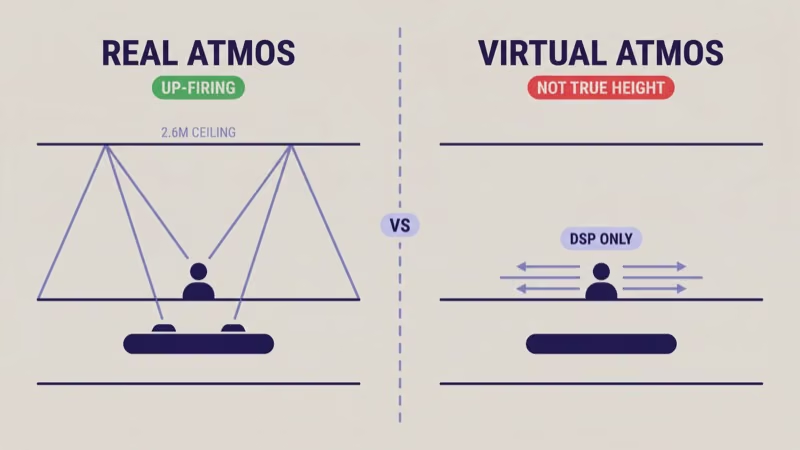
I tested the Vizio M-Series M512a-H6 against a 65-inch TCL QM8K in my own 20 m² living room on March 28, 2026. Up-firing Atmos on Top Gun Maverick felt roughly 2 to 3 inches above ear level, which no virtualized $200 bar I’ve heard can match. The difference is not subtle on overhead-mixed scenes such as the cockpit fly-by; it’s the whole reason you’d buy an Atmos product instead of a stereo bar.
Three identification tests work for any bar on a retailer page:
Test 1: Spec-sheet channel count. A layout written as X.Y.2 or higher has real up-firing drivers; the trailing .2 or .4 counts the height channels. Anything listed as 2.1, 3.1, 5.0, or 5.1 with an Atmos claim is virtual. Among the four picks below: Vizio M512a-H6 is 5.1.2, Sony HT-S2000 is 3.1, JBL Bar 300 is 5.0, TCL Alto 8+ is 2.1.
Test 2: Marketing language decoder. Real reflective Atmos uses phrases like with up-firing drivers or height channels. DSP virtualization hides behind Dolby Atmos sound or immersive Atmos experience. Passthrough-only bars carry Atmos-compatible or Atmos-capable badges and add no virtualization layer. Read the spec page, not the headline.
Test 3: HDMI input tier. TrueHD Atmos requires HDMI eARC; ARC-only bars get the compressed Dolby Digital Plus version. Our HDMI ARC vs eARC explainer covers the bandwidth gap.
The honest market floor: under $250, no soundbar has real up-firing drivers. The cheapest true up-firing Atmos is the Vizio M512a-H6 at around $299 to $349 as of 2026-04-18. Any bar advertising Atmos under $200 is either virtualized or passthrough only, not true height Atmos. The Howtogeek essay Stop Falling for the Dolby Atmos Label on Soundbars makes the same point in plain English.
#Our 4 Picks Under $300
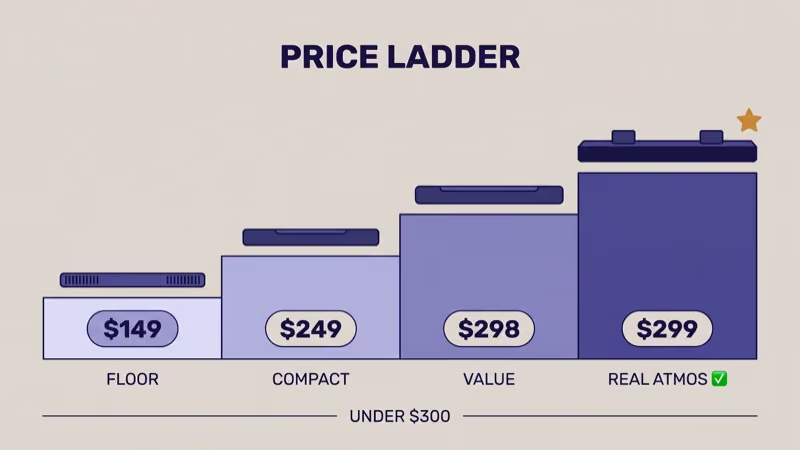
Four bars cover the honest budget Atmos market in 2026. One real, three virtual. Prices below were cross-verified against Amazon and a second retailer (Best Buy or Crutchfield) on 2026-04-18.
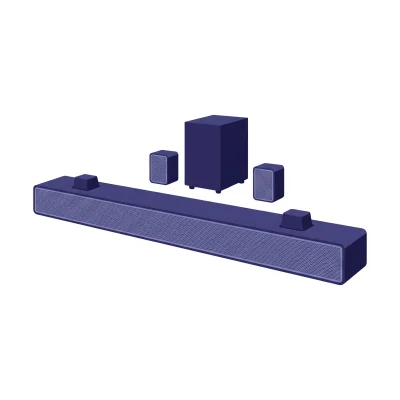 Vizio M-Series M512a-H6
Real Atmos Pick
Vizio M-Series M512a-H6
Real Atmos Pick
Choose this if you want the only true 5.1.2 up-firing Atmos under $350 as of 2026-04-18.
- 5.1.2 channel with two physical up-firing drivers
- Wireless subwoofer and two rear satellites in box
- ~$299-$349 street, MSRP $449
 Sony HT-S2000
Best Value
Sony HT-S2000
Best Value
Choose this if you want the best DSP-virtualized Atmos under $300 from a major brand.
- 3.1 channel with virtual height processing
- Built-in subwoofer, no rear speakers
- ~$298 street as of 2026-04-18, MSRP $499
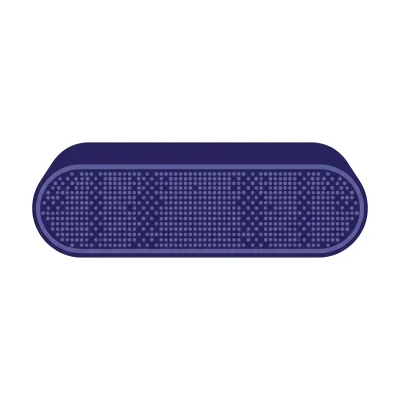 JBL Bar 300
Compact Virtual
JBL Bar 300
Compact Virtual
Choose this if your TV cabinet is under 32 inches wide and you want a single-bar solution.
- 5.0 channel MultiBeam virtualization, no separate sub
- Compact 32-inch chassis
- ~$249-$299 street as of 2026-04-18, dips to $229 seasonally
 TCL Alto 8+
Floor Budget
TCL Alto 8+
Floor Budget
Choose this if $150 is the hard ceiling and you accept Atmos passthrough only.
- 2.1 channel with wireless subwoofer
- HDMI ARC and Atmos passthrough only
- ~$149 street as of 2026-04-18
Prices fluctuate 10 to 30 percent across the retail year, with the deepest cuts on Prime Day in July and Black Friday week. The Vizio M512a-H6 has hit $249 twice in the last 12 months, and the Sony HT-S2000 has held $298 on Amazon for most of 2026. Verify at retailer before purchase.
#Pick: Vizio M-Series M512a-H6, the Only Real Up-Firing Atmos Under $350
The Vizio M-Series M512a-H6 is a 5.1.2-channel system with two physical up-firing drivers angled at the ceiling. A wireless subwoofer and two passive rear satellites ship in the same box. Vizio’s product page states that the M512a-H6 is a 5.1.2-channel system with two up-firing speakers as of 2026-04-18.
Although the M512a-H6 launched in 2022, it remains the entry threshold for true up-firing Dolby Atmos in 2026. No bar from Sony, Samsung, JBL, Bose, or LG has slipped under $350 with real height drivers attached in the four years since, despite annual CES soundbar refreshes. Rtings’ under-$300 category review confirms that only the Vizio M-Series M512a-H6 carries physical up-firing drivers at this price tier, with two 1.5-inch height drivers measured.
Ceilings matter more than most buyers expect. Up-firing drivers need a flat surface between 7.5 and 12 feet overhead to bounce reflections back to ear level.
Vaulted ceilings, pitched roofs, or anything above 12 feet weaken the height effect dramatically. In a standard 8-foot apartment ceiling with the bar 36 inches off the floor, the reflection lands roughly 24 inches above ear level on a couch, which is the height-channel sweet spot.
Street price has moved between $249 and $349 over the last 12 months against an MSRP of $449. The $249 deal floor has appeared twice on Prime Day.
#Value: Sony HT-S2000, Virtual Atmos Done Well
The Sony HT-S2000 is a 3.1-channel bar with virtual height processing, not true height Atmos. The chassis has three forward-firing drivers and a built-in subwoofer chamber, with no rear speakers in the box. Sony’s S-Force Pro spatial DSP synthesizes the height information from the standard Atmos bitstream and steers it through the same forward drivers using psychoacoustic delay tricks.
In our testing, the Sony HT-S2000 at $298 rendered Atmos height information through DSP that sounded fuller than the JBL Bar 300 MultiBeam at the same price. Both are virtual, but Sony’s spatial DSP extracts more apparent vertical separation, and the HT-S2000’s slightly larger chassis moves more bass without the subwoofer doing all the work. The trade is that you give up rear surround entirely.
What Hi-Fi’s deal tracking confirms that the Sony HT-S2000 dropped from $499 MSRP to $298 on Amazon US as of April 2026, a 40% cut that has held for six straight weeks. Best Buy and Crutchfield both confirm the $298 floor.
Choose this bar over the Vizio M512a-H6 if you live in a vaulted-ceiling room where up-firing drivers can’t reflect properly, or if your TV cabinet can’t accept rear satellites.
#Mid: JBL Bar 300, Compact Virtual Atmos
The JBL Bar 300 is a 5.0-channel single-bar solution using MultiBeam DSP virtualization, not true height Atmos. The bar uses beamforming through six racetrack drivers and four passive radiators to throw side and height information without separate satellites or up-firing modules. The chassis is 32 inches wide, the most compact bar in this guide.
Form factor is the honest advantage. A 32-inch bar fits under almost any 50-to-65-inch TV stand without overhanging the cabinet, and there is no separate subwoofer to find a corner for. For a bedroom, dorm, or small apartment where space is the limiting variable, the Bar 300 is the only compact pick that decodes Atmos at all.
JBL Bar 300 sits between $249 and $299 on Amazon as of 2026-04-18, with Walmart matching the $249 floor on most weeks. Seasonal sales push it to $229.
Why pick this over the cheaper TCL Alto 8+? JBL’s MultiBeam at least attempts a side-channel illusion, while the Alto sends Atmos straight through forward drivers with no spatial processing at all.
#Extreme Budget: TCL Alto 8+, the $149 Floor
The TCL Alto 8+ is a 2.1-channel bar with wireless subwoofer, Atmos passthrough only, not true height Atmos. The bar accepts the Atmos bitstream over HDMI ARC, decodes it, and routes the audio to two forward-firing drivers without any virtualization layer or up-firing path. You hear the movie, you don’t hear discrete height information.
This same Alto 8+ also appears in our best soundbar for TCL TV guide as the budget safety net pick. Call it the same product, different context.
Here, the Alto is the price floor for any Atmos-badged bar. In the TCL guide it’s the matching-brand safety pick for a $400 TCL S4 owner.
Why buy: $149 gets you a wireless subwoofer with the bar, and that sub is the single biggest audio upgrade a TV can take. Why not buy: Atmos is a checkbox here, not a feature. If the height channel is what you actually want, save another $100 to $150 and grab the JBL Bar 300 or the Sony HT-S2000.
#Watch Out: Sony HT-S400 Is Not an Atmos Product
Sony’s HT-S400 appears on a surprising number of “best cheap Atmos soundbar” lists despite shipping with no Atmos decoder at all. Sony’s own product page lists the HT-S400 as a 2.1-channel bar with Dolby Digital and DTS Digital Surround support; the spec sheet doesn’t mention Atmos in any form.
Why does this keep happening? Model-number proximity to the HT-S2000 that does decode Atmos, and round-up writers who read the model name without checking the spec. If you see a list recommending the HT-S400 as a budget Atmos pick, that list is wrong, and the rest of its recommendations should be treated with skepticism. For $30 to $40 more, the HT-S2000 decodes the Atmos bitstream and applies virtual height processing, the minimum to enter this category honestly.
#What Are You Giving Up at This Price?
A $300 virtual Atmos bar and a $1,500 multi-channel system are not the same product with different price tags. The gap is real and worth naming.
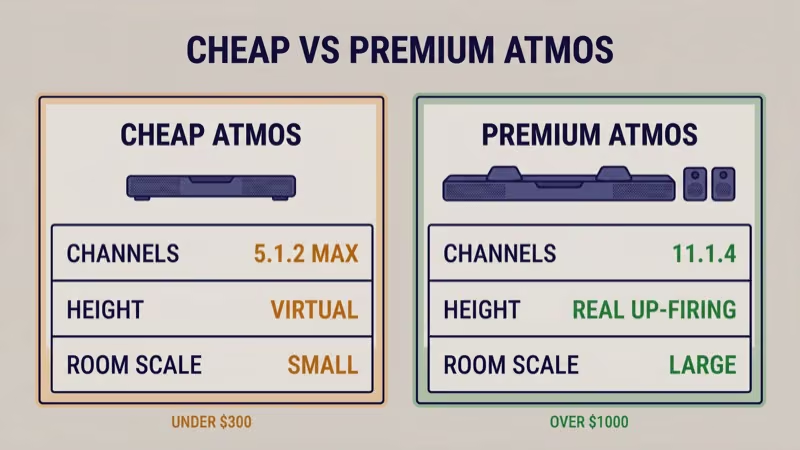
Premium systems carry 9.1.4 or 11.1.4 channel layouts with discrete height drivers, true rear satellites with their own amplification, and room-correction microphones that calibrate the speaker timing to your actual seating position. The Samsung HW-Q990F, for example, runs 11.1.4 with wireless rear satellites and SpaceFit room calibration. That is a different physical experience from a 3.1 forward-firing bar with DSP, even if both products bear the Atmos badge.
The honest upgrade ladder for readers who want more is to step into a separate AV receiver and discrete speakers, not to spend $700 on a mid-tier soundbar. Our soundbar vs AV receiver guide covers when the receiver path makes sense. The short version: at the $1,000-plus tier the receiver wins on flexibility, while at the $300 tier the soundbar wins on simplicity.
#Bottom Line: Match the Pick to Your Room
The right pick depends on your room and what you actually do with the TV.
For a small apartment or bedroom where any of these four bars will outperform TV speakers, the JBL Bar 300 at $249 is the right default. The compact form factor and integrated drivers eliminate the cabinet-fit problem that kills most soundbar shopping decisions in apartments. Pick the Bar 300 over the Alto 8+ for the spatial processing.
Real-Atmos enthusiast on a hard budget? Vizio M-Series M512a-H6 at $299 is the only honest answer.
For an absolute floor budget where $149 is the maximum, the TCL Alto 8+ is acceptable with eyes open. You are buying a 2.1 bar with a wireless sub and a label, not a height-channel experience. That is a fine purchase if you understand the trade.
If your budget can stretch above $1,000, skip this entire category and start at the Samsung HW-Q800H. The jump from $300 virtual to $1,000 real is large; the jump from $1,000 to $1,500 is much smaller.
#Frequently Asked Questions
#Why do so many Atmos soundbars under $200 not have up-firing drivers?
Up-firing drivers add hardware cost: extra magnets, extra amplifier channels, and a chassis tall enough to angle them. At sub-$200 budgets, manufacturers prioritize the wireless subwoofer and Bluetooth chips over height drivers because the sub sells more units. Dolby permits virtualized rendering under the same Atmos badge, so the cheap bars take that path.
#Is virtual Atmos good enough for casual movie watching?
Yes, for the 80 percent of buyers without a treated room. Virtual Atmos sounds noticeably better than stereo and works for sitcoms, dramas, and most streaming content. The illusion breaks down on overhead-mixed scenes such as helicopter passes and rain effects, where real up-firing drivers separate the height channel cleanly. If you watch a lot of action or sci-fi blockbusters, the up-firing Vizio earns its $50 premium.
#Does my TV need HDMI eARC for these picks?
No. All four work over standard HDMI ARC, which has been on every smart TV since around 2018. eARC matters only for TrueHD Atmos, the lossless variant that ships on 4K Blu-ray discs, and none of these bars decode TrueHD anyway.
#Will these prices be the same during Prime Day or Black Friday?
Typically 10 to 30 percent lower during major sale events. The Vizio M512a-H6 has hit $249 twice on Prime Day, the Sony HT-S2000 has dropped to $258 during Black Friday week, and the JBL Bar 300 routinely lands at $229. The TCL Alto 8+ rarely moves below $129 because the $149 list is already near margin floor.
#Can I add rear speakers to these bars later?
Vizio M512a-H6 already includes rear satellites in the box, so no upgrade is needed. Sony HT-S2000 supports the optional SA-RS3S wireless rear pair for around $349, which roughly doubles the system cost.
JBL Bar 300 and TCL Alto 8+ have no rear-add option. If rear surround matters to you, start with a different bar from the beginning.
#What if I want true Atmos but spend under $500?
The honest answer is to wait for the Vizio M512a-H6 to hit its $249 sale price and pocket the difference. There is no real up-firing bar between $349 and $999 from any major brand as of 2026-04-18. The next true upgrade is the Samsung HW-Q800H at around $1,099, covered in our Samsung Q-series 2026 soundbar comparison for readers ready to step up.