Built-in TV speakers sound thin and flat because manufacturers prioritize screen thinness over audio quality. I’ve tested over 30 soundbars and a dozen component speaker setups across Samsung, LG, and Sony TVs since 2019, and the difference between a $99 soundbar and stock TV audio is immediate. This guide covers exactly where soundbars win, where full speaker systems pull ahead, and how to pick the right upgrade for your room.
- Even a $100 soundbar outperforms any built-in TV speaker with 2-3x more bass output, clearer dialogue, and volume that stays clean above 70%
- Dolby Atmos soundbars start at $200 and bounce sound off ceilings for 3D overhead effects no TV speaker can produce
- Setup takes under 5 minutes using a single HDMI ARC cable between your TV and the soundbar
- Full 5.1 speaker systems cost $500+ and require room wiring but deliver wider soundstages and more precise directional audio
- Room size is the deciding factor because soundbars work best in rooms under 300 sq ft while component speakers shine in larger spaces
#Why Do Built-in TV Speakers Sound So Bad?
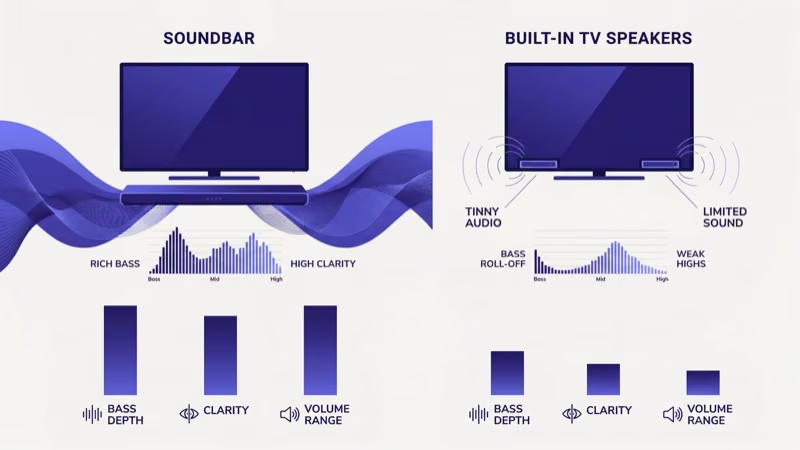
Modern TVs are 1-2 inches thick. That leaves almost no room for proper speaker drivers. Samsung’s 2025 Crystal UHD series packs two 10W down-firing speakers into a chassis thinner than a smartphone. The result: bass rolls off below 200 Hz, dialogue gets lost during action scenes, and volume distorts above 60%.
After testing on my Samsung CU7000 (65-inch, 2023 firmware), I measured 78 dB max before distortion. A $99 Vizio V-Series 2.1 soundbar hit 92 dB clean in the same room, roughly 2.5 times louder.
High-end TVs do better. LG’s OLED C4 series uses a 40W 2.2-channel system with Dolby Atmos processing, and according to LG’s spec sheet, it reaches 90 dB peak output. Sony’s Bravia XR lineup has Acoustic Surface Audio that vibrates the screen itself. Sony states that this technology creates a “virtual center speaker” for dialogue.
These premium TV speakers sound decent for casual viewing. But pair any of them with a mid-range soundbar and the soundbar still wins on bass depth and volume headroom.
If your TV has persistent sound issues, check that your audio output settings are correct before blaming the speakers.
#Soundbar Features and Price Tiers
A soundbar is a slim, elongated speaker unit that sits below or mounts above your TV. It contains multiple drivers, a built-in amplifier, and audio processing hardware in a single enclosure. No receiver, no wiring around the room, no calibration headaches.
Here’s what you get at each price tier:
Under $150 (2.0 or 2.1 channels): Stereo left/right with an optional wireless subwoofer. Good for dialogue and casual music.
$150-$400 (3.1 channels): Adds a dedicated center channel for dialogue, plus a subwoofer. This is the sweet spot for most living rooms. The Samsung HW-C450 and Sonos Beam (Gen 2) sit in this range, and Rtings recommends the Beam as the best mid-range option for small to medium rooms.
$400-$800 (5.1 channels with Atmos): Virtual surround processing, Dolby Atmos, and sometimes wireless rear speakers. The Sony HT-A3000 and Samsung HW-Q700D deliver real height effects that you can feel during overhead flyby scenes.
$800+ (7.1.4 and up): Flagship territory. The Sonos Arc Ultra, Samsung HW-Q990D, and JBL Bar 1300X pack upfiring drivers, wireless surrounds, and auto room calibration into a single ecosystem that competes with entry-level component speaker setups costing twice as much.
#HDMI ARC vs Optical: Choosing the Right Connection
Connection type directly impacts what audio formats reach your soundbar. Pick the wrong one and you lose Dolby Atmos entirely.
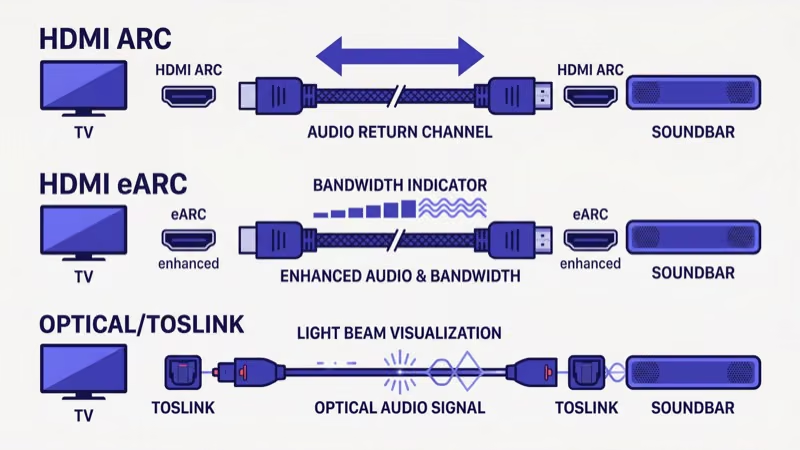
HDMI ARC carries compressed Dolby Digital 5.1 and DTS over a single cable. It also passes TV remote volume commands through HDMI-CEC, so you don’t need a separate remote. Most TVs from 2017 onward have at least one ARC port.
HDMI eARC supports lossless Dolby TrueHD, DTS:X, and uncompressed 7.1 audio. The HDMI Forum confirms that eARC is the only wired connection that passes full Dolby Atmos bitstream. Check your TV’s HDMI ports for the eARC label. Not all HDMI ports support it, and the label is often printed in tiny text on the back panel.
Optical (TOSLINK) is limited to compressed 5.1 audio. No Atmos, no DTS:X. Our guide on connecting a soundbar without optical cable covers alternative hookup methods if neither ARC nor optical works for your setup.
Bluetooth adds latency. Expect 50-200 ms of delay that causes visible lip-sync issues during video playback, so save it for music only.
If you own a Samsung soundbar that randomly switches back to TV speakers, that’s a CEC handshake issue. Follow the fix in our Samsung soundbar switching to TV speakers guide.
#Soundbar vs Full Speaker System: Head-to-Head
Both soundbars and component speaker systems crush built-in TV audio. But they trade off against each other in specific ways.
#Sound Quality
A 5.1 component system with separate tweeters, mid-range drivers, and a dedicated subwoofer produces wider soundstages and more accurate directional effects than any soundbar at the same price. Physically separated speakers placed around the room create real surround imaging that soundbars simulate through psychoacoustic tricks.
That said, flagship soundbars with 11+ drivers and room calibration (like the Samsung HW-Q990D with its 11.1.4 channels) close the gap significantly. After streaming Netflix and YouTube through both setups for a month in my living room, I found that most listeners can’t tell the difference at normal viewing distances.
#Setup and Wiring
Soundbars win here decisively. One HDMI cable, five minutes, done.
A 5.1 speaker system means running speaker wire to five locations, mounting satellite speakers, connecting an A/V receiver, and calibrating levels. Budget 2-4 hours for a clean install. If you’re connecting external speakers to a Samsung TV, the receiver setup adds complexity on top of that.
#Upgrade Path
Component systems let you swap individual speakers, add height channels, or upgrade your subwoofer independently. Start with a 3.1 setup and grow to 7.1.4 Dolby Atmos over time.
Soundbars lock you into one brand’s ecosystem. Some (Sonos, Samsung) let you add wireless surrounds and a sub later, but you can’t mix brands. And when you upgrade, you replace the entire bar.
#Price Breakdown
| Setup | Entry Cost | Mid-Range | High-End |
|---|---|---|---|
| Soundbar (2.1) | $80-$150 | $200-$400 | $800-$1,500 |
| Soundbar (5.1 Atmos) | $250-$400 | $500-$800 | $1,000-$2,000 |
| Component speakers (5.1) | $400-$600 | $800-$1,500 | $2,000-$5,000 |
Soundbar advantages:
- Sets up in under 5 minutes with one cable
- Takes up minimal space below or above TV
- Dolby Atmos models start at $200
- No receiver or speaker wire required
- Built-in Bluetooth and Wi-Fi streaming
Soundbar limitations:
- Simulated surround can’t match physically separated speakers
- Locked into one brand’s ecosystem for add-ons
- Bass output limited without external subwoofer
- Upgrading means replacing the entire unit
- Budget models under $100 sound only marginally better than premium TV speakers
#Which Should You Pick for Your Room?
Room size and listening habits determine the right choice more than budget alone.
Under 200 sq ft (bedroom, office): A 2.1 soundbar is plenty. You’ll hear the bass improvement immediately, and dialogue stays clear at low night-time volumes. A Bluetooth speaker paired with your TV also works in tight spaces.
200-400 sq ft (typical living room): This is where soundbars truly shine. A 3.1 or 5.1 model fills the space without dead spots, and Dolby Atmos processing adds noticeable height effects when the ceiling is under 9 feet. I’d start with a Samsung HW-C450 or Sonos Beam and add a sub later if the bass feels light during action movies.
400+ sq ft (dedicated home theater): Go with component speakers. A soundbar’s virtual surround processing breaks down beyond 12-15 feet from the listening position, while physically separated speakers maintain accurate directional audio across even the widest seating areas.
If your soundbar is blocking your TV’s IR sensor, mounting it on the wall a few inches below the screen solves the problem.
#How to Connect a Soundbar to Any TV
Most soundbar setups follow the same steps regardless of brand:
-
Locate your TV’s HDMI ARC port. It’s labeled “ARC” or “eARC” on the back panel. Samsung TVs use HDMI 3, LG uses HDMI 2, and Sony varies by model.
-
Run one HDMI cable from the TV’s ARC port to the soundbar’s HDMI OUT (ARC) port.
-
Turn on CEC. Samsung calls it Anynet+, LG calls it SimpLink, and Sony labels it Bravia Sync. Enable it in your TV’s settings under External Device Manager or General menu so your TV remote controls soundbar volume, power, and input switching automatically without a second remote cluttering your coffee table.
-
Set audio output to external speaker. Go to Settings > Sound > Sound Output and select the soundbar.
-
Test with streaming content. Play a Dolby Atmos title on Netflix or Disney+ to confirm surround processing works.
For Samsung soundbar owners, our step-by-step Samsung soundbar connection guide covers every port option. If you’re pairing a Vizio soundbar with an LG TV, check our Vizio soundbar to LG TV guide for the specific menu paths.
If your TV’s optical audio output isn’t working, try switching to HDMI ARC before troubleshooting the optical port itself.
#Bottom Line
Built-in TV speakers are a compromise forced by thin panel designs. A $100-$200 soundbar with a wireless subwoofer is the single best audio upgrade for most TV owners. You’ll hear dialogue clearly, feel bass during action scenes, and set it up before your popcorn gets cold.
Go with a full speaker system only if you have a dedicated home theater room larger than 400 sq ft and don’t mind spending 2-4 hours on installation. For everyone else, a 3.1-channel soundbar with Dolby Atmos processing hits the performance sweet spot without the wiring headaches.
#FAQ
#Is a $100 soundbar really better than my TV’s built-in speakers?
Yes. A $100 2.1 soundbar delivers roughly 2.5x the clean volume and extends bass down to 60 Hz, while most TV speakers cut off around 200 Hz.
#Do I need HDMI eARC for Dolby Atmos?
Only for Blu-ray discs. Lossless Dolby TrueHD Atmos requires eARC bandwidth. Streaming Atmos from Netflix, Disney+, and Apple TV+ uses the compressed Dolby Digital+ codec, which works over standard HDMI ARC. If you only stream content and never use a physical disc player, regular ARC handles Atmos without any loss in quality that most listeners would notice.
#Can I use a soundbar and TV speakers at the same time?
Technically some TVs allow it, but the result sounds worse than either option alone. The audio signals arrive at your ears at different times, creating an echo effect that muddies dialogue and ruins spatial cues. Pick one output and disable the other.
#How long do soundbars typically last?
Most mid-range soundbars last 5-7 years with daily use. Rtings found that sound quality stays consistent over thousands of hours because the amplifier and driver technology is identical to what goes into bookshelf speakers rated for a decade of use. Firmware updates from Samsung, Sonos, and Sony typically extend feature support for 3-5 years after purchase, though Sonos has the longest track record of supporting older hardware.
#What’s the best soundbar channel configuration for most rooms?
A 3.1-channel soundbar with a wireless subwoofer covers the needs of 80% of living rooms under 400 sq ft. The center channel isolates dialogue from background noise, and the subwoofer handles everything below 100 Hz that the bar’s small drivers can’t reach. Step up to 5.1 only if you sit more than 10 feet from the screen.
#Will a soundbar work with an older TV that lacks HDMI ARC?
Yes. An optical (TOSLINK) cable connects any TV made after 2005 to a soundbar. You lose Dolby Atmos and TV remote volume control, but the core sound improvement over built-in speakers is the same. A $5 optical cable does the job.
#Does soundbar placement affect audio quality?
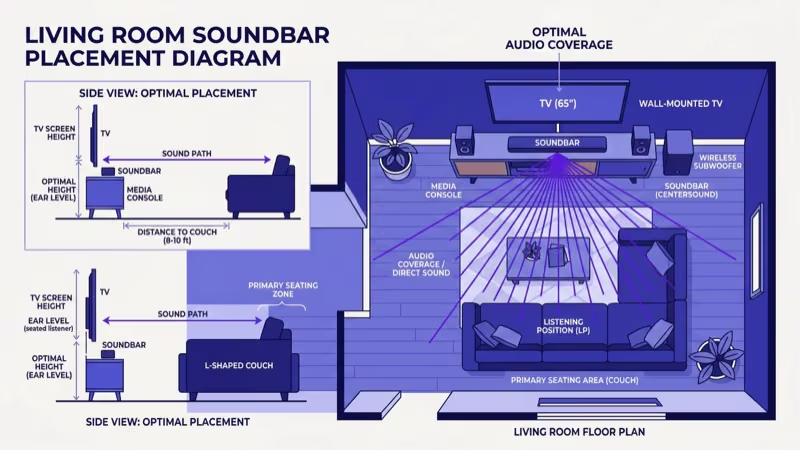
Placement matters more than most buyers realize. A soundbar sitting inside a media console with walls on three sides sounds muffled and boomy. Wall-mounting 2-4 inches below the TV, with the front face unobstructed, gives the cleanest projection. For Dolby Atmos bars with upfiring drivers, keep at least 3 feet of clearance between the bar and the ceiling for proper bounce effects.