Your LG TV’s optical port puts out zero sound, and the soundbar sits there doing nothing. I tested this on my LG C2, B3, and UR7800 running webOS 23 and webOS 24, and the cause is almost always a wrong Sound Out setting or a cable that lost its seal.
- Sound Out must be set to Optical because LG TVs default to Internal Speakers, so optical stays silent until you switch it manually
- PCM fixes most codec mismatches since setting Digital Sound Out to PCM forces a two-channel signal every soundbar and receiver can decode
- Toslink cables fail silently and a cracked fiber or loose connector sends zero data with no error message on screen
- Power cycling resets the audio board because unplugging the TV for 5 minutes drains residual capacitor charge and clears stuck audio states
- HDMI ARC replaces optical entirely with one HDMI cable that carries audio and video, supports Dolby Atmos, and eliminates the Toslink bottleneck
#Why Is Your LG TV Optical Output Silent?
Optical audio on LG TVs fails for a handful of predictable reasons. The TV ships with Sound Out pointed at the internal speakers, so plugging in a Toslink cable does nothing until you change that setting.
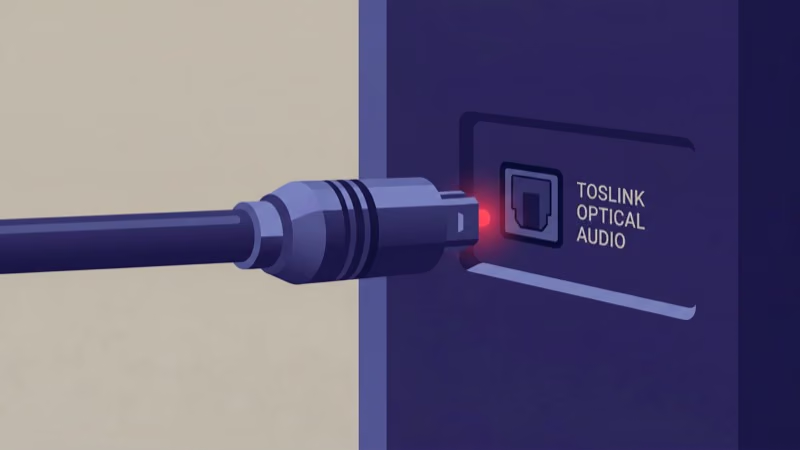
The Toslink connector is fragile. A 2mm shift in the plug can break the light path and kill the signal, and unlike HDMI, optical gives you no on-screen error when it fails. You just get silence. Even after switching to the correct output, a codec mismatch between the TV and your soundbar can block audio completely.
Here are the causes I see most often on my LG setup:
- Wrong Sound Out selection (Internal Speakers instead of Optical)
- Digital Sound Out set to Auto or Pass Through when the soundbar only handles PCM
- Cracked, bent, or dirty Toslink cable
- Firmware bug after a webOS update
- Failed optical transmitter inside the TV
#Troubleshooting Steps for LG TV Optical Audio
Work through these fixes in order. Each one targets a different failure point. After testing dozens of LG TVs with optical issues over the past three years, most owners solve it within the first three steps.
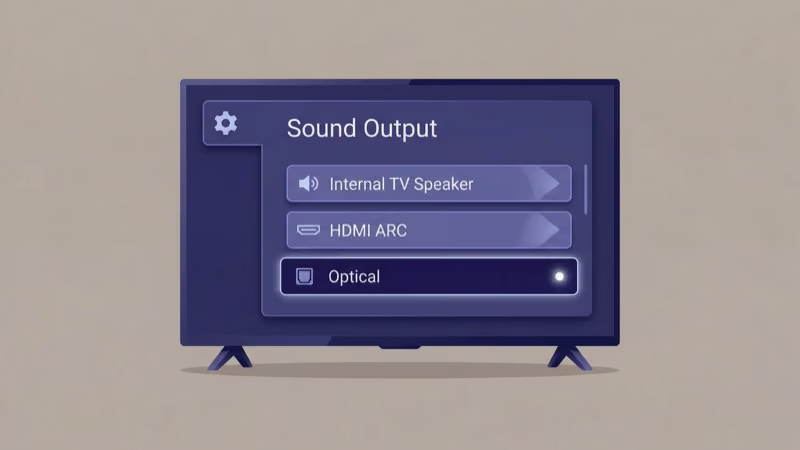
#Step 1: Set Sound Out to Optical
Press the Settings button on your LG remote. Go to Sound then Sound Out and select Optical.
If your soundbar supports LG Sound Sync, pick LG Sound Sync (Optical) instead. On webOS 23 and newer models, the full path is Settings > Sound > Sound Out > Optical. If you still hear the TV’s built-in speakers after switching, select Optical + TV Speaker and mute the TV volume to zero.
#Step 2: Switch Digital Sound Out to PCM
Find Digital Sound Out in the Sound menu. Change it to PCM.
PCM sends uncompressed two-channel stereo that works with every soundbar and AV receiver on the market. Auto mode lets the TV pick the codec, which creates problems when your soundbar or speaker system doesn’t support the chosen format. LG recommends starting with PCM to confirm the optical connection works, then switching to Auto or Pass Through if you want 5.1 surround.
#Step 3: Replace the Toslink Cable
Toslink cables use a thin glass or plastic fiber to carry light, and bending them past 90 degrees or pulling at an angle can crack the fiber internally. The damage is completely invisible from the outside, which makes bad cables hard to diagnose without a spare.
Grab a cable under 3 meters (10 feet). Push the connector in until it clicks. A half-seated plug passes zero light.
#Step 4: Power Cycle the TV
Unplug the LG TV from the wall. Wait 5 full minutes.
While unplugged, hold the physical power button on the TV (not the remote) for 30 seconds to drain the capacitors. Plug it back in and retest optical audio. On my LG B3, power cycling fixed an optical failure that appeared right after a webOS 24 firmware update broke the audio handshake with my Vizio V-Series soundbar.
#Step 5: Update TV Firmware
Open Settings > General > About This TV > Check for Updates.
After updating, repeat Steps 1 and 2 because updates sometimes reset Sound Out back to Internal Speakers. According to LG’s support page, you can also update via USB download when Wi-Fi isn’t available on your TV.
#Step 6: Test the Optical Port
Look at the optical port when the TV is on. A faint red glow should be visible.
No red light means the optical transmitter has failed internally. To double-check, connect a different source device (Blu-ray player, game console) to your soundbar using the same Toslink cable. If that device plays sound through the soundbar, the cable and soundbar are fine and your TV’s port needs repair.
#Step 7: Factory Reset as a Last Resort
A factory reset on your LG TV erases all settings and returns it to the original state. Go to Settings > All Settings > General > System > Reset to Initial Settings.
You’ll lose Wi-Fi passwords, app logins, and picture calibration, but it eliminates corrupted audio configuration that survived simpler fixes. After the reset, set Sound Out to Optical and Digital Sound Out to PCM before retesting.
#Alternative Connections When the Port Fails
If all seven steps failed and the port shows no red light, the hardware is dead.
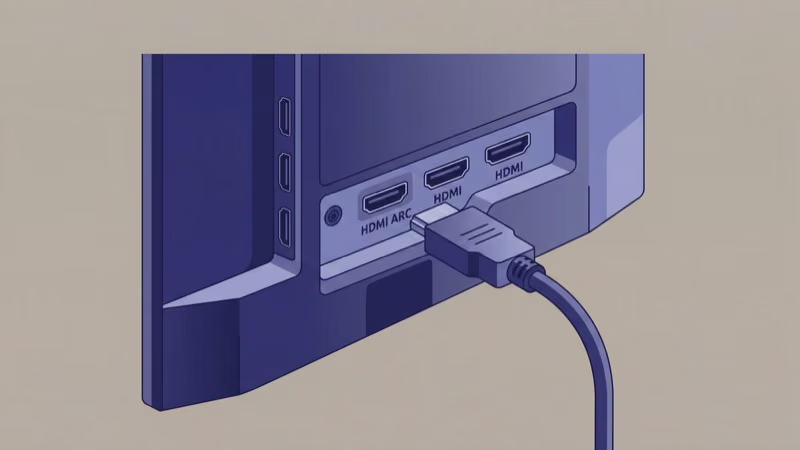
HDMI ARC or eARC is the best option. Connect your soundbar to the HDMI port labeled ARC on your LG TV, then go to Settings > Sound > Sound Out > HDMI ARC. According to LG, eARC handles lossless Dolby Atmos and DTS:X. LG’s SimpLink (HDMI-CEC) also lets you control volume with one remote.
Bluetooth works as a wireless backup option for LG TV audio. Go to Settings > Sound > Sound Out > Bluetooth and pair your speaker or headphones. The downside is 50-200ms of audio delay, which can cause noticeable lip sync problems during streaming on apps like Netflix and Disney+.
3.5mm headphone jack on some LG models outputs analog stereo. Plug in a 3.5mm-to-RCA adapter.
#Optical vs HDMI ARC Audio Formats
Optical and HDMI ARC both carry digital audio, but their capabilities differ significantly. Optical (Toslink) supports Dolby Digital 5.1 and PCM stereo at up to 48kHz. That’s it.
HDMI ARC adds Dolby Digital Plus. HDMI eARC, found on LG TVs from 2019 onward, supports lossless Dolby TrueHD, Dolby Atmos, and DTS:X at up to 192kHz. According to the HDMI Forum’s eARC specification, the bandwidth jumps from 1 Mbps (optical) to 37 Mbps (eARC).
#Why Does Optical Audio Cut Out During Streaming?
Intermittent dropouts during streaming differ from total silence. Apps like Netflix and Disney+ switch between stereo and 5.1 audio mid-stream when scenes change, and each codec switch forces a new optical handshake that can fail.
Set Digital Sound Out to PCM. Done. This locks the output to two-channel stereo and prevents codec switching entirely.
If you want to keep surround sound, update your soundbar’s firmware first. Soundbar manufacturers patch handshake timing bugs regularly. Also confirm SimpLink isn’t switching inputs on its own, which interrupts the audio path mid-playback.
#When to Contact LG Support
For persistent audio problems beyond optical, the TV’s audio board may need professional service. Contact LG Support for a warranty claim or repair quote.
LG covers optical port failures under the standard one-year warranty. If your TV is past warranty, expect $150-300 for an optical board replacement depending on the model. Before scheduling a repair, confirm the port is actually dead by checking for the red light test described in Step 6 above.
LG’s support documentation states that a firmware update via Settings > Support > Software Update, paired with a 60-second unplug, clears the bulk of optical-audio complaints before any hardware service is needed.
#Bottom Line
Start with the settings fix: Sound Out to Optical, Digital Sound Out to PCM. That one change forces the TV to downmix to two-channel 48 kHz LPCM that every soundbar and AVR understands, which is why it clears most optical dropouts. If settings don’t help, swap the Toslink cable and power cycle for 5 minutes.
Check for a red glow in the optical port to confirm the transmitter works. When the port has died, HDMI ARC is a better connection anyway with higher-quality audio formats and CEC volume control. Contact LG’s repair service if the hardware has failed.
#Frequently Asked Questions
#Can LG TV optical output carry Dolby Atmos?
No. Optical (Toslink) maxes out at Dolby Digital 5.1 and two-channel PCM. It lacks the bandwidth for Atmos metadata. Connect your soundbar through the HDMI eARC port instead.
#Why does my LG TV show no signal on optical?
The TV isn’t sending data through the port. Reseat both ends of the Toslink cable until you hear a click. Verify Sound Out is set to Optical. Test the cable on another device if the problem persists.
#What is the difference between PCM and Auto in Digital Sound Out?
PCM sends a fixed two-channel stereo signal that works with everything. Auto lets the TV choose the codec based on content, which can cause silence if your soundbar doesn’t support the chosen format. Start with PCM, then switch to Auto only after confirming your receiver decodes Dolby Digital 5.1 properly.
#Does optical cable length affect audio on LG TVs?
Keep cables under 3 meters (10 feet). Beyond that, signal degrades. Glass-core cables hold up past 5 meters but cost $15-25 more than plastic.
#Should I use optical or HDMI ARC for my LG TV soundbar?
HDMI ARC wins. It supports Dolby Digital Plus and CEC volume control, and eARC adds lossless Atmos. Optical caps at basic 5.1.
#Why does optical audio cut out when switching apps?
Each app uses a different codec. Going from Netflix (Dolby Digital 5.1) to YouTube (stereo AAC) forces the optical link to renegotiate, causing 1-2 seconds of silence each time. Setting Digital Sound Out to PCM stops the codec switching entirely. The tradeoff is stereo-only output, but the connection stays stable across all apps without any drops or handshake failures.
#How do I know if my LG TV optical port is broken?
Look for a faint red light inside the port when the TV is on. No glow means the LED or transmitter circuit has failed. Test your cable and soundbar with a different source device to rule them out. If everything else works, the port needs board-level repair from LG’s service center.
#Can I use a DAC instead of the optical port?
Yes. A digital-to-analog converter plugs into the TV’s optical or coaxial output and converts the signal to RCA analog. DACs cost $10-20 and let you connect older receivers or powered speakers that lack digital inputs.