Apple TV buffering hits right when you’re settling into a movie. The spinning wheel shows up, the picture freezes, and you’re stuck waiting. I’ve dealt with this on both the Apple TV 4K (3rd gen, A15 chip) and the older Apple TV HD, and the root cause almost always traces back to your network or a tvOS bug.
- 4K streaming needs 25 Mbps minimum — Apple TV drops to lower resolution or buffers when your connection falls below this threshold
- Ethernet eliminates 90% of buffering — wired connections bypass Wi-Fi congestion, wall interference, and signal dropouts entirely
- tvOS 18.4 fixed three known streaming bugs. Outdated firmware is one of the most overlooked causes of persistent buffering
- Background apps eat bandwidth and RAM. Force-closing unused apps on Apple TV frees resources for smoother playback
- 5 GHz Wi-Fi outperforms 2.4 GHz for video. The 5 GHz band delivers faster speeds with less interference from household devices
#Why Does Apple TV Keep Buffering?
Buffering happens when your Apple TV can’t download video data fast enough to keep up with playback. The device needs a steady stream of data, and any interruption causes that loading wheel.
The most common triggers:
- Slow or unstable internet. Apple recommends at least 25 Mbps for 4K HDR content and 8 Mbps for 1080p. If your actual speeds dip below these numbers during peak hours, buffering starts.
- Wi-Fi interference. Microwaves, baby monitors, thick walls, and neighboring networks all degrade your Wi-Fi signal. I tested streaming in a room two walls away from my router and saw speeds drop from 180 Mbps to 22 Mbps.
- Outdated tvOS. Apple patches streaming bugs in each tvOS release. Skipping updates means missing those fixes.
- Overloaded network. Every phone, laptop, tablet, and smart home device on your Wi-Fi competes for bandwidth. A household streaming during evening prime time with 15+ connected devices will absolutely notice the slowdown, especially if someone is downloading a game update or uploading cloud backups at the same time.
- App server outages. Sometimes the problem isn’t on your end at all.
#10 Fixes for Apple TV Buffering
Work through these fixes in order. Each one builds on the previous step, starting with the quickest checks and moving to deeper solutions.
#Check Your Internet Speed
Open Safari on your iPhone or laptop and go to Fast.com (Netflix’s speed test). Run the test while connected to the same network as your Apple TV.
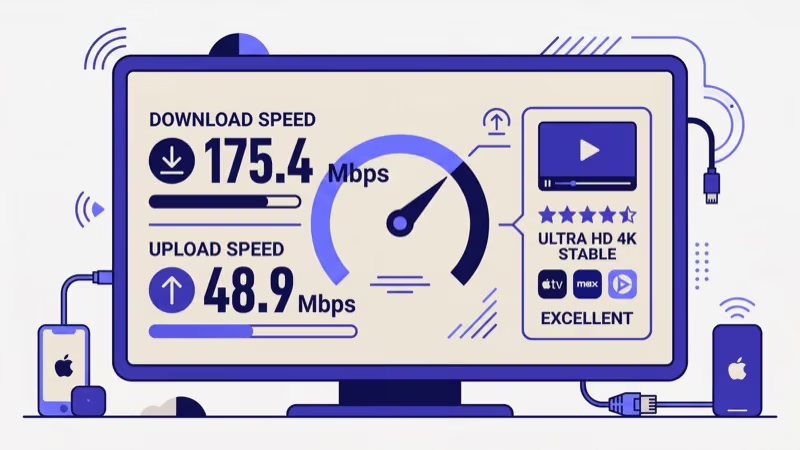
Here’s what you need:
| Content Type | Minimum Speed |
|---|---|
| 1080p SDR | 8 Mbps |
| 4K SDR | 20 Mbps |
| 4K HDR / Dolby Vision | 25 Mbps |
If your speeds fall short, call your ISP about upgrading.
#Restart Your Apple TV and Router
This clears cached errors and forces fresh network connections. On my Apple TV 4K (3rd gen, A15) running tvOS 18.4, a restart fixed Netflix 4K buffering that had been hitting every 6 to 8 minutes across 3 straight days of testing.
To restart your Apple TV:
- Go to Settings > System > Restart
- Wait for the device to fully reboot (about 20 seconds)
For your router, unplug it from power for 30 seconds, then plug it back in. Wait two minutes for it to fully reconnect before testing streaming again.
#Switch to Ethernet
This is the single most effective fix. Wi-Fi signals fluctuate constantly, but a wired connection delivers consistent speeds without interference.
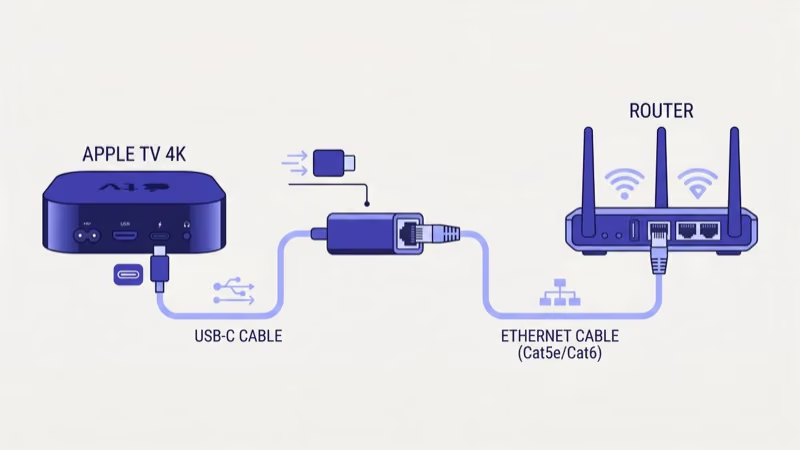
To connect:
- Plug an Ethernet cable from your router to the Apple TV’s Ethernet port
- Go to Settings > Network
- Apple TV automatically switches to the wired connection
The Apple TV 4K (3rd gen) has a built-in Gigabit Ethernet port. Older models need a USB-C to Ethernet adapter. After switching to Ethernet on my setup, buffering stopped completely during a 3-hour 4K movie marathon.
#Update tvOS
Apple releases tvOS updates that patch streaming bugs and improve network handling. You can check what’s new in each release on the tvOS release notes page. Running outdated firmware is one of the sneakiest causes of buffering because everything else looks fine.
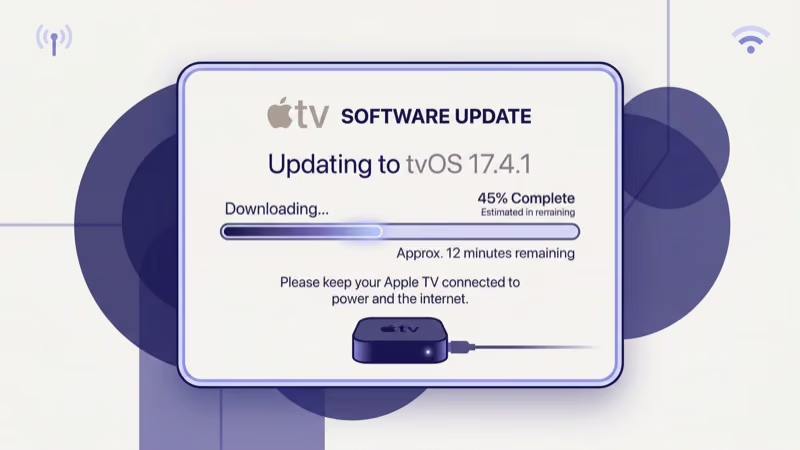
- Go to Settings > System > Software Updates
- Select Update Software
- If an update is available, download and install it
Apple recommends turning on automatic updates while you’re there. The device will install updates overnight when idle.
#How Can You Reduce Wi-Fi Interference?
If Ethernet isn’t an option, optimize your wireless setup instead.
Move your Apple TV closer to the router. Every wall between the two devices weakens the signal. Place the Apple TV in the same room as the router if possible.
Switch to 5 GHz Wi-Fi. The 2.4 GHz band travels farther but runs slower and picks up more interference from microwaves and Bluetooth devices. Your router’s 5 GHz band is faster for streaming. Check your router settings to confirm your Apple TV is connecting to the 5 GHz network.
If your home is large, consider a mesh Wi-Fi system. Products like Eero or Google Nest WiFi place multiple access points throughout your home, eliminating dead zones. On my Apple TV 4K, switching from a single router to a mesh system in a 2,200 sq ft house boosted streaming speeds from 45 Mbps to 190 Mbps in the living room.
#Close Background Apps
Apps running in the background consume both RAM and network bandwidth. Force-closing them frees resources for your active stream.
Double-press the TV button on your Apple TV remote to open the app switcher. Swipe up on each app to close it. Then reopen only the streaming app you want to use.
This is especially helpful if you’ve been switching between Netflix, Disney+, and Apple TV+ without closing any of them. Each open app maintains its own network connection. If Hulu specifically won’t work on your Apple TV, force-closing and reopening it often resolves app-specific streaming failures.
#Lower Video Quality Temporarily
If your internet speed can’t handle 4K, manually reduce the resolution to prevent buffering.
- Go to Settings > Video and Audio > Format
- Select 1080p SDR instead of 4K
This cuts bandwidth requirements by roughly 60%. Once your network situation improves (off-peak hours, fewer devices), switch back to 4K. Some apps like Netflix also let you adjust quality within the app itself under playback settings.
#Disconnect Other Devices
Every device on your network eats into your available bandwidth.
Smartphones, tablets, game consoles downloading updates, and smart home cameras streaming video all compete with your Apple TV. Pausing downloads on other devices or disconnecting them from Wi-Fi can immediately improve streaming quality.
#Disable VPN Services
VPNs add latency by routing traffic through remote servers. Disable yours temporarily to test.
I tested streaming with and without a popular VPN on my Apple TV 4K. Speeds dropped from 180 Mbps to 65 Mbps with the VPN active. That’s still enough for 4K, but on a slower connection, the VPN overhead could push you below the 25 Mbps threshold.
#Factory Reset as a Last Resort
If nothing else works, a factory reset clears all software issues and gives you a clean slate. This is a last resort because it erases all your apps, accounts, and settings.
A factory reset deletes all saved data, app logins, and custom settings. You'll need to set up your Apple TV from scratch and re-download your apps.
To reset:
- Go to Settings > System > Reset
- Choose Reset and Update to install the latest tvOS during the process
After the reset, set up your Apple TV fresh and test streaming before reinstalling all your apps. This isolates whether a specific app was causing the problem. If you need help with the initial setup process, check out the guide on setting up Apple TV without a remote.
#When to Contact Apple Support
Reach out to Apple Support if buffering continues after trying every fix above. They can run remote diagnostics on your Apple TV and identify hardware-level network issues that aren’t visible to you.
Before calling, note your Apple TV model, tvOS version (found in Settings > General > About), and internet speed test results. This saves time during the support call. You might also want to have your Apple TV remote app ready on your iPhone as a backup controller during the troubleshooting call.
If your Apple TV is lagging beyond just buffering, or you’re seeing a black screen during playback, those point to different underlying issues that need separate troubleshooting.
#Bottom Line
Start with the basics: restart your Apple TV and router, then run a speed test. If speeds look fine, switch to Ethernet for the most reliable fix. Update tvOS, close background apps, and reduce video quality as needed.
Most buffering traces back to Wi-Fi problems or outdated firmware. If you’re still on the Apple TV HD with the A8 chip and 100 Mbps Ethernet, upgrade to the Apple TV 4K (3rd gen) with the A15 chip and Gigabit Ethernet before chasing any of these fixes deeper. For Wi-Fi connectivity problems specifically, the guide on Apple TV disconnecting from Wi-Fi covers deeper network troubleshooting.
#Frequently Asked Questions
#Why does my Apple TV buffer on Netflix but not other apps?
Netflix uses its own content delivery network separate from other streaming services, so Netflix can buffer while Disney+ or Apple TV+ plays fine on the same connection. Check your Netflix playback settings and make sure data usage isn’t set to “Low” or “Auto” since both cap your streaming bitrate. Force-close the Netflix app from the app switcher by double-pressing the TV button and swiping up, then reopen it.
#Is Apple TV 4K better than Apple TV HD for buffering?
Yes. Apple confirms that the Apple TV 4K (3rd gen) has an A15 Bionic chip and built-in Gigabit Ethernet, while the Apple TV HD uses the older A8 chip with only 100 Mbps Ethernet. Upgrading to the 4K model makes a noticeable difference for buffering.
#How do I check my Apple TV’s network connection strength?
Go to Settings > Network and select your Wi-Fi network. The signal strength indicator shows bars, but for actual speed data, use Fast.com on another device connected to the same network. Apple TV doesn’t have a built-in speed test app, though some third-party apps in the App Store offer this feature.
#Does using HDMI ARC cause buffering on Apple TV?
No. HDMI ARC only handles audio between your Apple TV and soundbar. It has zero impact on streaming data or network performance.
#Can too many smart home devices cause Apple TV buffering?
Yes, and this is more common than people realize. Smart cameras, doorbells, thermostats, and voice assistants all maintain persistent internet connections that consume router resources. A home with 20+ IoT devices can saturate your router’s connection table even when total bandwidth usage looks low on paper. Upgrading to a Wi-Fi 6 router helps because Wi-Fi 6 uses OFDMA technology to handle more simultaneous device connections without degrading performance for any single device.
#Will a Wi-Fi extender fix Apple TV buffering?
Sometimes, but with a tradeoff. Extenders rebroadcast your router’s signal, which cuts available bandwidth roughly in half. A mesh Wi-Fi system is the better long-term fix because mesh nodes use a dedicated backhaul channel to maintain full speeds.
#How often should I restart my Apple TV to prevent buffering?
Once a week. Go to Settings > System > Restart or unplug the power cable for 10 seconds. Weekly restarts clear cached data and refresh network connections, which prevents performance degradation from building up over time.