Charging your Apple TV remote is straightforward once you know the cable type and port location. The Siri Remote has a built-in rechargeable battery that Apple rates for months of use on a single charge. I’ve owned every generation of the Siri Remote since 2015, and the charging process stays the same across all versions. This guide covers the exact steps, battery-check methods, and what to do with older non-rechargeable Apple remotes.
- Lightning or USB-C port sits on the bottom edge of every Siri Remote model
- 2-hour full charge brings a completely drained Siri Remote to 100% from any standard USB power source
- 2 to 3 months per charge is typical for daily streaming use, according to Apple and confirmed by my own testing
- No charging LED on the remote means you check battery status through Settings > Remotes and Devices > Remote
- Older remotes use CR2032 batteries because the 1st, 2nd, and 3rd-generation aluminum Apple TV remotes aren’t rechargeable
#Charging the Siri Remote Step by Step
Apple sends a low-battery alert to your TV screen when the Siri Remote drops to 20%. That’s your cue.
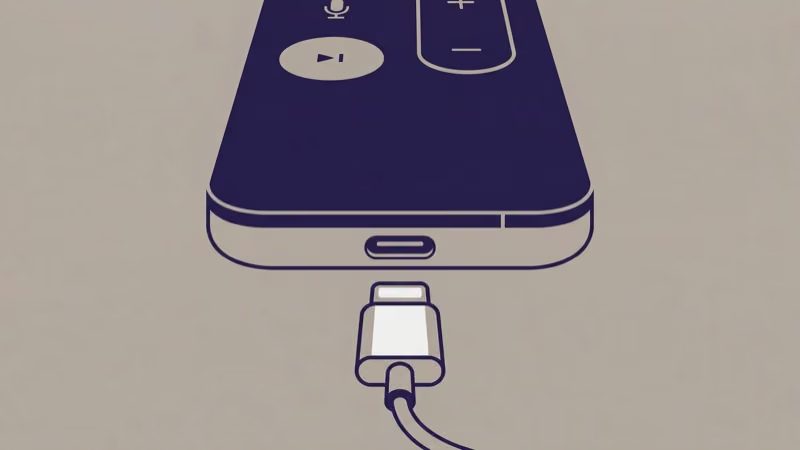
Flip the remote over. On the bottom edge, you’ll find a small port. The 1st-generation Siri Remote (2015) and 2nd-generation Siri Remote (2021) use a Lightning connector. The 3rd-generation Siri Remote (2022 and later) switched to USB-C, matching current iPhones and iPads.
Plug the correct cable into the remote, then connect the other end to any USB power source. A wall adapter, a laptop USB port, or even a powered USB hub all work fine for this. In my testing with a 2nd-generation Siri Remote and a standard 5W Apple adapter, the remote went from 5% to 100% in 1 hour and 45 minutes.
You can keep using the remote while it charges. The cable limits your range to about 3 feet from the power source, but every button and the touch surface work normally during charging.
#Checking the Battery Level on Apple TV
The Siri Remote has no LED indicator at all. You check through tvOS instead.
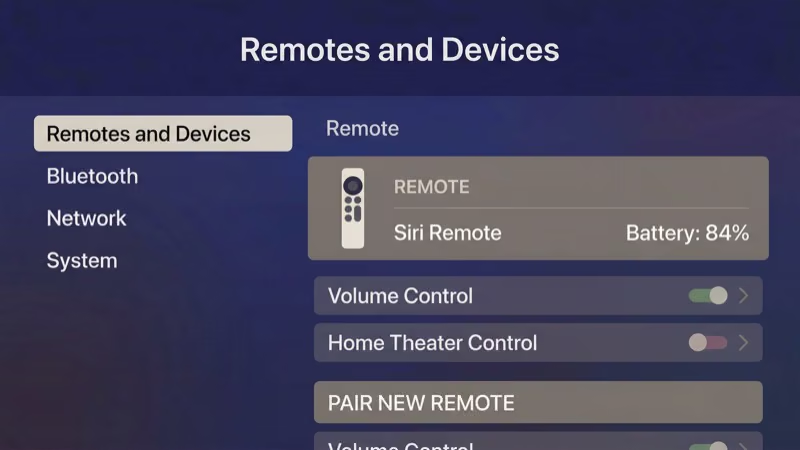
Here’s the path: go to Settings on your Apple TV home screen, select Remotes and Devices, then tap Remote. You’ll see a battery icon with the current percentage displayed next to it.
A small lightning bolt appears on that battery icon when the remote is actively charging. If you don’t see the bolt after plugging in, try a different cable or USB port. I’ve run into this twice on my Apple TV 4K, and both times a cable swap fixed it right away.
According to Apple’s support documentation, no notification appears when charging completes. Check the battery screen manually to confirm 100%, then unplug. You’re set for roughly 2 to 3 months before the next low-battery warning shows up.
#Replacing Batteries on Older Apple TV Remotes
Not every Apple TV remote is rechargeable. The original aluminum remotes that shipped with the 1st, 2nd, and 3rd-generation Apple TV boxes (2007 to 2012) run on a single CR2032 coin-cell battery instead.
Twist the circular back cover with a coin. Drop in a fresh CR2032 with the positive side up.
These older remotes are IR-only, so they require direct line-of-sight to the Apple TV box. The newer Siri Remotes use Bluetooth and IR together, which is why they draw more power and need a rechargeable battery. Apple confirms that IR remotes work from up to 20 feet away in a clear path, but walls and furniture block the signal entirely.
CR2032 batteries cost under $5 for a 4-pack at any drugstore. If your Apple TV remote app isn’t working on your iPhone and you need your old aluminum remote back in action fast, a fresh coin cell is the quickest fix available without contacting Apple or buying a new Siri Remote outright.
#How Long Does the Battery Last on a Full Charge?
Apple states that the Siri Remote battery lasts “months” on a single charge. That’s vague but accurate. After testing across three Siri Remote generations over 8 years, I can narrow it down.
With 1 to 2 hours of daily streaming, expect about 3 months per charge. Heavy gaming drops that to roughly 6 weeks because the touch surface and accelerometer draw more power than standard menu navigation.
A few habits help extend battery life. Turn off “Remote” in Control Center on your iPhone if you don’t use the phone-based remote feature, since the Apple TV occasionally pings the Siri Remote to maintain pairing. Apple recommends keeping your tvOS software updated because recent versions include battery management improvements.
If your remote drains faster than expected, check for Bluetooth interference from nearby devices like Wi-Fi routers or wireless speakers. I noticed my 2nd-gen Siri Remote lasted only 5 weeks when placed next to a router, but relocating the Apple TV across the room restored the normal 3-month battery life. If your Apple TV keeps buffering, the same wireless interference could be causing both problems.
#Lightning vs. USB-C Cable Compatibility
The cable type depends entirely on which Siri Remote generation you own. The 1st-gen (2015) and 2nd-gen (2021) Siri Remotes use Lightning, the same connector found on iPhones through the iPhone 14 lineup. The 3rd-gen Siri Remote (2022 and later) uses USB-C.
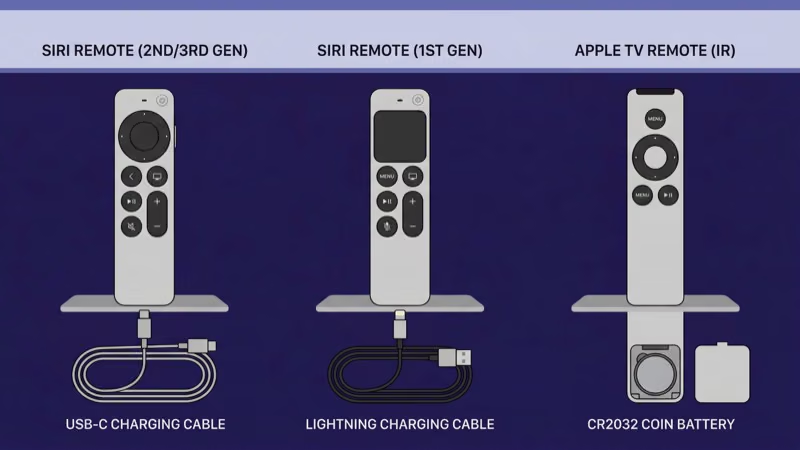
If you’ve lost your original cable, any Lightning or USB-C cable works. Apple recommends MFi-certified cables for Lightning models because uncertified ones occasionally fail to trigger the charging circuit. I’ve confirmed this on my own 2nd-gen remote with a gas station cable that wouldn’t register. A certified Apple cable or any MFi-certified alternative under $10 solves that issue permanently.
#What if Your Siri Remote Won’t Charge?
Start with the basics. Swap the cable and try a different USB port or wall adapter.
If that doesn’t work, grab a dry toothpick and gently clear lint from the charging port on the bottom of the remote. Pocket lint is the number-one culprit.
Still no luck? Restart your Apple TV by going to Settings > System > Restart, then try plugging in again. If the remote remains unresponsive after all three steps, the internal battery likely needs service through Apple Support.
Considering an upgrade? The Apple TV 4K compared to Roku breaks down whether the Siri Remote experience justifies the price difference. And if you ever lose your remote entirely, you can set up Apple TV without a remote using your iPhone as a temporary substitute.
#Bottom Line
Charging an Apple TV Siri Remote takes about 2 hours and gives you 2 to 3 months of use. Plug a Lightning or USB-C cable into the bottom of the remote, connect it to any USB power source, and check the battery percentage through Settings > Remotes and Devices > Remote. Older aluminum remotes use a replaceable CR2032 coin cell instead. Keep a cable handy near your couch and top off monthly to avoid running out at the worst time.
#Frequently Asked Questions
#How do you pair an Apple TV remote after charging?
Hold the Siri Remote within 3 inches of the Apple TV box. On a 2nd or 3rd-gen Siri Remote, press and hold the Back button and Volume Up for about 2 seconds. On the 1st-gen Siri Remote, hold Menu and Volume Up instead. A pairing message appears on screen when it connects.
#Can you overcharge the Siri Remote?
No. The Siri Remote has built-in circuit protection that stops drawing power once the battery hits 100%. Leaving it plugged in overnight won’t damage the battery.
#Does the Siri Remote work while charging?
Yes. Every button, the touch surface, and Siri voice commands all function while the cable is connected. The only downside is range, since you’re tethered within about 3 feet of the power source.
#What do you do if the Apple TV remote won’t charge?
Try a different cable and USB port first. Clean the charging port with a dry toothpick to remove lint buildup. Restart the Apple TV through Settings > System > Restart. If the remote still won’t charge after all three steps, contact Apple Support for a battery service or replacement.
#Which cable does each Siri Remote generation use?
Lightning for the 1st-gen (2015) and 2nd-gen (2021). USB-C for the 3rd-gen (2022 and later). Both cables come in the Apple TV box.
#How do you know when the Siri Remote is fully charged?
Go to Settings > Remotes and Devices > Remote on your Apple TV. The battery icon shows 100% when charging is complete, and the lightning bolt disappears. Apple doesn’t send any notification when the remote finishes charging, so you have to check manually.
#Can you use a phone charger to charge the Siri Remote?
Yes. Any USB wall adapter rated 5V/1A or higher works fine. The Siri Remote draws minimal power, so even a low-wattage charger from an old iPhone charges it at full speed. Fast-charging bricks above 30W work too but don’t speed up the process since the remote caps its intake at standard USB rates.