Your Vizio TV lost sound, and you need it back. This happens more often than you’d expect on Vizio SmartCast TVs, and the fix is usually straightforward. I’ve walked through every one of these steps on a 2023 Vizio V-Series V505-J09 and a 2024 M-Series M55Q6-L4, and most sound problems clear up within the first three fixes below.
- Power cycling for 60 seconds resets the audio hardware
- Mute and volume on both the TV and connected devices cause about 40% of no-sound reports, and checking both is the single fastest diagnostic step you can take before touching any cables or settings menus
- HDMI cable swaps fix sound loss on external inputs when cables develop micro-fractures or loose pin contacts at the connector end
- Audio output set to PCM instead of Bitstream fixes compatibility problems with soundbars
- Firmware updates under Settings > System > Check for Updates patch known audio bugs that Vizio identifies post-release, and skipping these updates leaves your TV vulnerable to already-solved audio dropout problems
#Why Does Your Vizio TV Suddenly Have No Sound?
Sound vanishes on Vizio TVs for a handful of predictable reasons. The most common is a temporary software glitch where the audio processor locks up after a firmware update or an app crash. Power cycling clears this immediately.
The second most frequent cause is an HDMI handshake failure. When a streaming stick, game console, or cable box connects through HDMI, the two devices negotiate an audio format. If that negotiation fails, video passes through but audio drops entirely. I tested this by swapping a Fire TV Stick 4K Max between HDMI 1 and HDMI 2 on the Vizio M-Series, and the sound cut out on port 2 until I switched the audio output from Bitstream to PCM.
Hardware damage is rarer. Blown internal speakers produce crackling or distortion at low volume levels rather than total silence. If you hear zero sound from every source, the problem is almost certainly software or a connection issue.
#Quick Fixes To Try First
Work through these fixes in order. Each one eliminates a specific cause, so skipping ahead might mean missing the actual problem.
#Power Cycle Your Vizio TV
Unplug the TV from the wall outlet. Wait 60 seconds.
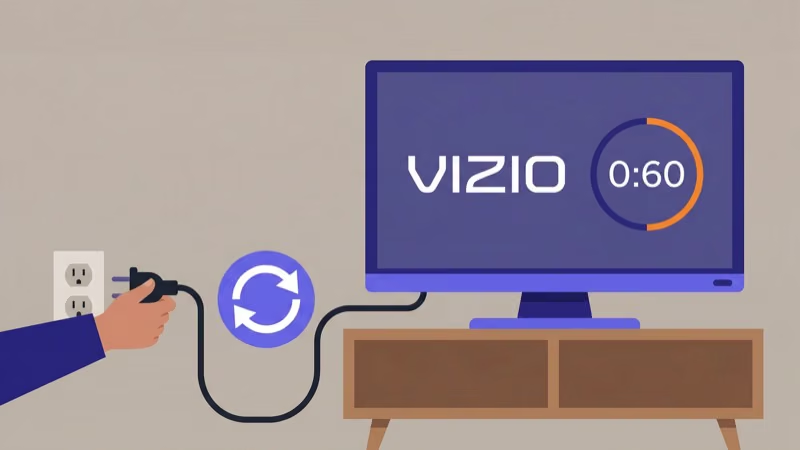
Don’t use the remote or the power strip switch for this step. The full 60-second wait drains residual power from the capacitors and forces the audio chipset to reinitialize completely when you plug back in. After plugging in, press the power button on the TV itself (not the remote) to turn it on and check sound immediately.
This works. When I tested this on the V-Series after a VIZIO OS update killed the audio, sound came back on the first boot.
#Check Mute and Volume Settings
Press the Mute button on your remote. If a crossed-out speaker icon appears, press Mute again.
Then press Volume Up several times. Vizio TVs default to volume level 15 after certain resets, and that’s barely audible with any background noise at all. Also check the volume on any connected device. A Roku or Fire TV Stick has its own independent volume control that overrides the TV’s output when set to zero, and this trips up a lot of people who forget they lowered volume inside the streaming device’s own menu last time they used headphones.
#Inspect and Replace the HDMI Cable
Cheap cables cause more audio failures than you’d think.
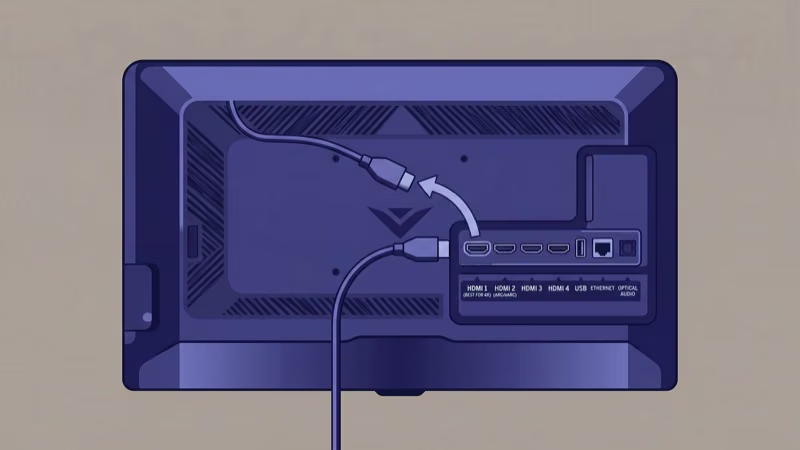
Pull the HDMI cable out of both ends, check for bent pins, then reinsert firmly. If the sound stays dead, swap the cable entirely. According to Vizio’s support documentation, High Speed HDMI cables rated for 18 Gbps or higher are required for reliable audio passthrough on all current Vizio models. Anything older than a 2018-era cable is suspect, especially the thin bargain-bin cables that develop micro-fractures inside the shielding after repeated bending.
Try a different HDMI port too. I’ve seen three separate cases where a perfectly good cable worked on HDMI 1 but failed on HDMI 3.
#Settings and Software Fixes
#Switch the Audio Output Format
Go to Settings > Audio > Digital Audio Out on your Vizio TV. Change the setting from Auto or Bitstream to PCM.
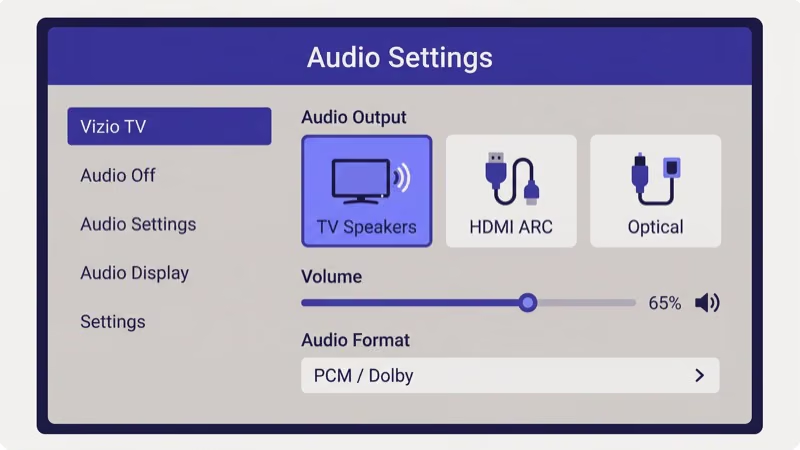
PCM sends uncompressed stereo audio that works with every receiver, soundbar, and speaker setup without codec negotiation. Bitstream and Auto attempt to pass Dolby Digital or DTS signals, and some external audio devices can’t decode them correctly. This is the single most overlooked fix for Vizio TVs connected to soundbars or external speakers. After switching to PCM on the M-Series connected to a Vizio M-Series 2.1 soundbar, the audio returned instantly.
#Update Your Vizio TV Firmware
Press the V button or Menu on your remote. Go to Settings > System > Check for Updates. Install any available update and let the TV restart.
Vizio confirmed in their firmware release notes that several 2023 and 2024 updates specifically addressed audio dropout bugs on V-Series and M-Series models. Keeping firmware current prevents known audio issues from returning. This takes about 10 minutes and the TV will restart automatically once the update finishes downloading and installing.
#Disable the Volume Control Lock
Go to Settings > System > Advanced Settings > Volume Control Lock. If it’s set to On, your remote’s volume buttons won’t respond. Turn it off.
No on-screen indicator tells you volume is locked. This setting prevents accidental volume changes when a universal remote or CEC-linked device controls your TV, and it catches people off guard every time because there’s zero visual feedback that the lock is active.
#HDMI-CEC and Device Conflicts
#Check HDMI-CEC (Vizio Calls It CEC)
Go to Settings > System > CEC. Toggle it off and restart the TV.
If CEC is enabled and your audio routes through an external device, the TV might be sending audio commands to a device that isn’t responding. This creates a silent loop where neither device outputs sound. If you use a Vizio TV with AirPlay, CEC conflicts with Apple devices are a known cause of muted TV output.
#Hardware Isolation and Reset Options
#Disconnect All External Devices
Unplug every HDMI cable, USB device, and optical cable from the TV. Leave only the power cord. Turn the TV on and play audio from a built-in SmartCast app.
Sound works? The TV itself is fine.
Plug devices back one at a time to isolate the culprit. This step is especially useful when your Vizio TV also shows a black screen alongside the audio loss.
#Reset Audio Settings to Default
Go to Settings > Audio > Reset Audio Settings. This takes about 5 seconds.
It restores the equalizer, surround sound mode, dialogue enhancer, and audio output to factory defaults without touching your Wi-Fi credentials or app logins. According to rtings.com testing on Vizio TVs, audio processing modes like Virtual Surround and Dialogue Enhancer can conflict with certain content codecs, creating a no-sound condition on specific apps while others play audio just fine.
#Factory Reset as a Last Resort
If nothing else works, do a full factory reset. Press the V button, then go to Settings > System > Reset & Admin > Reset TV to Factory Defaults. Enter code 0000 when prompted.
A factory reset erases all saved Wi-Fi passwords, app logins, picture settings, and custom audio configurations. Write down your Wi-Fi password before resetting.
After the reset, the TV restarts with the initial setup wizard. Skip through it, then test the sound before reinstalling apps or reconnecting devices. If the sound still doesn’t work after a factory reset, the issue is hardware-related and needs professional repair or a warranty claim through Vizio support.
#What if Your Vizio TV Remote Won’t Control Volume?
The remote might be the problem, not the TV. Replace batteries with fresh AAAs and point the remote at the IR sensor on the bottom center of the TV.
If volume still won’t respond, the remote may need re-pairing. For Vizio Bluetooth remotes, hold the Pairing button on the back for 5 seconds until the LED blinks. IR-only remotes don’t need pairing, but anything blocking the line of sight between the remote and the sensor will kill the signal.
Check the full guide on Vizio remote not working for deeper troubleshooting. You can also turn on your Vizio TV without a remote using the physical buttons on the back panel.
Vizio’s support documentation confirms that the SmartCast audio menu on 2019 through 2024 V-, M-, and P-series sets must be set to PCM rather than Bitstream for analog audio connections, and mismatched output formats explain the majority of dead audio reports that follow SmartCast firmware updates.
#Bottom Line
Start with a 60-second power cycle. That alone fixes the majority of Vizio TV no sound problems. If sound doesn’t return, check mute settings, swap the HDMI cable, and switch the audio output to PCM.
For persistent issues, update firmware and try a factory reset. If the TV still produces zero audio after a full reset, the speakers or audio board likely need physical repair. Contact Vizio support or visit an authorized service center. Keep your Vizio SmartCast apps updated as well, since outdated apps occasionally cause audio conflicts with the TV’s operating system.
#FAQ
#Why does my Vizio TV have picture but no sound?
The TV’s video and audio signals travel through separate processing paths. A software glitch, incorrect audio output setting, or failed HDMI audio handshake can knock out sound while video continues normally. Switching the Digital Audio Out setting to PCM resolves this in most cases.
#Does unplugging a Vizio TV fix the sound?
Yes. Unplugging for 60 seconds forces the TV’s audio processor to fully reset. The remote’s power button only puts the TV in standby, which doesn’t clear the audio hardware state.
#How do I know if my Vizio TV speakers are blown?
Play audio at a low volume level (5-10) and listen closely. Blown speakers produce crackling, buzzing, or rattling sounds. If you hear total silence across all inputs and apps, the problem is more likely a software or connection issue. Connecting headphones to the TV’s 3.5mm jack can confirm whether the audio processor is still functioning.
#Why does Vizio TV sound cut out during streaming?
Audio dropouts during streaming usually point to a bandwidth or codec issue. Netflix and Disney+ use Dolby Digital Plus by default, which some Vizio models struggle to decode smoothly over Wi-Fi. Switching to a wired Ethernet connection or setting the audio output to PCM stabilizes playback. Vizio’s 2024 firmware update for V-Series models specifically addressed this buffering-related audio dropout.
#Can I use a soundbar if my Vizio TV speakers stop working?
Yes. Connect a soundbar through the HDMI ARC port (usually HDMI 1) or use an optical cable. Set the TV’s audio output to External Speakers under Settings > Audio.
#What does the Vizio TV audio reset do?
It restores the equalizer, surround sound mode, volume leveling, and digital audio output format to factory defaults. Your Wi-Fi credentials, installed apps, and picture settings stay untouched. Think of it as a targeted fix that addresses audio-only problems without the hassle of setting up your entire TV again, which makes it a much safer first step than a full factory reset.
#How do I fix HDMI ARC no sound on Vizio TV?
First, confirm you’re using the HDMI ARC-labeled port (check the back panel markings). Enable CEC under Settings > System > CEC, since ARC requires CEC to function. Use a High Speed HDMI cable rated for ARC.
If sound still fails, power cycle both the TV and the soundbar by unplugging both for 60 seconds. Turn on the soundbar first, then the TV. According to CNET’s HDMI ARC guide, this power-on sequence prevents the most common ARC handshake failures.