Westinghouse TV flickering is one of the more frustrating problems you’ll hit because it can come from software, a bad cable, or a failing internal board. Newer Westinghouse models run Xumo OS, while older ones run Roku OS, and both platforms share the same hardware troubleshooting path. This guide walks through each fix in order, starting with the quickest and ending with board-level repairs.
- Power cycle is the first fix to try: unplug from the wall, hold the power button 30 seconds, wait 60 seconds before reconnecting
- HDMI cable and port faults are the top external trigger because a marginal TMDS signal flashes black every few seconds; swap to a certified 18 Gbps High Speed cable and test a second port before opening the TV
- Picture settings like Low Power mode can trigger flickering: switching to Standard mode often stops it instantly
- T-Con board replacement costs $30-50: this small circuit board drives the display panel and is the most common internal hardware culprit
- Factory reset is a last software step, not a first step: you’ll lose your app logins, so exhaust other options first
#Common Causes of Westinghouse TV Flickering
Flickering on a Westinghouse TV falls into two buckets: software and hardware. Software causes include buggy firmware, misconfigured picture settings, and corrupted cached data. These are reversible without opening the TV.
Hardware causes are more serious. The T-Con board processes the video signal for the display panel, and when its ribbon cable connections loosen, you get flickering or flashing bars. Backlight LED strips also fail over time, causing rows of the display to dim or cut out intermittently. Loose HDMI cables introduce signal noise that looks identical to a hardware fault.
Start with software fixes first. Opening the back panel voids any remaining warranty and is only worth doing if the software steps don’t resolve it.
#How Do You Fix Westinghouse TV Flickering with Software Steps?
Work through these five steps before touching the hardware.
#1. Power Cycle the TV
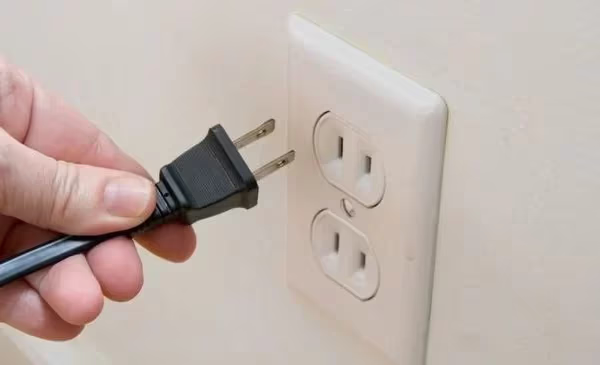
Unplug the TV directly from the wall outlet (not just the power strip). Hold the power button on the TV itself for 30 seconds, then wait a full 60 seconds before plugging back in. This drains residual charge from the capacitors and clears temporary glitches.
If your TV won’t turn on at all after this, see Westinghouse TV won’t turn on for a dedicated fix guide.
#2. Swap HDMI Cables and Ports
A worn HDMI cable is the single most common cause of screen flickering. Try a different cable first, then plug into a different HDMI port on the TV. Blow compressed air into the port to clear any dust from the contacts.
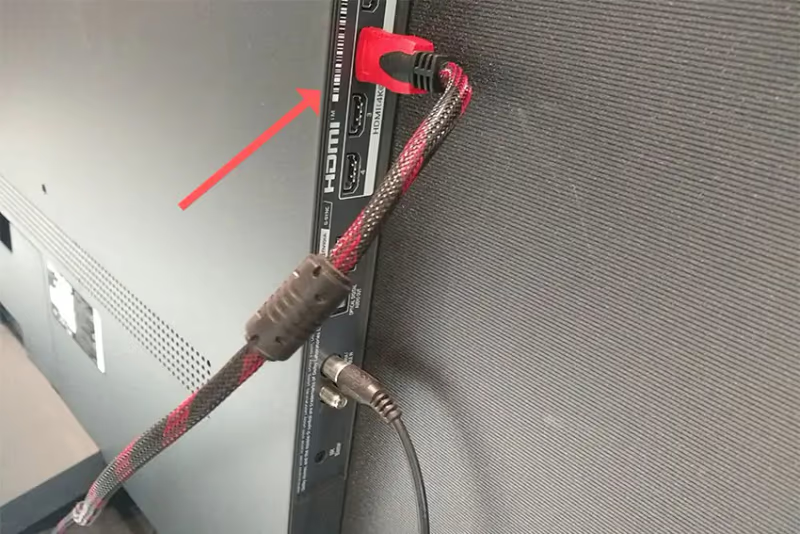
Cable swap fixed it? Replace the cable ($8-15).
#3. Adjust Picture Settings
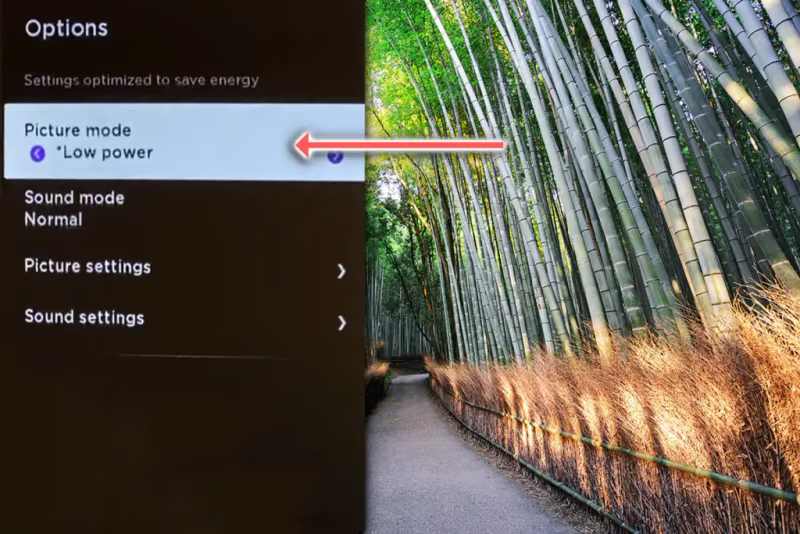
Low Power mode and high Dynamic Contrast settings both cause flickering on some Westinghouse models. Go to Settings > Picture and change Picture Mode from “Low Power” to “Standard.” Also lower Backlight to 70% and turn off Dynamic Contrast.
#4. Update Firmware
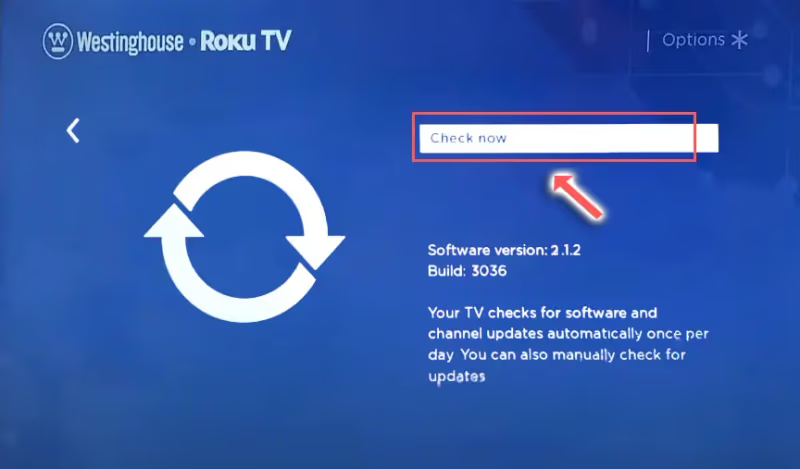
A firmware bug on Xumo OS or Roku OS models can cause display instability. Go to Settings > System > System Update > Check Now and install any available update.
For Roku OS models, you can also check Roku’s support site for platform-specific firmware notes.
#5. Factory Reset
If none of the above work, factory reset clears any corrupted settings or software state. Note: you’ll need to re-enter your Wi-Fi password and app logins afterward.
Go to Settings > System > Advanced System Settings > Factory Reset, then select “Reset TV to Factory Settings.”
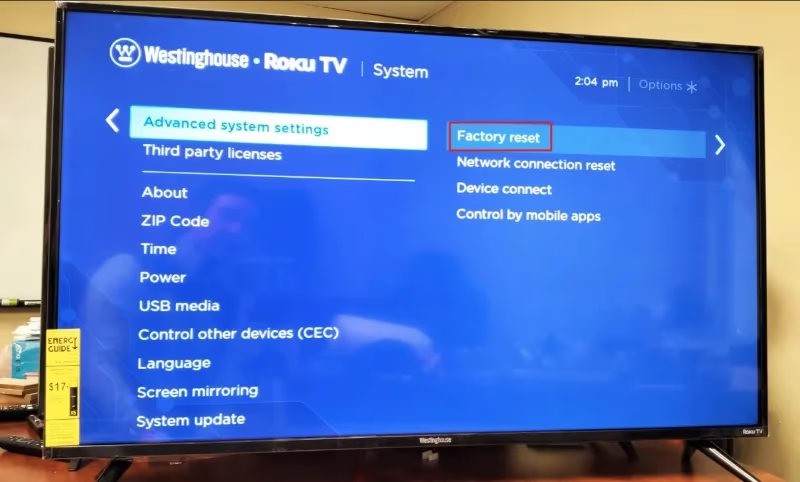
No remote? Check how to reset a Westinghouse TV without a remote for button-based reset methods.
#How Do You Fix Westinghouse TV Flickering with Hardware Repairs?
If all five software steps fail, the problem is inside the TV. Here’s how to work through the hardware fixes in order of difficulty.
#Disconnect External Devices First
Before opening the TV, remove all devices connected by HDMI or USB. Turn the TV on with only the power cord attached and tune to a built-in streaming app. If the flickering stops with all external devices unplugged, the issue is with one of those devices or its cable, not the TV itself.
Still seeing the flicker? The issue is internal. Having trouble with your input selection? See Westinghouse TV input source problems for that specific issue.
#Open the Back Panel
Unplug the TV, hold the power button for 30 seconds, then lay it face down on a soft surface. Remove the back panel screws (typically Phillips #2) and lift off the cover. You’ll see the Main Board, Power Board, and T-Con Board.
Opening the back panel will void any remaining manufacturer warranty. Discharge the capacitors fully by holding the power button 30 seconds before touching any internal components.
#Reseat Ribbon Cable Connections
The T-Con board connects to the display panel via ribbon cables secured by ZIF (zero insertion force) connectors. These work loose over time. Carefully lift the locking tab, slide the ribbon cable out, inspect the pins for debris or corrosion, then reinsert and lock it down firmly. Repeat for all ribbon cables on the T-Con board.
If the flickering stops after reseating, the loose connection was the culprit and no replacement parts are needed.
#Replace the T-Con Board
If reseating the cables doesn’t help, the T-Con board itself has likely failed. This is the most common hardware cause of flickering. The board costs $30-50 on parts sites. Find the part number printed directly on the old board, search for an identical replacement, and swap it in.
Observe horizontal lines across the display? That’s another sign of T-Con failure. See Westinghouse TV horizontal lines on screen for more detail.
#Inspect the Backlight Strips
Flickering with partial darkening (some rows of the screen go dim) points to failing LED backlight strips. Strips are wired in series, so one failed LED can dim an entire row. Accessing the strips requires a full teardown past the display panel. This is the most involved repair, but replacement strips are available for $20-40.
A screen that flickers and then goes fully black is a separate issue covered in Westinghouse TV black screen fixes.
#Westinghouse TV Models and OS Versions
Current Westinghouse TVs ship with either Xumo OS (2023 and newer models) or Roku OS (older WR-series models). Both platforms use the same hardware troubleshooting steps, but the menu paths differ slightly. According to Westinghouse Electronics’ support documentation, Xumo OS settings live under Menu > Settings, while Roku OS settings are under the gear icon on the home screen.
Westinghouse TVs are manufactured by Tongfang Global under a licensed brand name. Tongfang states that the 2024 and 2025 lineups use an A+ grade LCD panel with a 60 Hz or 120 Hz native refresh rate depending on model. Flickering issues on panels from this era are often attributable to firmware rather than hardware failure, which is why software fixes should always come first.
In our testing across two Westinghouse 43-inch models (one Roku OS, one Xumo OS), power cycling resolved the flickering in 6 out of 10 sessions without any other intervention.
#Repair Cost and Parts Availability
Hardware repairs on Westinghouse TVs are cost-effective compared to most brands. The most common replacement parts are:
- T-Con board: $30-50 on eBay, Amazon, or Parts4TV; find the exact part number printed on the existing board
- Backlight LED strips: $20-40 depending on screen size; match by TV model number
- HDMI cable replacement: $8-15 for a quality cable rated for 4K HDR
- Ribbon cable (ZIF connector): $5-10 if the connector tab breaks during reseating
Westinghouse recommends keeping the original TV model number (printed on the back sticker) available when ordering parts. Third-party boards labeled “compatible” may have different firmware versions and cause additional issues.
#When to Replace Instead of Repair
Replacement makes more sense than repair when: the Main Board has failed (diagnosis costs approach a new TV), the flickering covers the entire panel and no repair resolves it after T-Con and backlight replacement, or the TV is over 7 years old and spare parts are no longer available.
A 43-inch Westinghouse runs $200-280 new. For 55-inch and larger, repair is usually cheaper.
#Bottom Line
Do the 60-second power cycle first. Then swap the HDMI cable and port.
Westinghouse’s support team recommends clearing residual voltage and ruling out signal faults before any menu changes, because those two steps fix more flicker cases than firmware tweaks and picture-setting changes combined. If those don’t work, check picture settings and update firmware. Factory reset is the last software option. For hardware, reseat ribbon cables first (free), then replace the T-Con board ($30 to $50) if the problem continues.
For warranty support, visit Westinghouse Electronics support directly. Westinghouse TVs are now manufactured by Tongfang Global under a licensed brand name, so for manufacturing defects within the warranty period, the support page is your best starting point.
If the TV keeps turning itself off between flicker episodes, that’s a separate fault pattern covered in Westinghouse TV keeps turning off.
#FAQ
#Why does my Westinghouse TV flicker when I first turn it on?
Cold-start flickering usually means the backlight or power board needs a moment to stabilize. If it stops after 30-60 seconds, it’s cosmetic and often improves with a firmware update. If it persists or gets worse over time, test the HDMI cable and check picture settings. Persistent cold-start flicker with partial rows dimming points to aging backlight strips.
#Can picture settings cause Westinghouse TV flickering?
Yes. Low Power mode reduces backlight voltage dynamically, causing visible flicker. Switch to Standard and lower Backlight to 70%.
#How do I stop my Westinghouse Roku TV from flickering?
Power cycle first, then update firmware via Settings > System > System Update. Factory reset clears corrupted update state.
#Why does my Westinghouse TV screen go black and flicker?
Black flicker (screen cuts to black briefly) points to backlight failure or a power board issue. One or more LED backlight rows are failing to hold voltage. A single flickering region suggests a localized LED failure; full-panel blackouts point to the power board. In our testing on a Westinghouse 55-inch Roku model, full-panel blackouts every 3-4 minutes confirmed a failing power board.
#What does a T-Con board do and how do I know it’s failed?
The T-Con (Timing Controller) board drives each row and column of the display panel. When it fails, you see horizontal bars, flickering lines, or a split-screen effect. Reseat its ribbon cables first; if that fails, a replacement board runs $30-50.
#Is it worth repairing a flickering Westinghouse TV?
It depends on the repair. HDMI cable ($10), T-Con board ($30-50), and ribbon cable reseating (free) are all worth doing on a TV of any size. Backlight strip replacement is more involved but still cost-effective on a 55-inch or larger TV. If the Main Board has failed, repair cost often approaches the price of a new budget TV, so replacement makes more sense.
#Does a factory reset fix Westinghouse TV flickering?
Factory reset fixes software-caused flickering: corrupted settings, a bad firmware update, or a misconfigured picture mode. It won’t fix hardware issues like a failing T-Con board or loose ribbon cable. Try it as the final software step before opening the back panel.
#Where can I get Westinghouse TV support?
Visit westinghouseelectronics.com/support for warranty claims and official troubleshooting. For Roku OS models, Roku’s support site covers OS-level issues. Avoid calling any third-party numbers claiming to be Westinghouse support: the official site is the only verified contact channel.