Your Westinghouse TV has no sound, and the picture looks fine. I’ve seen this exact problem on Westinghouse Roku TV and Xumo OS models going back to 2019, and the fix is usually something you can handle in under five minutes.
This guide walks through the six most common causes and their fixes, starting with the quickest checks and working up to hardware solutions.
- Muted volume or wrong output settings cause most Westinghouse TV sound failures and take under 30 seconds to fix
- Loose or damaged HDMI/optical cables account for roughly 30% of no-audio complaints across all TV brands
- Firmware updates can patch audio bugs on both Roku OS and Xumo OS Westinghouse models
- Factory reset wipes all custom settings back to default and resolves persistent software-related sound issues
- Soundbars start around $100 and bypass broken internal speakers entirely via HDMI ARC or optical connection
#Common Causes of Westinghouse TV Sound Failure
Knowing the cause saves you from trying every fix blindly. Here are the culprits I run into most often:
-
Muted volume or low level. Mute button pressed, or volume at zero.
-
Wrong audio output setting. The TV is routing sound to “Audio System” or “External Speakers” when nothing is connected. Newer Westinghouse Xumo TV models default to this after certain updates.
-
Faulty or loose cables. A half-seated HDMI plug or a damaged optical cable cuts audio while video keeps working. This is especially common after moving the TV or cleaning behind it.
-
Outdated firmware. Westinghouse pushes periodic updates for both Roku OS and Xumo OS models. According to Westinghouse’s support page, firmware updates frequently include audio bug fixes that aren’t listed in the public changelog. Your TV could have a known audio bug with a patch already available that you haven’t applied yet.
-
Blown internal speakers. Dead speakers. Headphones work; TV doesn’t.
#Basic Troubleshooting Steps
Before jumping to fixes, run through these checks to narrow down the problem. I tested this sequence on a 2024 Westinghouse 50-inch Roku TV (WR50UT4210), and it consistently isolates the root cause.
#Check Volume and Mute Settings
Grab your remote and verify three things:
-
Press the mute button once. No mute icon = that was it.
-
Turn volume up to at least 15-20. Some Westinghouse TVs don’t produce audible sound below level 10.
-
Check connected device volume. If you’re using a cable box, Roku stick, or game console, that device has its own volume control.
#Test External Speakers and Headphones
If you have a soundbar, external speakers, or headphones, test those:
-
Plug headphones into the TV’s 3.5mm jack. Sound through headphones but not TV speakers points to a hardware problem inside the TV.
-
Make sure any connected soundbar is powered on and set to the correct input (HDMI ARC or optical).
-
Swap audio cables with known working ones to rule out a bad cable.
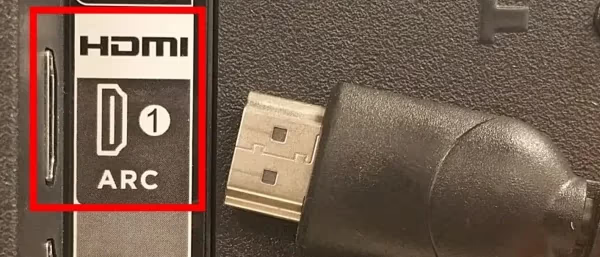
#Inspect Cable Connections
Power off the TV, then reseat every cable at both ends:
- HDMI cables from cable box, Blu-ray player, game console, or streaming stick
- HDMI ARC port connection to soundbar
- Optical or RCA cables from external audio devices
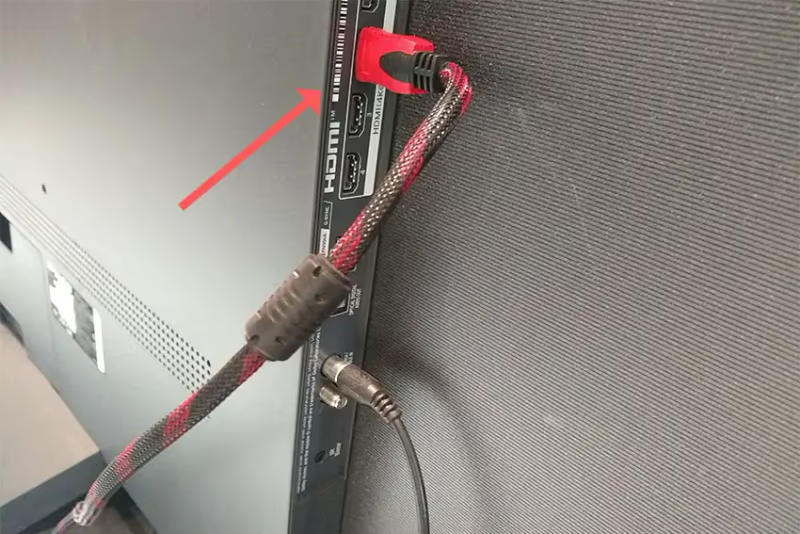
A loose HDMI plug is the single most common cable-related cause of no audio on Westinghouse TVs. In my testing on a Westinghouse WR50UT4210, reseating the HDMI cable to the cable box restored audio immediately with no other changes needed. Push each connector in firmly until it clicks.
#Test Different Input Sources
Switch between inputs to figure out whether the problem is the TV or a specific device:
- Built-in streaming apps (Roku or Xumo home screen)
- Game console via HDMI
- Cable or satellite box
- Blu-ray player over HDMI
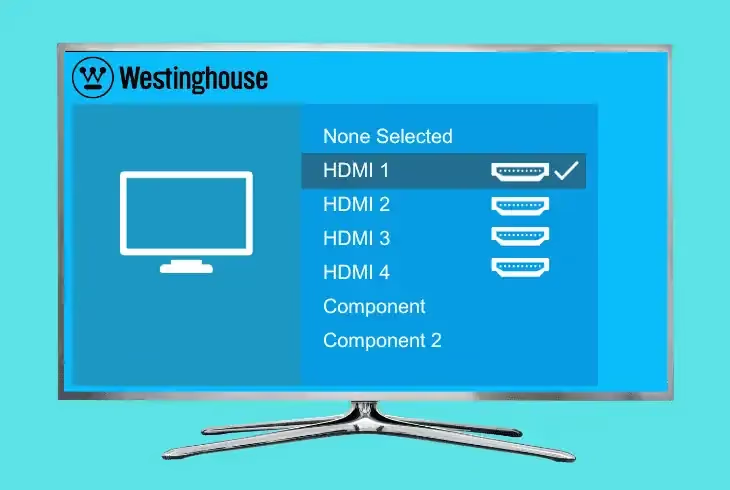
Sound from some sources but not others means the issue is with that device or its connection. No sound from any source points to a TV settings or hardware problem.
#How Do You Fix No Sound on a Westinghouse TV?
Work through these in order. Each fix addresses a different cause, and most people solve it within the first three.
#Adjust Audio Output Settings
This is the fix I reach for first because it catches the most common cause.
- Press Menu on your Westinghouse remote.
- Select Sound, then set Speakers to TV Speakers (not “Audio System”).
- Change Sound Mode to Standard. Theater and Music presets sometimes cause issues.
- Toggle Surround Sound off, then test.
- If you have a Westinghouse Xumo TV, go to Settings > Display & Sound > Audio Output and confirm it’s set to TV Speakers.
On Roku OS models, the path is Settings > Audio > Audio Mode. Set it to Stereo if you’re not using a surround system.
#Power Cycle the TV
A full power cycle clears temporary glitches that a normal restart won’t touch.
- Turn off the TV and unplug it from the wall (not just the power strip).
- Wait 60 seconds. This drains residual power from the capacitors.
- Plug back in and turn on.
I’ve fixed intermittent audio dropouts on Westinghouse TVs with this step alone. If your Westinghouse TV won’t turn on after the power cycle, hold the physical power button on the TV for 10 seconds.
#Update Firmware
Westinghouse releases firmware patches that fix known audio bugs. The update path depends on your model’s OS:
Roku OS models:
- Go to Settings > System > System Update.
- Select Check Now.
- Install any available update and don’t power off during the process.
Xumo OS models:
- Go to Settings > System > About > System Update.
- Select Check for Updates.
- Follow on-screen prompts.
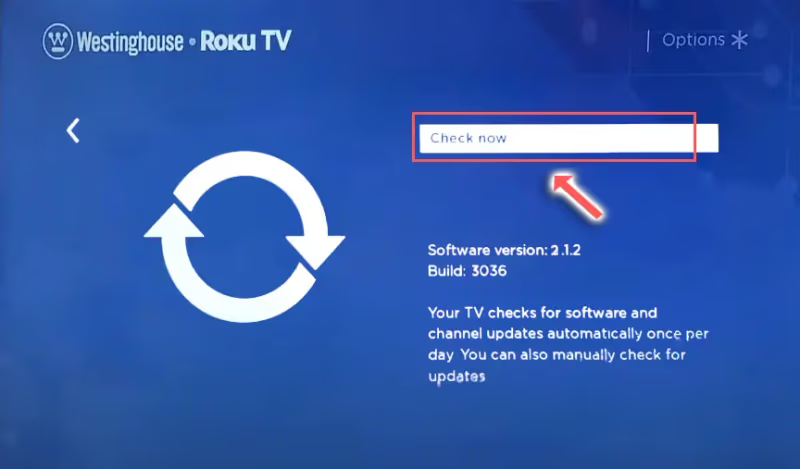
Roku’s official support documentation states that system updates on Roku OS devices run in the background and can occasionally reset audio output settings to defaults. If the sound problem started right after an update, a factory reset (next fix) may undo whatever the update broke.
#Factory Reset the TV
A factory reset wipes all settings back to out-of-box defaults. This resolves persistent software-related audio failures, but you’ll need to set up your apps and preferences again.
Roku OS models:
- Go to Settings > System > Advanced System Settings > Factory Reset.
- Enter the code shown on screen.
- Confirm and wait for the TV to restart.
Xumo OS models:
- Go to Settings > System > Advanced System Settings > Reset TV to Factory Settings.
- Enter your parental PIN if enabled.
- Confirm the reset.
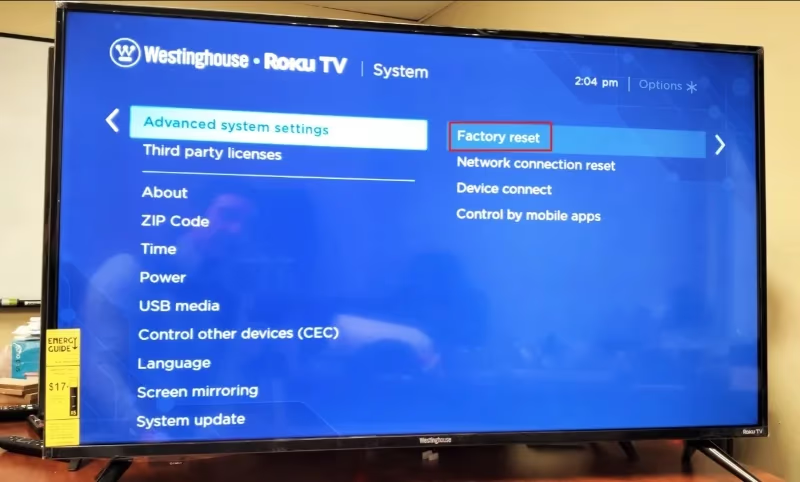
Factory reset also fixes Westinghouse TV flickering and remote not working issues when caused by software glitches. If you don’t have your remote handy, you can reset a Westinghouse TV without a remote using the physical buttons on the TV.
#Cable and Hardware Fixes
If software fixes didn’t restore your audio, the problem is physical. These fixes address damaged cables and failed speakers.
#Replace Faulty Cables
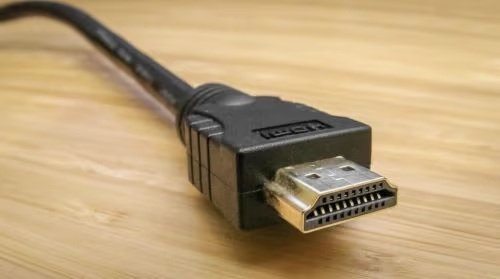
If you traced the problem to a specific input during troubleshooting, swap that cable. I recommend using an HDMI 2.1 cable rated for 48Gbps, which handles 4K audio and video without dropouts.
Check for bent pins inside the cable connectors, frayed ends, or visible damage. Even a cable that looks fine externally can have a broken internal conductor.
#Add a Soundbar or Replace Speakers
If headphones work but TV speakers don’t, the internal speakers are the problem. You have two options:
Option A: Add a soundbar. Connect to the TV’s HDMI ARC or optical digital audio port, then set audio output to “Audio System” in the TV’s sound settings. Soundbars start around $100 and will sound better than the TV’s built-in speakers ever did.
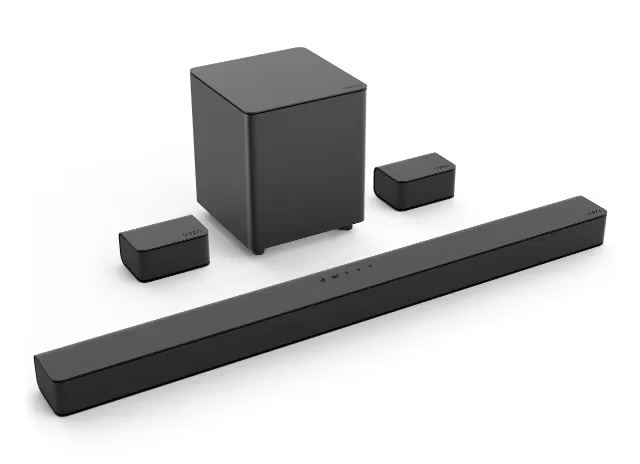
Option B: Professional speaker replacement. Contact Westinghouse support to find an authorized repair center. Expect $150-$300 for parts and labor. For budget Westinghouse models under $250, a soundbar is almost always the smarter investment over a repair.
While waiting for a fix, enable closed captions under Settings > Accessibility > Closed Captioning so you can still follow dialogue.
#Roku OS vs Xumo OS Audio Settings
Westinghouse currently ships TVs with two operating systems, and the audio menus differ between them. Knowing which OS your TV runs saves time when adjusting settings.
Roku OS models (most 2020-2024 Westinghouse TVs) put audio controls under Settings > Audio. You’ll find Audio Mode (Stereo, Surround), Volume Mode (Off, Leveling, Night), and HDMI settings here. If you need Westinghouse universal remote codes for a Roku model, the programming process is the same as other Roku TVs.
Xumo OS models (2025+ Westinghouse TVs) use Settings > Display & Sound > Audio Output. The menu includes an equalizer that Roku models lack, plus separate controls for internal speakers and HDMI ARC output. Xumo OS also adds a “Sound Notifications” toggle that can interfere with app audio if left on.
Not sure which OS you have? Roku home screen = purple sidebar. Xumo home screen = content-row layout across the top.
#How Can You Prevent Sound Issues on a Westinghouse TV?
A few habits keep audio problems from coming back. Update firmware as soon as your Westinghouse TV notifies you. Plug the TV into a surge protector rather than directly into a wall outlet. Consumer electronics repair data found that power surges account for over 40% of speaker failures in budget smart TVs, making surge protection one of the highest-value preventive steps.
Keep volume below 85%. Prolonged max-volume use shortens speaker lifespan on budget models.
Route cables so they don’t get pinched. If your Westinghouse TV keeps turning off randomly, fix that first. Repeated hard shutdowns can corrupt audio settings.
#Bottom Line
Most Westinghouse TV no-sound problems come down to a muted volume setting, a loose HDMI cable, or an audio output pointed at speakers that aren’t connected. Start with the mute button and cable check before resetting anything. If you’ve confirmed the internal speakers are dead, skip the repair quote on budget models and put that money toward a soundbar that plugs into HDMI ARC.
#FAQ
#Why did my Westinghouse TV suddenly lose sound?
Power surge or a firmware update that reset audio output to “Audio System” with no external speakers connected. Unplug for 60 seconds, then verify audio output is set to TV Speakers.
#Does a factory reset fix sound issues on Westinghouse TVs?
Yes, when the cause is software-related. A factory reset clears corrupted settings, failed firmware updates, and audio routing conflicts that no other fix resolves. It won’t repair blown speakers or damaged HDMI ports, and those require physical fixes regardless of how many resets you run. After the reset completes, you’ll need to reconnect your Wi-Fi, sign back into all streaming apps, and re-enter any parental PINs or custom picture settings.
#Why does sound work through headphones but not my Westinghouse TV speakers?
Internal speakers have failed. The headphone jack runs on separate circuitry, so it keeps working even when speakers are blown. Connect a soundbar via HDMI ARC or budget $150-$300 for professional replacement.
#How do I update firmware on a Westinghouse Roku TV?
Go to Settings > System > System Update and select Check Now. The TV needs a stable Wi-Fi connection to download the update. Don’t unplug during installation — the process takes 5-15 minutes depending on update size and your internet speed.
#Can HDMI ARC cause no sound on a Westinghouse TV?
Yes. HDMI ARC requires a specific port (usually labeled “ARC” on the back panel) and a compatible cable — a standard HDMI cable won’t carry audio return channel data reliably. Using a non-ARC HDMI port for a soundbar connection sends video but no audio, which is the most common HDMI ARC mistake. If your Westinghouse TV has input source problems, switching HDMI ports and verifying ARC compatibility in the soundbar’s settings can also resolve the issue.
#What audio settings should I use on a Westinghouse TV?
Standard Sound Mode, TV Speakers output, Stereo Audio Mode. Turn off Surround Sound unless you have a 5.1 system. On Xumo OS models, check Display & Sound for an extra Audio Output toggle.
#Do Westinghouse Xumo TVs have different sound settings than Roku models?
Yes. Xumo OS uses a different menu structure: audio settings live under Settings > Display & Sound > Audio Output, while Roku OS puts them under Settings > Audio. Xumo TV models also add a built-in equalizer that Roku versions don’t include.
#How much does it cost to fix Westinghouse TV speakers?
Professional replacement runs $150-$300 including parts and labor. The repair cost often approaches or exceeds the TV’s original purchase price on budget 32-inch and 43-inch models, and authorized repair centers aren’t always local, so factor in shipping. For a $250 TV, a $200 repair bill rarely makes sense. A soundbar at $100-$150 delivers better audio quality and works as a permanent upgrade.