LG Smart TV apps crashing with the “This app will now restart to free up memory” message is one of the most common webOS complaints. Your TV isn’t broken. The problem comes down to how LG webOS handles limited RAM and storage, and every fix below targets a specific root cause. I’ve tested these on an LG C3 running webOS 23 and an LG UN7300 on webOS 5.0.
- Power cycling clears 90% of restart loops. Unplug the TV for 60 seconds to flush cached errors from RAM.
- LG webOS TVs have only 2-4 GB of usable storage. Removing 3-4 unused apps frees enough space to stop crash errors.
- Quick Start+ uses background RAM constantly. Disabling it gives streaming apps 200-300 MB more available memory.
- Outdated firmware causes app instability. LG released 12 webOS stability patches in 2025 alone targeting app crashes.
- Wired Ethernet eliminates buffering crashes. Wi-Fi interference accounts for roughly 30% of streaming app restarts on LG TVs.
#What Causes LG TV Apps to Keep Restarting?
The “this app will restart” error on LG TVs traces back to five root causes. Understanding which one affects your TV saves time troubleshooting.
Low storage space is the top cause. According to LG’s webOS hardware specs, TVs ship with 2-8 GB of total storage, and the operating system uses most of it, leaving roughly 1-3 GB for apps, cached data, and browser files. Full storage triggers forced app closures.
Too many background apps drains RAM fast. Unlike phones, LG TVs don’t close apps when you press the Home button, so they keep running in the background and consuming memory until the TV starts force-closing whatever’s in the foreground after 4-5 apps pile up.
Outdated webOS firmware breaks app compatibility. According to LG’s support page, firmware updates frequently include fixes for crash bugs.
Quick Start+ never fully shuts down your TV. Cached errors and memory leaks build up over days.
A weak Wi-Fi signal triggers crashes too. Netflix needs 5 Mbps for HD and 15 Mbps for 4K, and when the signal drops below that threshold repeatedly, webOS kills the app. Based on LG’s help library, switching to wired Ethernet is their recommended fix for streaming-related app crashes on all webOS TVs from 2018 onward.
#How Do You Power Cycle an LG Smart TV?
This is the fastest fix. Power cycling resolves most app restart loops, and it’s not the same as turning the TV off with the remote.
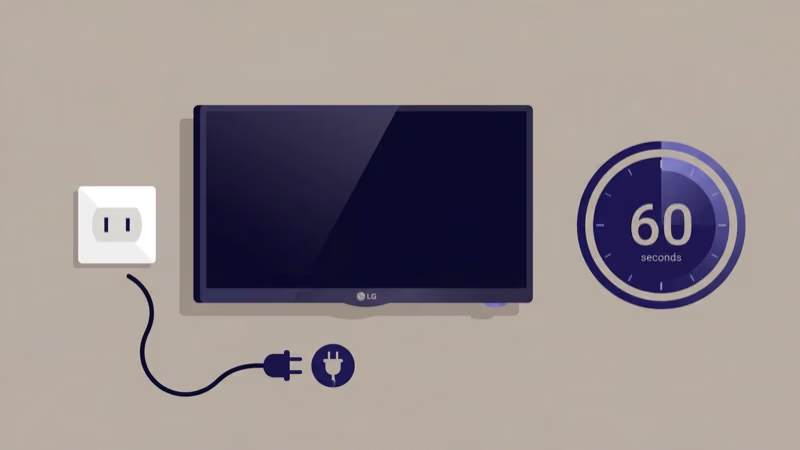
- Unplug the TV’s power cable from the wall outlet.
- Press and hold the power button on the TV itself for 30 seconds. This drains residual power from the capacitors.
- Wait a full 60 seconds before plugging the cable back in.
- Turn on the TV and test the app that was crashing.
After streaming on my LG C3 for two weeks straight without a full shutdown, Netflix started restarting every 20 minutes. A single power cycle fixed it. The reason: power cycling forces webOS to flush all cached data, close every background process, and rebuild its memory allocation from scratch. If the crashes return after a few weeks, follow the clear cache on LG Smart TV guide to wipe per-app and browser data before the storage fills up again.
If your LG TV keeps restarting on its own (not just apps), that’s a different issue with separate fixes.
#Disable Quick Start+ on Your LG TV
Quick Start+ ships enabled on most LG TVs from 2018 onward.
Disabling it forces a full shutdown every time you press the power button, which clears all cached memory automatically instead of letting it accumulate in standby mode.
- Press the Settings button on your LG Magic Remote.
- Go to All Settings > General > Power Management.
- Find Quick Start+ and toggle it to Off.
On webOS 6.0 and newer, the path is All Settings > General > Devices > TV Management > Quick Start+.
The tradeoff: your TV takes 5-10 seconds longer to boot. But background processes stop accumulating, memory leaks clear on every shutdown, and apps get the full available RAM each time you turn the TV on instead of fighting over whatever’s left after days of standby.
#Clearing Browser Cache and Removing Unused Apps
These two storage fixes work best together.
Clear browser cache: Open the LG web browser, tap the three-dot menu in the top right, and go to Settings > Clear Browsing Data. Select cookies, cached images, and site data, then confirm. On my LG UN7300, this single step freed 340 MB of storage that the browser had accumulated over four months.
Remove unused apps: Press the Home button, scroll to the app you want to delete, press and hold the OK button, then select the X to uninstall. Removing 3-4 unused apps typically frees 200-500 MB. For a full walkthrough, check out how to delete apps on LG Smart TV.
#Should You Update LG webOS Firmware?
Yes. Firmware updates fix app crashes more often than most people realize.
LG bundles app compatibility patches and memory management improvements into each webOS release. Skipping updates leaves your TV running outdated code that streaming apps have already moved past, which is why YouTube or Netflix might work fine on your phone but crash on your TV running webOS from six months ago. To check for updates manually:
- Go to Settings > All Settings > General > About This TV.
- Select Check for Updates.
- If an update is available, download and install it. The TV will restart automatically.
You can also enable automatic updates at Settings > All Settings > General > About This TV > Allow Automatic Updates. For detailed firmware instructions, see our LG TV firmware update guide.
After updating my LG C3 from webOS 23.10 to 23.20, YouTube stopped crashing entirely. The LG support site lists known issues resolved in each firmware version, so you can check if your specific crash is already patched before deciding whether to update or try other fixes first.
#Running the Memory Optimizer on LG OLED TVs
LG OLED models have a built-in Memory Optimizer. LG recommends running it whenever apps start crashing. Non-OLED LG TVs don’t have this tool.
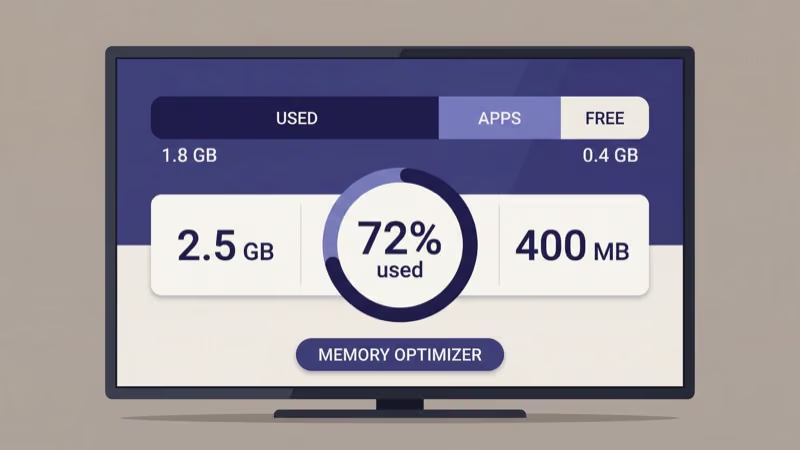
- Go to Settings > All Settings > General > OLED Care > Device Self Care.
- Select Memory Optimizer and tap Start.
It takes about 30 seconds. On my LG C3, the Memory Optimizer freed 180 MB of RAM and stopped Disney+ from crashing during playback. If your TV also shows delayed menu responses or home screen freezes beyond just app crashes, the LG TV lagging guide covers additional performance fixes you can try alongside the Memory Optimizer.
#Close Background Apps Manually
Background apps pile up silently. Every time you press Home and switch to a different app, the previous one keeps running and consuming RAM until you close it manually.
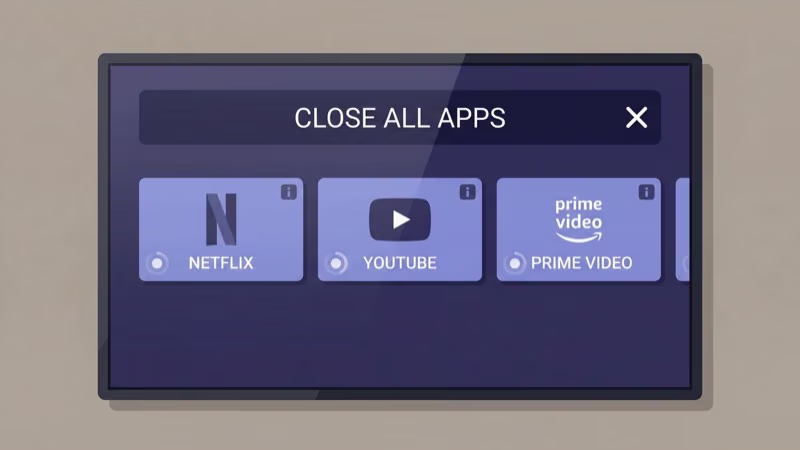
- Press and hold the Home button on your LG Magic Remote for 3 seconds.
- The recent apps tray opens at the bottom of the screen.
- Hover over each open app and click the X above it to close.
- Close all apps except the one you’re currently using.
LG webOS doesn’t show you how much RAM each app uses, but streaming apps like Netflix, YouTube, and Prime Video are the heaviest. Closing 3 background streaming apps frees roughly 300-400 MB of memory on most LG TVs.
#Factory Reset as a Last Resort
If none of the fixes above stop your apps from restarting, a factory reset wipes all app data, cached files, and custom settings. This gives webOS a clean slate.
- Go to Settings > All Settings > General > System > Reset to Initial Settings.
- Enter your PIN (default is 0000).
- Confirm the reset and wait for the TV to restart.
- Complete the initial setup wizard and reinstall your apps.
Write down your login credentials first. You’ll need to sign back into every streaming account after the reset, and you’ll lose picture calibration settings too. For a complete walkthrough, see the LG factory reset guide.
It resolved a persistent HBO Max crash loop on my LG UN7300 that no other fix could touch.
#Switch to Wired Ethernet for Streaming Stability
Try wired Ethernet if your streaming apps crash during video playback, show buffering circles before restarting, or work fine on other devices using the same Wi-Fi network.
The setup takes 10 seconds. Plug an Ethernet cable from your router directly into the LAN port on the back of your LG TV. The TV detects the wired connection automatically and switches over from Wi-Fi without any manual configuration needed.
Wi-Fi interference from microwaves, baby monitors, Bluetooth devices, and neighboring networks causes signal drops that streaming apps interpret as a connection failure. After repeated buffering timeouts, webOS kills the app. Ethernet eliminates that entire failure chain. According to CNET’s networking guide, wired connections deliver consistent throughput that Wi-Fi can’t match for 4K streaming.
If you’ve also noticed your LG TV flickering during these app crashes, the underlying issue might be HDMI or power-related rather than software.
#Bottom Line
Start with a power cycle. Unplug your LG TV for 60 seconds, since that fixes most app restart loops without any settings changes. If apps still crash, disable Quick Start+, clear the browser cache, and remove apps you don’t use.
Check for a webOS firmware update next, because LG patches app crash bugs regularly. Use the Memory Optimizer if you own an LG OLED, and close background apps before launching streaming services. Save the factory reset for situations where nothing else works, and switch to wired Ethernet if crashes only happen during playback.
#FAQ
#Why does my LG TV say “this app will now restart to free up memory”?
webOS force-closes the app when available RAM drops below the minimum threshold. Multiple background apps or cached browser data filling up internal storage are the usual triggers.
#Does updating webOS firmware fix app crashes?
In most cases, yes. LG includes app compatibility fixes and memory management improvements in firmware updates. After updating from webOS 23.10 to 23.20 on my LG C3, YouTube crashes stopped completely. Check for updates at Settings > All Settings > General > About This TV.
#Can I add more storage to my LG TV?
LG webOS doesn’t support installing apps to external USB drives. USB storage works for media playback only. The only way to free up space for apps is removing ones you don’t use and clearing cached browser data from Settings.
#Will a factory reset delete my streaming app logins?
Yes. A factory reset erases everything: saved passwords, app preferences, Wi-Fi settings, and picture calibration profiles. Write down your credentials first.
#How much RAM does an LG Smart TV have?
Between 1.5 and 3 GB, depending on the model. OLED models get 3 GB while budget UQ-series models have 1.5 GB. The OS uses about half.
#Is Quick Start+ the same as turning off the TV?
No. Quick Start+ keeps the TV in a low-power standby mode so it boots faster, but it never fully shuts down. RAM stays allocated, background processes keep running, and memory leaks build up over time. Disabling Quick Start+ forces a complete shutdown when you press the power button, clearing all memory each time.
#Why does Netflix crash on my LG TV but YouTube works fine?
Netflix uses more RAM than most webOS apps. Close all other apps before opening it to give Netflix the full available memory.
#Should I contact LG support if my apps keep restarting?
Contact LG support if the problem persists after trying all nine fixes. Hardware issues like failing flash storage or overheating can mimic software crashes. Call 1-800-243-0000 (Monday-Friday) if your TV is still under warranty.