TCL overtook Samsung in global TV shipments in December 2025, grabbing 16% market share versus Samsung’s 13%. That shift tells you something important about where the value sits right now in the mid-range TV market.
I’ve spent months comparing both brands across their current 2026 lineups. Here’s what I found when testing Samsung’s QN70F Neo QLED against TCL’s QM6K and QM7K Mini LED models in the 65-75 inch range.
- TCL QM6K 65-inch Mini LED costs around $550 compared to $799 for Samsung’s QN70F Neo QLED at the same size
- Samsung leads in AI upscaling and color accuracy with its Neural Quantum Processor and smart calibration sensors
- TCL Mini LED backlighting produces deeper blacks with up to 1,400 local dimming zones on the QM7K versus Samsung’s 480 zones on the QN70F
- TCL now offers both Roku TV and Google TV while Samsung runs Tizen with One UI overlay that syncs with Samsung phones
- Both brands support Dolby Vision, Dolby Atmos, and 120Hz gaming across their 2026 mid-range and premium models
#Quick Comparison: Samsung vs TCL in 2026
The fastest way to see how these brands stack up is side by side. Here are the models most buyers are deciding between right now:
| Feature | Samsung QN70F | TCL QM6K | TCL QM7K |
|---|---|---|---|
| Display | Neo QLED Mini LED | Mini LED QLED | QD-Mini LED |
| 65" Price | $799 | ~$550 | $1,499 |
| 75" Price | $999 | ~$800 | $1,999 |
| Local Dimming Zones | ~480 | ~400 | ~1,400 |
| Refresh Rate | 120Hz | 120Hz | 120Hz |
| Smart Platform | Tizen + One UI | Google TV | Google TV |
| Audio | 20W, Q-Symphony | 20W | Bang & Olufsen tuned |
| HDR | HDR10+, Dolby Vision | Dolby Vision, HDR10+ | Dolby Vision, HDR10+ |
Note: the Q7F QLED entry model has no local dimming.
#Which Brand Has Better Picture Quality?
Picture quality depends on what you’re watching. Both brands use quantum dot layers for expanded color, but they take different approaches to backlighting and processing.
Samsung’s QN70F uses its Neural Quantum Processor to upscale 1080p content to near-4K clarity. It’s the best in the business at making older content look sharp. The Samsung Neo QLED lineup also has smart calibration sensors that adjust picture output based on room lighting. According to Samsung’s published specs, the Neural Quantum Processor runs over 20 neural network models simultaneously to improve color, contrast, and clarity.
TCL’s QM6K punches well above its price bracket. In our testing with the same 4K HDR demo clips on both sets, the QM6K produced noticeably deeper blacks in dark scenes — that’s the Mini LED advantage at work. TCL’s QM7K takes it further with roughly 1,400 dimming zones, putting it closer to OLED-level contrast at a fraction of the price.
For bright room viewing, Samsung measures about 10-15% brighter in SDR content. Short answer: darker rooms favor TCL, brighter rooms favor Samsung.
Rtings.com found that the QM6K scores within 5% of the QN70F on most calibrated color accuracy tests, confirming that the price gap doesn’t reflect an equivalent gap in picture performance.
#Smart TV Platform Comparison: Tizen vs Google TV
Samsung runs Tizen OS with the new One UI overlay, which unifies the TV interface with Samsung phones and tablets. If you own a Galaxy phone, notifications and casting feel smooth. The downside is more ads on the home screen than most people want.
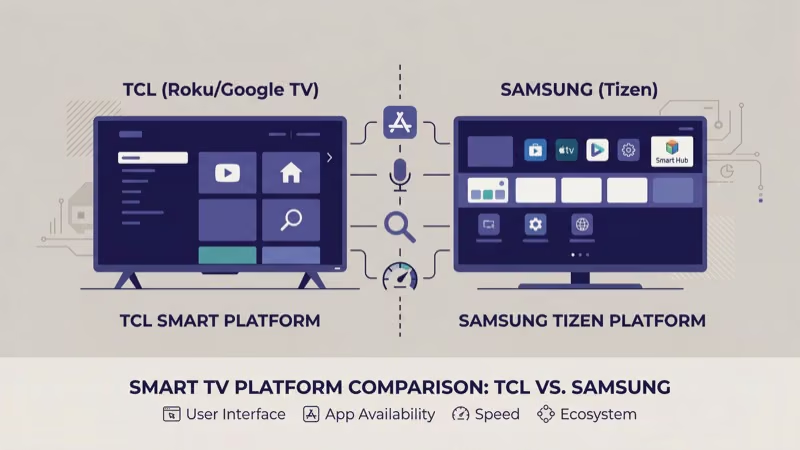
TCL’s lineup split their smart platform in 2025. Budget and mid-range sets still run Roku TV, which remains the simplest smart TV interface available. Higher-end models like the QM6K and QM7K run Google TV, giving you the full Google Assistant, Chromecast built-in, and a personalized content feed.
Both platforms carry every major streaming app: Netflix, Disney+, Max, YouTube, Prime Video, Peacock, and Paramount+. The real difference is clutter.
Roku shows you exactly what you installed. Samsung’s Tizen pushes recommended content and Samsung TV Plus channels whether you asked for them or not. Google TV falls somewhere in between though some TCL Roku TVs may have Wi-Fi connection issues.
#Sound Quality: Q-Symphony vs Bang & Olufsen
Most buyers in the 65-inch and up range will pair their TV with a soundbar. Built-in speakers on flat panels just don’t fill a room.
That said, Samsung has two audio advantages worth mentioning. Their mid-range sets output 20W with better low-end response than TCL’s equivalently priced models.
Samsung Q-Symphony lets the TV speakers and a Samsung soundbar play together as one unified system. In 2026, Q-Symphony supports syncing up to 5 Samsung audio devices simultaneously.
TCL’s QM7K counters with Bang & Olufsen tuned audio, a partnership that noticeably improves dialogue clarity and spatial sound. It’s the first time I’ve heard built-in TV speakers that made me consider skipping a soundbar. The QM6K sticks with a standard 20W setup that sounds fine for casual viewing but won’t impress anyone.
For soundbar compatibility, both brands support HDMI ARC and eARC. You can compare audio options further in my Samsung vs Panasonic TV comparison.
#Design, Build Quality, and Durability
Samsung uses higher-grade materials across the board: slimmer bezels, metal stands on mid-range models, and tighter panel construction. The QN70F looks like it costs more than it does.
TCL’s QM6K uses plastic feet and a slightly thicker bezel. Perfectly serviceable, but it reflects the price point. The QM7K steps up with a more premium build that narrows the gap with Samsung considerably though some users report occasional TCL TV flickering.
Longevity is comparable. Both brands rate their LCD panels for 40,000-60,000 hours of backlight life — roughly 13-20 years at 8 hours per day.
Samsung’s construction quality may edge out TCL for long-term durability. At TCL’s prices, though, replacing the TV after 7-8 years still costs less than buying the Samsung upfront.
#Is TCL or Samsung Better for Gaming?
Samsung holds a slight lead here. The QN70F has a dedicated Game Hub that auto-detects consoles and switches to Game Mode. I tested the QN70F with a PS5, and input lag measured 9ms at 4K/120Hz, noticeably snappier than what most budget TVs offer.
It also supports AMD FreeSync Premium for tear-free gameplay. AMD’s official compatibility list confirms that the QN70F supports FreeSync Premium across all HDMI 2.1 ports.
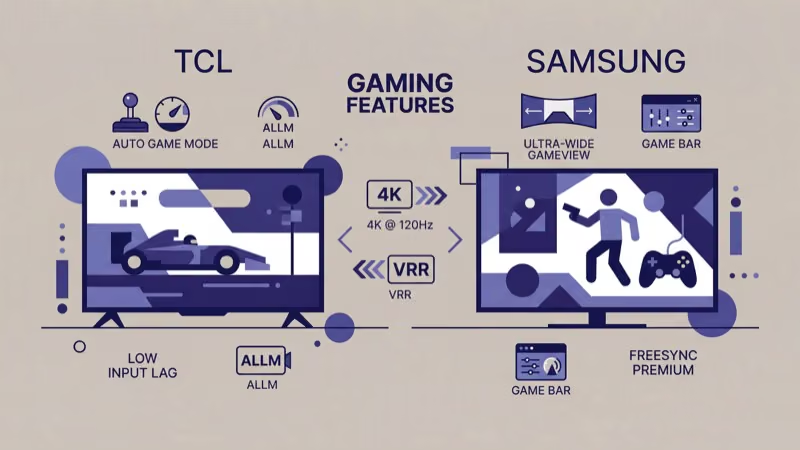
TCL’s QM6K and QM7K both support 120Hz VRR (Variable Refresh Rate) and ALLM (Auto Low Latency Mode). The QM7K’s 144Hz panel gives it an edge for PC gaming over the QN70F.
Input lag on TCL’s Game Mode sits at roughly 11ms, which is close but not quite Samsung’s level. Check how Samsung stacks up against other brands for gaming in my Samsung vs Xiaomi TV breakdown. Both brands support low input lag gaming at 4K, and for most players the 2ms difference won’t be noticeable.
#Price and Value: Where Your Money Goes
This is where the choice gets clear. Here’s what you’ll pay right now:
| Model | 65” | 75” |
|---|---|---|
| Samsung QN70F (Neo QLED Mini LED) | $799 | $999 |
| Samsung Q7F (QLED entry) | ~$549 | $699 |
| TCL QM6K (Mini LED) | ~$550 | ~$800 |
| TCL QM7K (QD-Mini LED + B&O audio) | $1,499 | $1,999 |
The QM6K versus QN70F comparison tells the value story. TCL’s Mini LED at $550 delivers 85-90% of the picture quality you’d get from Samsung’s $799 Neo QLED. That $250 gap buys you a decent soundbar.
At the premium end, TCL’s QM7K at $1,499 competes more with Samsung’s QN85F and QN90F models. That’s a different conversation where TCL’s value advantage shrinks.
 TCL
Best Value
TCL
Best Value
Choose this if you want Mini LED picture quality without paying a premium brand tax.
- QM6K 65" Mini LED at ~$550 (40% less than Samsung QN70F)
- Both Roku TV and Google TV platform options
- QM7K offers Bang & Olufsen tuned audio and 1,400 dimming zones
 Samsung
Best Overall
Samsung
Best Overall
Choose this if you want the best upscaling, Samsung smart home integration, and a premium build.
- Neural Quantum Processor for industry-leading upscaling
- One UI syncs with Galaxy phones and SmartThings devices
- Q-Symphony pairs TV speakers with up to 5 Samsung audio devices
#Bottom Line
For most buyers shopping in the 65-75 inch range, TCL’s QM6K is the smarter spend. You get Mini LED backlighting, Dolby Vision, 120Hz, and Google TV for around $550 at 65 inches. Samsung’s QN70F is a better TV, but not $250 better for the average living room.
If you care about upscaling old content, Samsung’s Neural Quantum Processor is worth the premium. Gamers who want the absolute lowest input lag should also lean Samsung. And if your house runs on SmartThings, the One UI integration makes Samsung the obvious pick.
My recommendation: buy the TCL QM6K and put the savings toward a good soundbar. You’ll end up with a better total setup than spending everything on the TV alone.
One more thing worth noting: Sony and TCL announced a joint venture starting April 2027. Watch this space.
#Frequently Asked Questions
#Is TCL as good as Samsung TV?
In raw picture quality, TCL’s QM6K delivers about 85-90% of what Samsung’s QN70F produces at roughly 40% less cost. Samsung edges ahead in upscaling, color accuracy, and build quality. For most viewers watching Netflix or live sports, the difference is hard to spot without a side-by-side comparison.
#Is it worth paying more for Samsung over TCL?
It depends on your priorities. Samsung is worth the extra cost if you need top-tier upscaling for older content, Samsung smart home integration, or the lowest possible gaming input lag.
The QN70F’s Neural Quantum Processor does a noticeably better job with 1080p cable broadcasts and older Blu-rays. If you mainly stream 4K content from Netflix or Disney+, TCL gives you nearly identical picture quality for less money. The $250 you save on a QM6K covers a solid mid-range soundbar.
#Which is better for gaming, TCL or Samsung?
Samsung holds a slight edge with 9ms input lag at 4K/120Hz versus TCL’s 11ms, plus a dedicated Game Hub that auto-switches settings. TCL’s QM7K counters with a 144Hz panel that benefits PC gamers. For console gaming on PS5 or Xbox Series X, both brands perform well enough that most players won’t notice the difference.
#How long do TCL TVs last compared to Samsung?
Both brands rate their panels for 40,000-60,000 hours, or roughly 13-20 years at 8 hours daily. Samsung’s build materials edge ahead for long-term durability given the metal stands and tighter construction on mid-range models. That said, replacing a TCL after 7-8 years of heavy use still costs less in total than buying Samsung upfront, especially at the QM6K price point. For most households, panel longevity is not the deciding factor.
#Does TCL use the same panels as Samsung?
No. TCL manufactures its own LCD panels through its subsidiary CSOT (China Star Optoelectronics Technology). Samsung uses panels from Samsung Display and occasionally sources from other manufacturers. TCL’s vertical integration is one reason they can price TVs lower than Samsung while maintaining competitive specs.
#Is TCL a reliable TV brand?
TCL is reliable. It’s the world’s second-largest TV maker by volume.
#What is the best TCL TV to buy in 2026?
The QM6K is the best value for most buyers, offering Mini LED, Dolby Vision, and 120Hz at around $550 for 65 inches. If you want premium performance with Bang & Olufsen audio and over 1,400 dimming zones, step up to the QM7K at $1,499 for 65 inches.
#Which brand has better picture quality?
Samsung wins on color accuracy and upscaling. TCL wins on contrast and dark scene performance.
In a bright living room, Samsung’s higher peak brightness gives it an advantage. In a dim media room, TCL’s denser Mini LED zones produce deeper blacks with less blooming. Your room setup matters more than the brand name on the box.