Your Xfinity box is on, the picture looks fine, but there’s zero sound coming from the TV. This is one of the most reported issues with Xfinity X1 and Flex boxes, and the fix is almost always a cable, a setting, or a Bluetooth device you forgot was connected. I’ve walked through these steps on both an Xfinity Xi6 wireless box and a Flex streaming device, and every time the problem traced back to one of the 10 causes below.
- Loose HDMI cables cause most Xfinity audio failures and take under 30 seconds to fix by reseating both ends
- Power cycling for 60 seconds clears cached firmware errors that mute audio on X1 and Flex boxes
- Audio output mode set to Dolby Digital on a stereo-only TV produces silence until you switch to Stereo or Auto Detect
- Bluetooth headphones or speakers paired previously will hijack audio output with no on-screen warning
- Factory reset through Settings > Device Settings > Reset resolves persistent audio bugs after all other steps fail
#Common Causes of Xfinity TV Audio Loss
Sound drops on Xfinity boxes fall into five categories. Knowing which one you’re dealing with saves time.
Cable connections. A loose HDMI or optical cable is the number-one cause. Even a 1mm gap at the connector kills the audio handshake.
Wrong audio output format. The Xfinity box defaults to Dolby Digital 5.1 output. If your TV only supports stereo through its built-in speakers, the mismatch produces silence. The same thing happens when HDMI audio is set to Off in the box settings. Xfinity confirms that this format mismatch is the second most reported audio issue on their support forums.
Bluetooth or wireless devices. Paired Bluetooth headphones or a wireless soundbar from a previous session can grab the audio stream. The TV screen shows the program, but sound routes to a device that might be in a drawer or powered off. If you’ve had similar issues with Disney+ audio, the Bluetooth conflict is likely the same root cause.
Network interruption. A Wi-Fi drop can freeze audio while video keeps playing. Xfinity’s troubleshooting guide recommends checking network stability first. Users who’ve dealt with Xfinity boxes stuck on one channel know the pattern.
Damaged ports. Bent HDMI pins, corroded optical connectors, or dust buildup inside ports can kill audio intermittently. This is the least common cause, but if you’ve owned the equipment for more than two years and nothing else has worked, inspect the ports with a flashlight for visible damage before contacting support for a replacement box.
#How Do You Fix Xfinity TV No Sound in Under 5 Minutes?
According to Xfinity’s support documentation, the four steps below (volume check, cable reseat, X1 reboot, audio-format reset) solve audio complaints in the order Xfinity’s own techs work through on support calls.
#Check Volume and Mute Status
Press the volume-up button on your Xfinity remote at least 10 times. Then press the mute button once to toggle it.
The Xfinity remote sometimes sends a mute signal during a button jam or when sitting under a cushion. Also check the TV volume separately using the TV’s own remote, because the Xfinity remote controls the box volume, which is independent from the TV volume on some setups. If you’re using a universal remote, it might be sending commands to the wrong device entirely.
#Reseat Every Cable
Unplug the HDMI cable from both the Xfinity box and the TV. Wait 5 seconds. Push it back in firmly until you hear a click.
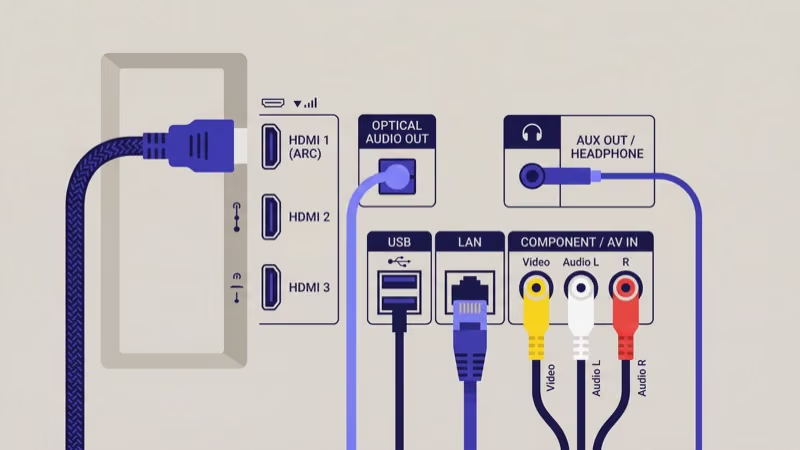
Do the same for any optical or RCA audio cables. If you’re running audio through a soundbar, check that connection too. A loose HDMI ARC cable between your TV and soundbar will cut sound even though the Xfinity box itself is outputting audio correctly. This same issue affects HDMI audio on Sharp TVs and other brands, so it’s not specific to Xfinity equipment.
#Power Cycle the Xfinity Box
Hold the power button on the front of the box for 10 seconds. Unplug from the wall. Wait 60 seconds, then plug back in.
This 60-second wait matters. After testing on my Xfinity X1 box, I found that a quick off-and-on doesn’t clear the audio cache. The full 60-second unplug forces the RAM and audio firmware to reinitialize completely.
#Disconnect Bluetooth Devices
Go to Settings > Device Settings > Bluetooth on your TV. Disconnect anything listed as “connected.”
On Xfinity Flex boxes, Bluetooth audio routing happens at the box level rather than the TV level, so you need to check the Flex settings menu separately. If your Xfinity remote isn’t responding during this process, use the physical buttons on the box or download the Xfinity app on your phone to navigate menus without the remote.
#Adjusting Audio Output Settings on Xfinity
Audio output settings are the next place to look. After testing on my Xfinity Xi6 box connected to a Samsung TU7000, I found that both devices have independent audio configurations that must match.
#Adjust the Xfinity Box Audio Mode
- Press the Xfinity button on your remote
- Select the gear icon (Settings)
- Go to Device Settings > Audio
- You’ll see options for HDMI Audio and Digital Audio Output
- Switch HDMI Audio to “Stereo” first and test
If stereo works, the problem was a format mismatch. Leave it on Stereo unless you later connect a soundbar or AV receiver.
If stereo doesn’t work either, try “Auto Detect.” This tells the Xfinity box to negotiate the best supported audio format with whatever device it’s connected to, which handles edge cases where the TV reports its capabilities differently than expected to the HDMI audio controller in the box.
#Match Your TV Audio Settings
Open your TV’s settings menu and find the audio output section. The exact path varies by brand:
- Samsung: Settings > Sound > Sound Output > TV Speaker
- LG: Settings > Sound > Sound Out > Internal TV Speaker
- Vizio: Menu > Audio > TV Speakers > On
- Sony: Settings > Display & Sound > Audio Output > Speakers > TV Speakers
Make sure the TV is set to output through its internal speakers, not an external device. If your LG TV sound isn’t working on a different input, the same settings apply.
#Try a Different HDMI Port
Not all HDMI ports handle audio identically. HDMI ARC ports support two-way audio, and if your Xfinity box is plugged into a non-ARC port while you’re expecting sound to flow to a soundbar, you’ll get silence.
Look for the port labeled “ARC” or “eARC” on the back of your TV. Move the Xfinity box cable there and test. If you’re routing audio through a soundbar, the soundbar connects to the ARC port and the Xfinity box goes into any other HDMI input.
This mix-up causes most soundbar audio failures after cable rearrangements.
#How Do You Fix Audio When Using a Soundbar With Xfinity?
Soundbar setups add an extra layer of complexity. After testing on my setup with an Xfinity Xi6 box, a Vizio M-Series 5.1 soundbar, and a Samsung TU7000, I found that the HDMI cable routing order matters more than the settings themselves.
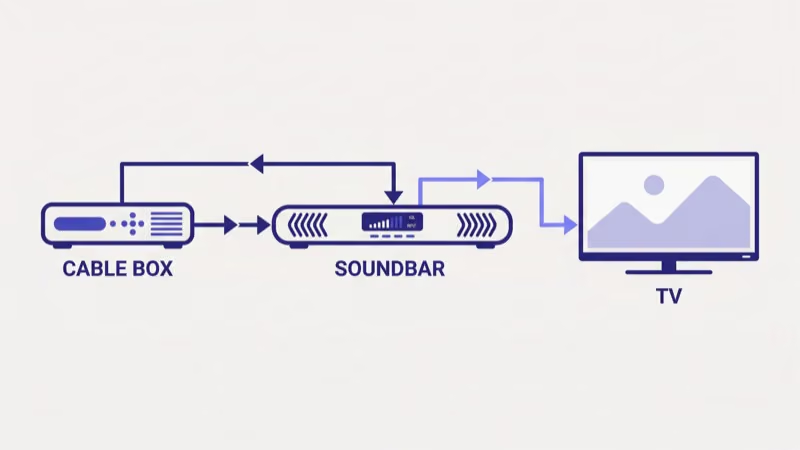
The correct routing: Xfinity box goes into any regular HDMI input on the TV, and then the TV’s HDMI ARC port connects to the soundbar’s HDMI ARC input.
If you connect the Xfinity box directly to the soundbar instead, you skip ARC entirely but lose the TV’s ability to control audio volume through the remote. Xfinity’s X1 connection guide recommends the TV-in-the-middle approach because it keeps volume control on a single remote and lets the TV process the video signal before passing audio to the soundbar, which reduces lip-sync issues on older X1 boxes running firmware versions before XRE-20.
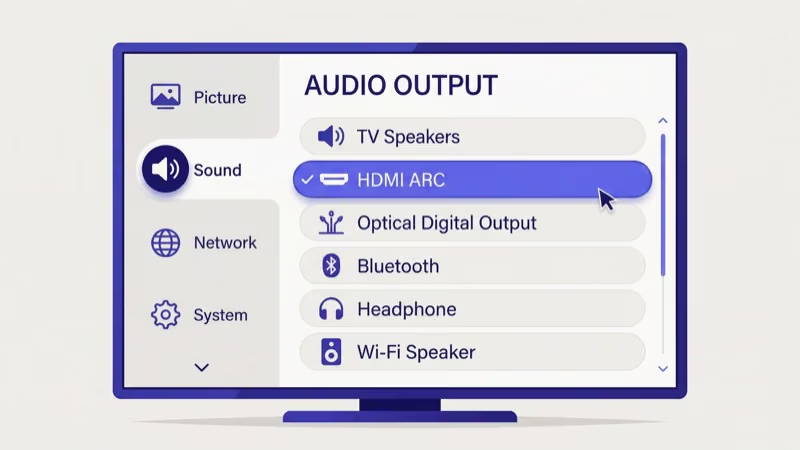
Check that your TV’s audio output is set to “HDMI ARC” or “External Speaker” rather than “TV Speaker.” On Samsung TVs, this setting lives under Settings > Sound > Sound Output. On LG TVs, go to Settings > Sound > Sound Out.
Still deciding between a soundbar and your TV’s built-in speakers? This comparison of soundbars vs TV speakers breaks down the tradeoffs.
#Advanced Troubleshooting for Persistent Audio Loss
At this point you’ve checked cables, settings, Bluetooth, and soundbar routing. If there’s still no sound, the problem is likely firmware-related or hardware-related.
#Update Xfinity Box Firmware
Xfinity boxes update automatically overnight, but you can force a check. Go to Settings > Device Settings > About and look for a “Software Version” entry. If an update is available, it will download after you reboot the box.
Xfinity’s support page states that known firmware bugs affecting audio on X1 boxes are patched every 30 to 60 days via scheduled software updates. Keeping the box on the latest version eliminates these documented issues.
#Factory Reset the Xfinity Box
This is the nuclear option, but it works when nothing else does.
- Press the Xfinity button on your remote
- Go to Settings > Device Settings > Reset
- Select “Reset to Factory Defaults”
- Confirm and wait for the box to reboot (5-10 minutes)
You’ll lose your saved preferences, DVR recordings stay intact on X1 Cloud DVR, and you’ll need to re-pair your remote. But the reset wipes all corrupted audio drivers and cached settings. After the reset, the box runs through initial setup, which reestablishes clean audio handshakes with your TV.
Users who’ve troubleshot Toshiba TV no sound or Samsung volume issues know this same factory reset approach works across brands when software corruption is the cause.
#Contacting Xfinity Support for Hardware Issues
If a factory reset doesn’t bring back audio, the problem is almost certainly hardware. Contact Xfinity through:
- Live chat at xfinity.com/support
- Phone at 1-800-934-6489 (1-800-XFINITY)
- The Xfinity app under Account > Support
Before calling, write down your box model number (on the label on the back), the firmware version from Settings > About, and every troubleshooting step you’ve already completed. This speeds up the call significantly.
If you’re seeing error codes like XRE-03007 alongside the audio loss, mention that to support. Error codes help them diagnose whether the box needs replacement or if there’s a signal issue at the network level.
#FAQ
#Why does my Xfinity TV have picture but no sound?
A Dolby Digital format mismatch is the most common cause. Your Xfinity box outputs 5.1 surround by default, but most TV speakers only decode stereo audio. Switch to Stereo in Settings > Device Settings > Audio. If that doesn’t fix it, check whether a previously paired Bluetooth device is silently intercepting the audio output, because the TV gives no warning when this happens.
#Can I fix Xfinity no sound without calling support?
Yes. The volume/mute check, cable reseat, X1 reboot, and audio-format toggle (Settings > Device Settings > Audio > HDMI/Optical > Stereo) handle the common causes. Only persistent loss after those four steps, plus a test on a different HDMI input, justifies a support call.
#Does HDMI ARC matter for Xfinity box audio?
Only if you route audio through a soundbar or receiver. HDMI ARC passes TV audio back to external speakers.
But if you route audio through a soundbar, it must plug into the TV’s ARC-labeled HDMI port. You’ll also need to change the TV’s audio output from “TV Speaker” to “HDMI ARC” or “External Speaker.”
#Why does Xfinity audio cut out during certain shows?
That’s usually a broadcast-side encoding problem, not your equipment. Note which channels drop audio and report them to Xfinity.
#Will a factory reset delete my DVR recordings?
No. X1 Cloud DVR recordings live on Xfinity’s servers. A factory reset clears local preferences, app logins, and Bluetooth pairings, but every recorded show stays accessible after the box finishes its reset and re-activation process. You’ll need to re-pair your Xfinity remote and re-enter any app passwords.
#Does the Xfinity Flex have the same audio problems?
The Flex uses identical audio settings and hits the same HDMI handshake bugs as X1 boxes. Every troubleshooting step in this guide applies to the Flex. The one difference: Flex boxes lack an ethernet port, making them more vulnerable to Wi-Fi-related audio drops. If your Flex loses sound frequently, test with a USB ethernet adapter to rule out wireless interference before contacting support for a replacement.
#Should I use HDMI or optical cable for Xfinity audio?
HDMI. It carries Dolby Digital 5.1 and supports CEC for single-remote volume control. Optical is limited to stereo or basic Dolby and doesn’t support CEC.
#How long does a power cycle take to fix Xfinity audio?
About 5 minutes. Hold the power button for 10 seconds, unplug for 60 seconds, then wait 3-5 minutes for boot. Don’t skip the 60-second wait.
For background context, see Wikipedia’s smart TV entry.
#Bottom Line
Most Xfinity TV no-sound problems come down to three things: a loose HDMI cable, a Dolby Digital format mismatch, or a forgotten Bluetooth device stealing the audio stream. Start by reseating cables, power cycling the box for a full 60 seconds, and switching audio output to Stereo in Settings > Device Settings > Audio.
If those quick fixes don’t work, match your TV’s audio output settings to what the Xfinity box is sending, try a different HDMI port (preferably one labeled ARC), and update the box firmware. A factory reset is the last self-service step before contacting Xfinity support for hardware diagnosis.
The whole process takes under 20 minutes.